
Air Traffic Controller Salary: $47k to $228k Real Pay
Air Traffic Controller Salary
There are very few jobs left in the American economy that will pay you $150,000, $180,000, or even $200,000 without requiring a single college credit. Air traffic control is one of them. But before you start pricing out beach houses, understand this: the FAA isn’t handing out six-figure salaries out of generosity. They’re paying that much because the job is extraordinarily difficult, psychologically demanding, and because roughly one in three trainees at the busiest facilities never make it to full certification.
This is a career where a single mistake doesn’t mean a missed deadline or an angry client. It means aircraft. It means lives. And that reality shapes everything about how controllers are compensated, trained, and ultimately burned through a compressed 25-year career window that ends with mandatory retirement at 56.
So yes, six figures without a degree is absolutely real in 2026. Here’s exactly what that looks like, who earns it, and what it actually costs.
Quick ATC Salary Summary (2026 Update)
Fully certified controllers at small regional towers earn $90,000–$115,000 in total compensation. Mid-size international airports pay $120,000–$155,000. At the nation’s busiest Level 12 hubs—JFK, Atlanta, LAX, Chicago O’Hare—certified controllers earn $180,000–$230,000+, with top earners regularly hitting the federal pay cap of $228,000. Academy trainees start at approximately $47,000/year, but reach $80,000–$100,000+ within 12–18 months of arriving at their first facility.
ATC Earnings Calculator (Level & Differentials)
Calculate your Weekly, Monthly & Yearly Take-Home Pay
⚠️ These are estimates for a single filer using 2026 tax rates (IRS Rev. Proc. 2025-32).
Results do not include local taxes, pre-tax deductions (401k, health insurance), or tax credits.
Consult a tax professional for personalized advice.Paycheck Calculator
Level 4 vs. Level 12: Where the Big Money Is
The single most important concept in understanding ATC compensation has nothing to do with performance reviews, promotions, or years of service. It has everything to do with one number: your facility’s traffic level.
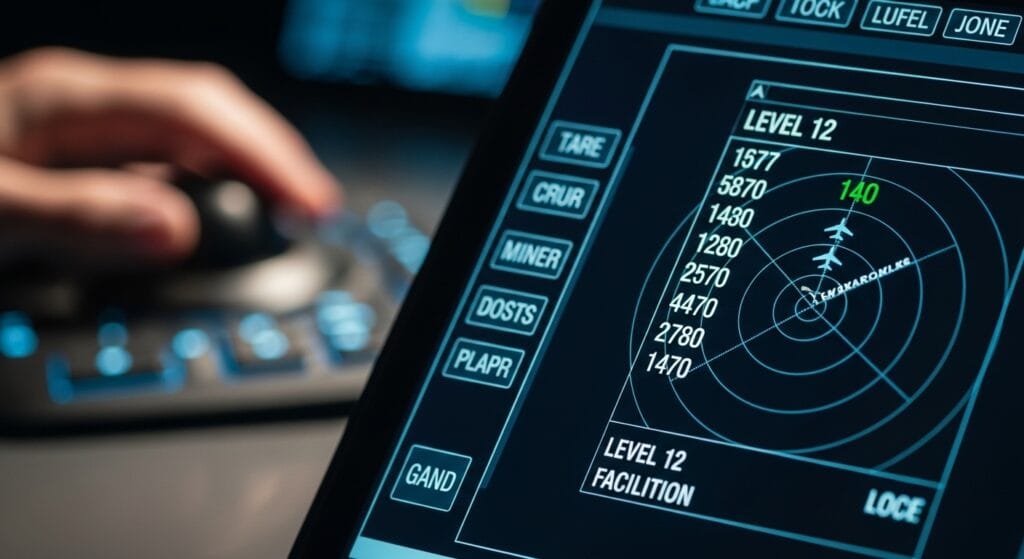
The FAA ranks every airport tower, TRACON (Terminal Radar Approach Control), and en route center in the country on a complexity scale from Level 4 to Level 12. That ranking is based on the volume and complexity of traffic your facility handles—how many aircraft, how many runways, how many intersecting flight paths, and how demanding the surrounding airspace truly is.
A Level 4 tower might handle 60–80 aircraft movements on a busy day. A Level 12 TRACON might process 2,500+ movements, coordinating dozens of aircraft simultaneously in some of the most complex, high-density airspace on earth. The pay difference reflects that gap almost perfectly.
FAA pay bands for 2026 reflect the critical nature of this role, and no document illustrates that more clearly than the compensation spread between a quiet regional tower and a New York metro facility. Here’s the full picture by facility tier:
Level 4 (Small Regional Towers) Base salary for a Certified Professional Controller (CPC) runs $95,000–$118,000. After locality pay adjustments—even at the minimum Rest of U.S. rate of +17.06%—total compensation lands between $111,000–$138,000. These are real six-figure salaries for work that, while still demanding, operates at a fundamentally different pace.
Level 5–6 (Mid-Size Airports) Base salaries of $105,000–$128,000 translate to total compensation of $123,000–$150,000 in most locations. For controllers who prefer a manageable workload with solid pay, this tier represents a genuine sweet spot.
Level 7–9 (Busy International Airports) Base pay of $115,000–$145,000 pushes total compensation to $135,000–$190,000 depending on location. Traffic volume is serious here—these facilities handle international routes, complex approach procedures, and high-stakes operations daily.
Level 10–12 (Major Hubs and TRACONs) This is where the real money lives. Base salaries of $135,000–$188,000+ combine with maximum locality pay adjustments (up to +46% in New York and San Francisco) and heavy differential opportunities to push controllers toward and sometimes past $200,000. At the very top, mandatory overtime during staffing shortages—a chronic industry problem in 2026—regularly pushes high earners to the federal pay ceiling of $228,000.
The brutal mathematics of this system: a Level 12 certified controller earns approximately double what a Level 4 controller earns. Same job title. Same certification. Completely different financial universe.
Controllers confirm that the stress is the real cost of the high salary, not just the training. Working Level 12 traffic during peak periods means managing situations where the margin for error is measured in seconds and the consequences of mistakes are catastrophic. The pay isn’t accidental—it’s structural acknowledgment of what those controllers absorb every single shift.
Salary by Facility: Highest Paying Towers
The highest paid ATC airports are concentrated in two geographic areas: the New York metropolitan corridor and Southern California. The combination of Level 12 complexity ratings and maximum locality pay creates total compensation packages that simply cannot be replicated anywhere else in the agency.
| Facility | Type | Location | Est. Total Comp (CPC, 2026) |
|---|---|---|---|
| N90 – New York TRACON | Terminal Radar | Westbury, NY (JFK/LGA/EWR) | $200,000–$228,000 |
| ZNY – New York Center | En Route Center | Ronkonkoma, NY | $195,000–$228,000 |
| A80 – Atlanta TRACON | Terminal Radar | Peachtree City, GA | $185,000–$215,000 |
| ZLA – Los Angeles Center | En Route Center | Palmdale, CA | $190,000–$225,000 |
| ORD – Chicago O’Hare | Tower/TRACON | Chicago, IL | $180,000–$210,000 |
The N90 New York TRACON deserves special mention. This facility handles arrival and departure sequencing for three of the busiest airports in the world—JFK, LaGuardia, and Newark—simultaneously, from a single radar room on Long Island. The cognitive load is staggering. The pay, maxing out at the federal cap, is a direct reflection of what’s being asked of controllers there.
Reaching one of these facilities requires an extended path. You don’t get assigned to N90 as your first posting. You certify at a smaller facility, build your résumé, then bid competitively for transfers—often waiting years for an opening.

The Academy: Your $47k “Paid Interview”
Before any of those salary figures apply to you, you have to survive Oklahoma City.
The FAA Academy, located at the Mike Monroney Aeronautical Center, is where all newly hired controllers begin. The Academy runs 2–4 months depending on your assigned track (En Route radar or Terminal tower/TRACON) and covers the theoretical and procedural foundations of air traffic control.
Here’s the compensation structure during that period: you earn approximately $22.61 per hour, annualizing to roughly $47,000. That’s the number that appears on USAJOBS and causes most people to dismiss ATC as a decent-but-not-spectacular government job. Don’t make that mistake.
On top of your hourly pay, the FAA provides a per diem allowance of approximately $100+ per day (tax-free) to cover housing and meals while you’re stationed in Oklahoma City. This tax-free allowance adds roughly $3,000–$3,500 per month to your effective compensation—without increasing your tax liability. Controllers in Academy training often describe genuine surprise at how much take-home pay they’re generating from what looks like a modest hourly rate.
The Academy’s pass rates vary by track and class, but this is genuinely not a rubber-stamp experience. Controllers who fail are separated from the FAA immediately, with no guaranteed alternative placement. The investment the FAA makes in Academy training is contingent on your performance, and they don’t hesitate to end the employment relationship for those who can’t meet standards.
Differentials: The Hidden $20,000–$30,000
The air traffic control system doesn’t sleep. Towers and centers operate continuously, 365 days a year, which means the shift differential system is one of the most financially impactful components of total ATC compensation—and one of the least discussed in career guides.
Night Differential (+10%) applies to all hours worked between 6:00 PM and 6:00 AM. Controllers on rotating schedules—virtually everyone—work these hours regularly. For a Level 10 controller earning $160,000 in base and locality pay, night differential hours could add $12,000–$16,000 annually.
Sunday Premium (+25%) applies to your entire 8-hour shift if any portion of it falls on a Sunday. A Level 12 controller earning roughly $80/hour on a standard shift earns closer to $100/hour every Sunday. Multiply that across a rotating schedule where Sunday shifts appear roughly every two weeks, and you’re looking at $8,000–$15,000 in additional annual income.
Holiday Pay (Double Time) means that federal holiday shifts pay base pay plus an equivalent holiday premium—effectively doubling the hourly rate for those shifts.
Controller-in-Charge Premium (+10%) applies when you’re designated as the supervisory controller for a shift, overseeing a sector or position in the absence of a manager. As controllers advance in seniority, CIC shifts become increasingly common.
Combined, these differentials routinely add $20,000–$30,000 to total annual compensation for controllers working typical rotating schedules. At Level 12 facilities with chronic understaffing driving mandatory overtime, that number climbs higher still.
The Mandatory Retirement Clause and “Good Time” Pension
Here is the trade that makes ATC unique among high-earning careers: you are guaranteed to be done at age 56. No negotiation, no performance exceptions (with extremely rare waivers to age 61). The cognitive demands of the job, specifically the processing speed and working memory required to manage complex traffic, decline in ways that create unacceptable safety margins as controllers age.
You can also retire earlier than 56 if you qualify under the Special Provision rules: at age 50 with 20 years of ATC service, or at any age with 25 years of service. For controllers who entered at 25, that means potential retirement at 50 with full pension benefits.
The pension formula that applies is called the “Good Time” multiplier, and it’s genuinely exceptional compared to standard federal retirement. While ordinary federal employees accumulate pension credit at 1.0% per year of service, controllers earn at 1.7% for the first 20 years of service, then 1.0% per year thereafter.
A controller with 30 years of service and a high-3 average salary of $180,000 receives a pension of $79,200 annually from day one of retirement. That same controller also receives a Social Security Supplement—a payment approximating their eventual Social Security benefit—from retirement until age 62, further cushioning the income transition.
At age 56, with a federal pension, Social Security Supplement, and three decades of high-income savings behind them, many controllers are in genuinely excellent financial positions. The mandatory exit is a constraint, but the “Good Time” math was designed specifically to compensate for it.
Frequently Asked Questions
What is the age limit to apply for ATC positions?
The hard ceiling is 31 years old—you must have your Tentative Offer Letter from the FAA before your 31st birthday. This is a strict statutory requirement with essentially no exceptions for civilian applicants. The only meaningful exception applies to prior military controllers, who may receive extended eligibility consideration depending on their service record. There is no path around this deadline for everyone else. If you’re 29 and considering this career, the clock is running now.
How hard is the FAA Academy, and what are washout rates?
The Academy is genuinely difficult, and failure rates are real. The ATSA (Air Traffic Skills Assessment) aptitude test that precedes the Academy already filters significantly—it’s specifically designed to screen for the spatial reasoning, multitasking ability, and pattern recognition that predict controller success. Those who clear the ATSA and arrive in Oklahoma City still face a curriculum that covers complex procedural scenarios, simulated traffic management, and increasingly high-pressure evaluations.
Failure at the Academy results in immediate termination. Once at a facility, washout rates during OJT (On-the-Job Training) can exceed 30% at Level 12 facilities—meaning roughly one in three developmental controllers at the busiest facilities never certify. These numbers are not cited to discourage anyone; they exist to frame the reality that the six-figure salary at the end of that process represents something genuinely earned.
What is the mandatory retirement age for air traffic controllers?
Mandatory retirement for ATCs is age 56, established by federal statute due to the cognitive demands of the profession. There is active legislative discussion in 2026 about whether this threshold should be raised—ongoing staffing shortages across the agency have amplified calls for reform—but as of this writing, 56 remains the hard retirement age. Separately, there is a maximum hiring age of 31, creating the compressed career window that defines ATC as a profession: a maximum of 25 years of service for those hired at the latest possible age. The Special Provision retirement rules (age 50 with 20 years, or any age with 25 years) allow qualified controllers to exit earlier with full pension benefits if they choose.
The Bottom Line: Is It Worth It?
The numbers are real. A certified air traffic controller at a major hub facility genuinely can earn $200,000+ per year without a bachelor’s degree, with a federal pension that kicks in at 56 and benefits that most private-sector workers will never see.
The path to those numbers involves an aptitude test, an intense Academy, 1–3 years of lower-paid developmental training, rotating shifts that will permanently reorganize your relationship with weekends and holidays, and a psychological burden that doesn’t disappear just because you’ve unclocked from your position.
For candidates who are analytically sharp, thrive under real pressure, and want a career with compressed earning potential and a defined endpoint, ATC in 2026 remains one of the most exceptional opportunities in the American labor market. The FAA is actively hiring. The shortage is real. The pay is verified.
The question isn’t whether the salary is legitimate. The question is whether you can earn it.
Data Methodology
The salary figures presented in this guide are derived from the FAA’s 2026 Core Compensation Plan pay tables, publicly available locality pay schedules published by the Office of Personnel Management (OPM), differential and premium pay regulations under Title 5 of the U.S. Code, and industry analysis data compiled for the 2026 Aviation Industry Research Brief. Facility level classifications reflect current FAA designations and are subject to periodic reclassification based on operational traffic volume.
Total compensation figures represent estimates incorporating base pay, applicable locality adjustments, and typical differential exposure for controllers working standard rotating schedules. Individual compensation will vary based on specific facility assignment, shift scheduling, overtime frequency, and advancement to Controller-in-Charge (CIC) status. Federal pay cap figures reflect the 2026 Executive Level II ceiling of $228,000.
“If you are looking for Government & USPS jobs, check out our guides on [IRS Revenue Agent] and [FBI Agent ].