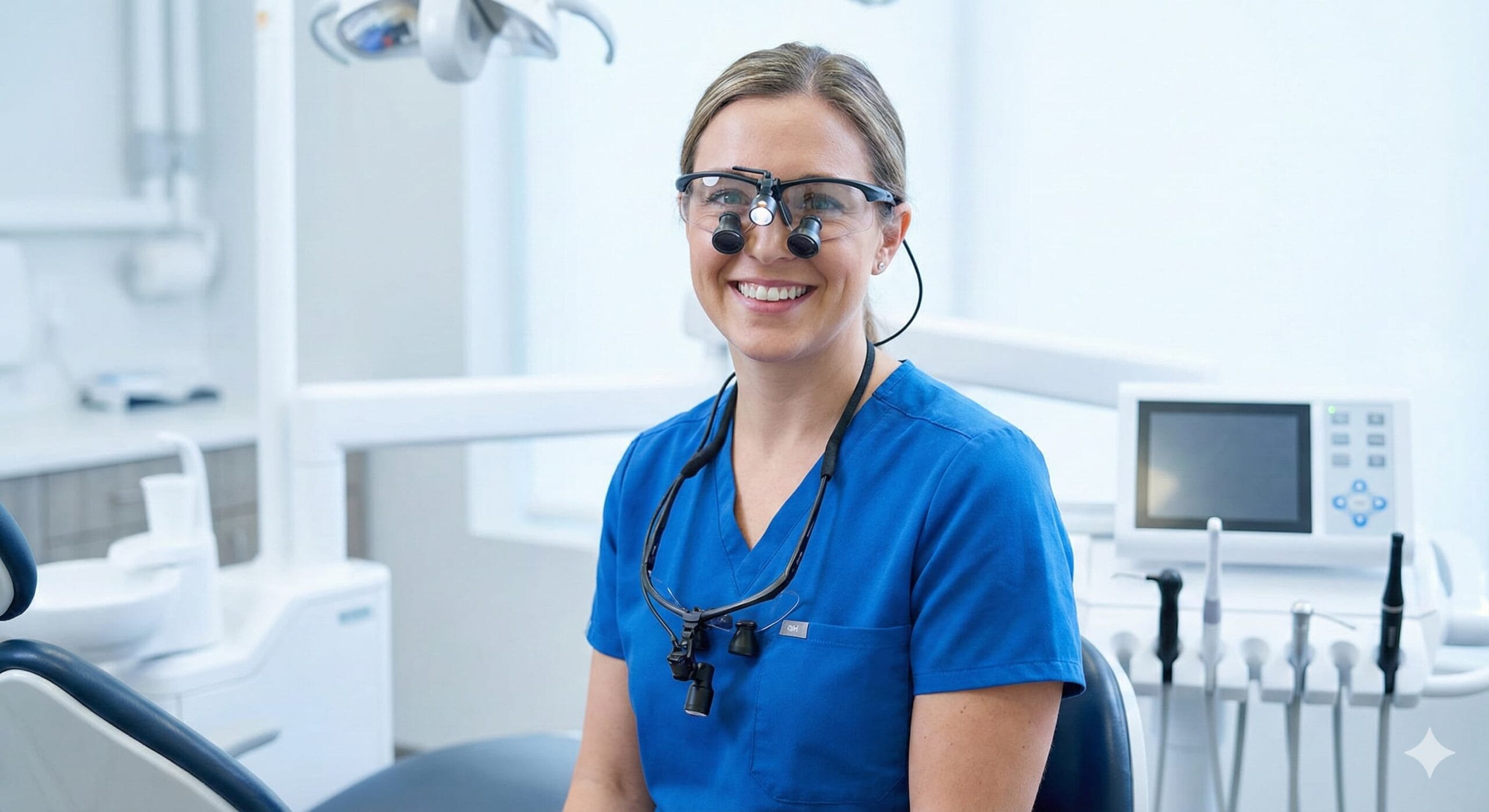
Dental Hygienist Salary 2026: $88K–$105K Real Data
Dental Hygienist Salary
If you’re looking for a healthcare career that pays six figures, requires only two years of school, and lets you leave work at the door every afternoon — dental hygiene deserves serious consideration. In 2026, Registered Dental Hygienists (RDHs) continue to benefit from one of the strongest labor market dynamics in all of healthcare: a genuine, persistent shortage of qualified providers that has shifted negotiating power squarely to the clinician.
This guide breaks down exactly what dental hygienists earn, where the highest pay is concentrated, how the salary compares to dental assistants, and what the career honestly looks and feels like from the inside — including the physical costs that compensation charts rarely mention.
Quick RDH Salary Summary (2026 Update)
For readers who want the headline numbers first:
| Metric | Figure |
|---|---|
| Average Hourly Rate | $42 – $55/hr |
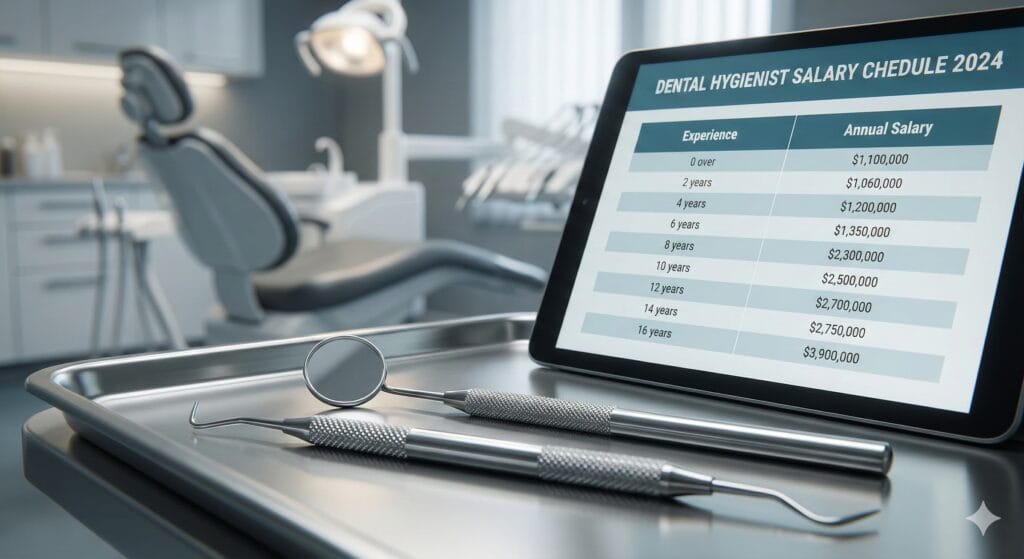
| Average Annual Salary | $88,000 – $105,000 |
| Top 10% Annual Earnings | $125,000+ |
| Entry-Level (New Grad) | $75,000 – $85,000 |
| Metro High Earners (SF, NYC, Seattle) | $70+/hr |
| Typical Work Schedule | 3–4 days/week |
| Degree Required | Associate’s (2–3 years) |
The headline: a new graduate dental hygienist with a 2-year Associate’s degree routinely enters the workforce at $85,000+, frequently out-earning peers who spent four or more years completing a bachelor’s degree in other fields. The labor shortage — what the industry calls the “Hygiene Drought” — is not easing. If anything, practices in 2026 are competing harder than ever for qualified RDHs, offering sign-on bonuses between $1,000 and $5,000 and flexible scheduling packages just to keep their operatories staffed.
Hygienist Income Calculator
Paycheck Calculator
Calculate your Weekly, Monthly & Yearly Take-Home Pay
⚠️ These are estimates for a single filer using 2026 tax rates (IRS Rev. Proc. 2025-32). Results do not include local taxes, pre-tax deductions (401k, health insurance), or tax credits. Consult a tax professional for personalized advice.
The $40,000 Difference: Assistant vs. Hygienist
The single most common source of confusion in dental career planning is the distinction between a dental assistant and a dental hygienist. On the surface, both titles suggest clinical dental work. In practice, they represent entirely different professional categories — and a salary gap that is impossible to ignore.
| Role | Education Required | Average Annual Salary |
|---|---|---|
| Dental Assistant (DA) | 9-month certificate | $46,000 – $52,000 |
| Dental Hygienist (RDH) | 2–3 year Associate’s | $92,000 – $102,000 |
| Difference | +1.5 years of school | +$40,000 – $50,000/year |
A dental assistant is a support role. They hand instruments to the dentist, provide suction, prepare treatment rooms, sterilize equipment, and assist chairside during procedures. The role is valuable and essential to a functioning dental practice — but it operates under direct supervision, with limited independent clinical responsibility. The compensation reflects this: approximately $46,000 to $52,000 annually, or around $22 to $25 per hour.
A dental hygienist is a licensed independent provider. They maintain their own patient column, perform prophylaxis (professional cleanings), scaling and root planing, local anesthesia, radiograph interpretation, and periodontal assessment. They work largely autonomously within their scope of practice, and in states like California, a credential called the RDHAP (Registered Dental Hygienist in Alternative Practice) even allows hygienists to operate entirely independently of a supervising dentist in certain settings.
The earnings difference — roughly $40,000 to $50,000 per year — is sustained over an entire career. An RDH who works from age 25 to 55 will out-earn a dental assistant by over $1.2 million in cumulative gross income, in exchange for spending approximately 18 additional months in school. The return on investment is, by any analytical measure, exceptional.
The extra schooling is also harder to get into than many expect — which is part of why the shortage persists and wages remain elevated. Most hygiene programs accept only 20 to 30 students per year. Admission is competitive, and the clinical requirements are demanding. But for those who complete the program, the credential is extraordinarily durable.
How Hygienists Are Paid: Three Models in 2026
Not all hygienist compensation works the same way, and understanding the pay structure you’re walking into matters as much as the hourly rate itself.
Straight Hourly (The Standard Model). The majority of hygienists are paid a flat hourly rate, typically between $42 and $55 per hour at mid-career. This model provides stability — you earn the same rate whether the schedule is full or a patient cancels at the last minute. It’s the most common arrangement and remains the preference of most clinicians who prioritize predictability over upside.
Base Plus Production (The Hustle Model). An increasingly prevalent structure in 2026, particularly at multi-location group practices and DSOs (Dental Service Organizations), pairs a lower base hourly rate — often around $38 to $42 per hour — with a production commission, typically 30% of any revenue generated above a daily threshold. For a hygienist who is skilled at case acceptance and comfortable discussing treatment recommendations with patients, this model can push annual earnings to $120,000 or more. The tradeoff is stress: hitting production goals requires active engagement with upselling services like scaling and root planing, fluoride treatments, and sealants. Some hygienists thrive in this structure; others find it fundamentally at odds with why they entered a clinical healthcare profession.
Daily Flat Rate (The Temp / Gig Model). A quietly growing segment of the hygiene workforce operates as independent contractors, picking up single-day shifts at practices that need coverage for sick or vacationing staff. Platforms like Cloud Dentistry and GoTu have formalized this market. Daily flat rates for temp hygienists typically run $400 to $550 per day, and motivated RDHs use this model to work exactly as many days as they choose, earning premium rates with maximum flexibility.
Salary by State: Where Hygienists Earn Six Figures
Geography is one of the most powerful variables in dental hygienist compensation. West Coast and Alaska-based practitioners are in a fundamentally different earnings environment than their counterparts in the rural South, driven by a combination of cost-of-living adjustments, state-level scope-of-practice laws, and regional labor supply.
Top 5 Highest-Paying States (2026)
| Rank | State | Avg. Hourly Rate | Annual Estimate | Key Driver |
|---|---|---|---|---|
| 1 | Alaska (AK) | $55 – $65/hr | $110k – $130k | Extreme labor shortage; high reimbursement rates |
| 2 | California (CA) | $52 – $62/hr | $104k – $124k | RDHAP independent practice license; high COL |
| 3 | Washington (WA) | $51 – $60/hr | $102k – $120k | Strong labor protections; high minimum wage floor |
| 4 | Oregon (OR) | $46 – $55/hr | $92k – $110k | Expanded scope-of-practice laws |
| 5 | District of Columbia (DC) | $48 – $58/hr | $96k – $116k | High density of premium private practices |
It’s worth noting that the lowest-paying states — primarily in the rural South and Appalachian regions — present a dramatically different picture. Alabama averages $24 to $28 per hour, and Mississippi and West Virginia are similarly depressed, reflecting lower insurance reimbursement rates, weaker labor market conditions, and in some cases an oversupply of graduates from regional hygiene programs. For hygienists with geographic flexibility, the decision to practice in a top-paying state rather than a bottom-tier one can represent a $30,000 to $50,000 annual difference in earnings.
The Lifestyle Case: Why the Schedule Is Part of the Compensation
Salary figures alone understate the total value proposition of dental hygiene. The industry-standard schedule of three to four clinical days per week, while common knowledge within the profession, consistently surprises outsiders.
A hygienist working four 8-hour days at $50 per hour generates $83,200 annually — with three-day weekends, every weekend. No on-call rotations. No nights or holiday shifts unless voluntarily chosen. When the practice closes at 5 p.m., the clinical responsibilities close with it.
ADHA reports indicate a continuing shift toward production-based bonuses and sign-on incentives as practices compete to fill open hygiene columns. The organization has documented ongoing pressure on practices to offer more flexible scheduling, including four-day and even three-day full-time equivalents, as a recruitment tool. In markets experiencing the sharpest shortages, practices that insist on five-day scheduling are finding themselves unable to attract qualified applicants at all.
For working parents, caregivers, or anyone pursuing meaningful non-work commitments, this structural reality is not a minor perk — it’s a fundamental quality-of-life factor that doesn’t appear in any salary comparison with nursing or allied health fields.
The Physical Toll: What the Salary Charts Don’t Show
Any honest treatment of dental hygiene compensation must confront the physical demands that make the abbreviated work schedule not just desirable but often medically necessary.
Dental hygiene is repetitive, precision work performed in sustained awkward postures. A hygienist working on a patient is typically seated with their neck rotated and flexed, their dominant hand executing fine motor movements with scalers and curettes for 45 to 60 minutes at a stretch, hour after hour throughout a clinical day. The cumulative biomechanical load on the neck, upper back, wrists, and hands is substantial.
Carpal tunnel syndrome is the occupational injury most strongly associated with dental hygiene, with some studies suggesting prevalence rates above 60% among working hygienists. Cervical spine problems, rotator cuff tendinopathy, and lower back pain round out the most common musculoskeletal complaints. Musculoskeletal disorders are, in fact, the leading cause of early career exit in the profession.
This context reframes the three-to-four-day work week. It isn’t primarily a generous scheduling policy — it’s a professional accommodation to the physical reality of the work. Hygienists who attempt to sustain five-day clinical schedules frequently experience accelerated onset of these injuries. The “short” work week is often a form of career preservation, not simply lifestyle optimization.
Experienced hygienists who maintain long careers typically invest seriously in ergonomic infrastructure: loupes with proper declination angles to avoid neck flexion, saddle stools or balance chairs to neutralize lumbar load, and often regular physical therapy or chiropractic care as a maintenance practice rather than a response to injury.
Dental Hygiene School: What to Expect
How long does dental hygiene school take? A standard Associate’s degree in Dental Hygiene requires approximately two to three years, including prerequisite coursework in anatomy, physiology, microbiology, and chemistry. Most accredited programs take two years after prerequisites are completed. The full path from deciding to pursue hygiene to sitting for the board examinations typically runs two and a half to three years for most students.
Getting in is frequently the hardest part. Programs are competitive and small — many accredited programs admit between 15 and 25 students per cohort. Applicants with strong science GPAs, healthcare observation hours, and letters of recommendation from dental professionals are prioritized. Being waitlisted for one or two cycles before gaining admission is common.
Once inside, the clinical requirements are demanding in ways that are difficult to anticipate. Students must complete a specified number of patient cases and procedures to qualify for graduation. Patients must be recruited, scheduled, and successfully treated within the academic clinic — and cancellations count against the student, not the calendar. If a patient cancels on the day of a graded clinical examination, the student may fail that component. This dynamic is the primary driver of stress in hygiene programs and is worth understanding before enrollment.
The cost structure strongly favors community college programs. A two-year hygiene program at a community college typically runs $10,000 to $20,000 in total tuition and fees. Private institutions offering the same Associate’s degree credential can charge $50,000 to $70,000. Both programs produce graduates who sit for the identical national and regional board examinations, earn the same RDH credential, and qualify for the same clinical positions at the same pay rates. The financial case for the community college pathway is overwhelming.
Frequently Asked Questions
How long is dental hygiene school?
The Associate’s Degree in Dental Hygiene takes two to three years, depending on how prerequisite science courses are sequenced. Most students complete prerequisites in one year at a community college, then enter a two-year accredited hygiene program, bringing the total timeline to approximately three years from start to licensure. A Bachelor’s of Science in Dental Hygiene takes four years but does not increase clinical pay — it’s relevant primarily for those pursuing teaching, public health, or corporate careers.
Is dental hygiene physically demanding?
Yes, substantially so. The work involves sustained awkward postures, fine repetitive hand motions, and prolonged static muscle loading throughout every clinical day. Carpal tunnel syndrome affects the majority of career hygienists at some point, and neck, shoulder, and back problems are prevalent throughout the profession. This is not a reason to avoid the career — it’s a reason to take ergonomics seriously from day one, invest in proper equipment, and treat the three-to-four-day work week as a career longevity strategy rather than a luxury.
Can I work part-time as a dental hygienist?
Yes, and the profession accommodates this exceptionally well. The standard full-time schedule is already only three to four days per week, meaning that part-time arrangements of two or three days per week are both common and professionally normalized. Many hygienists scale their schedule around family commitments, other income sources, or health needs. The gig model — picking up individual shifts through staffing platforms — also allows hygienists to work as little or as much as they choose in a given week with no long-term schedule commitment.
Data Methodology
The salary figures cited in this guide are drawn from the 2026 Dental Industry Analysis research brief, which aggregates labor market data from dental staffing platforms, state workforce reports, and ADHA member survey data. Hourly and annual ranges reflect the 25th to 75th percentile of reported compensation for actively practicing RDHs working standard clinical schedules in the United States. Top earner figures reflect the 90th percentile of reported compensation. State-level data reflects regional averages and will vary by city, practice type, and individual negotiation. All compensation figures are gross pre-tax amounts and do not account for benefits, which vary significantly between private practices and group/DSO environments.
“If you are looking for Medical & Nursing jobs, check out our guides on [Medical Assistant ] and [Phlebotomist].”