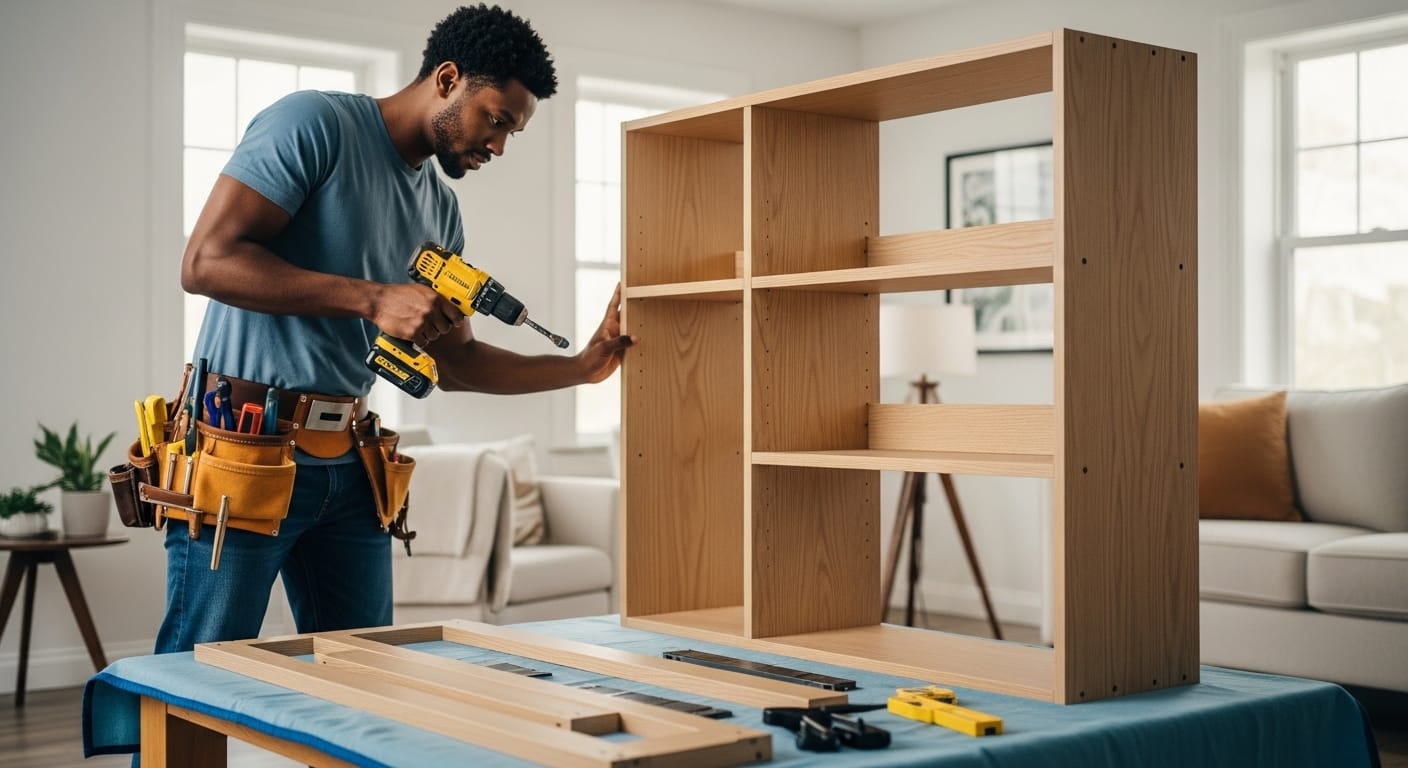
TaskRabbit Tasker Pay 2026: Earn $45–$120/Hr
TaskRabbit Tasker Pay
You’ve probably heard the gig economy horror stories—algorithmic pay cuts, surprise deactivations, surge pricing that evaporates the moment you need it. TaskRabbit is built differently. On this platform, you don’t wait for an algorithm to decide what your time is worth. You set your hourly rate, you choose your categories, and you build a client base that pays you what you deserve.
In 2026, skilled Taskers in high-demand cities are charging $50, $70, even $120 per hour for specialized work. That’s not a fantasy—it’s the reality for anyone willing to invest in the right skills, the right tools, and the right strategy. This guide gives you the complete roadmap: what you’ll actually earn, where you’ll earn the most, and exactly how to climb from your first $35-per-hour job to elite-tier rates that rival full-time professional wages.
Quick Tasker Salary Summary (2026 Update)
Platform: TaskRabbit (USA, UK, Canada) Pay Model: You set your own hourly rate. TaskRabbit charges the client separately. Commission to TaskRabbit: $0 — you keep 100% of your set rate + 100% of tips.
| Level | Hourly Rate | Best Category |
|---|---|---|
| Beginner (0–10 tasks) | $25 – $40/hr | Cleaning, Basic Assembly |
| Established (10–50 tasks) | $40 – $60/hr | Moving Help, Furniture Assembly |
| Elite Tasker (50+ tasks, 98% reliability) | $70 – $120/hr | Mounting, Handyman |
| Avg Active Tasker Rate (all categories) | ~$45–$55/hr | Varies by city |
Snapshot figures:
- Avg Part-Time Income (10 hrs/week): ~$450–$550/week
- Avg Full-Time Income (35 hrs/week): ~$1,500–$2,000/week
- Elite Tasker Annual Potential: $60,000–$90,000+
Tasker Income Calculator
Paycheck Calculator
Calculate your Weekly, Monthly & Yearly Take-Home Pay
⚠️ These are estimates for a single filer using 2026 tax rates (IRS Rev. Proc. 2025-32). Results do not include local taxes, pre-tax deductions (401k, health insurance), or tax credits. Consult a tax professional for personalized advice.
The “Name Your Price” Model: How TaskRabbit Pay Actually Works
This is the single most important thing to understand before you register: TaskRabbit does not take a commission from your earnings. If you set your rate at $60 per hour, you receive $60 per hour—every time, without deductions.
So how does TaskRabbit make money? They charge the client a service fee of approximately 35% on top of your rate. If you charge $60 per hour, the client actually pays around $81. This structure has a critical implication for your pricing strategy: if you raise your rates too aggressively without the reviews to justify them, you’ll price yourself out of the market before clients even read your profile. The client sees the total cost including fees, and sticker shock is real.
This is why strategic rate-setting matters as much as the rate itself. You’re not just competing against other Taskers—you’re competing against the client’s mental calculation of whether hiring someone at $80+ per hour (their actual cost) is worth it compared to doing the job themselves.
The one-time registration fee is $25, paid after your profile is approved and your background check clears. The background check examines criminal history and identity verification and typically takes 2–7 business days. This upfront friction is a feature, not a bug—it keeps low-commitment workers off the platform and signals to clients that every Tasker has been vetted.
Setting Your Rates: Don’t Sell Yourself Short
Here’s the paradox every new Tasker faces: you need reviews to justify premium rates, but you need tasks to get reviews. The solution is a deliberate, time-limited pricing strategy that most successful Taskers use to build their reputation quickly without permanently undervaluing their work.
Phase 1: The Review Sprint (Tasks 1–5)
Set your rate $5–$10 below the average for your category and city. If the average beginner rate for furniture assembly in your area is $40 per hour, open at $32–$35. Your only goal in this phase is to complete five jobs with five-star reviews. Don’t worry about profit margins yet—you’re buying social proof, which is worth far more than the $20–$30 you’re sacrificing per job.
During this phase, over-deliver on everything. Arrive early, communicate proactively, clean up thoroughly, and follow up after the job to make sure the client is happy. These first five reviews will define how the algorithm ranks you and how potential clients perceive your profile for months.
Phase 2: The Credibility Window (Tasks 6–20)
With a handful of strong reviews, raise your rate to the market average. You’ve earned the right to compete on equal footing. At this stage, focus on building your review count in your chosen specialty. If you’re targeting furniture assembly, decline cleaning requests even if it means fewer jobs short-term. Specialization builds a concentrated review profile that signals genuine expertise rather than a jack-of-all-trades generalism.
Phase 3: The Premium Push (Tasks 20–50)
Now you start testing the ceiling. Raise your rate by $5 every 10–15 tasks, monitoring your booking rate carefully. If new requests don’t meaningfully slow down after a rate increase, you’re still priced below your market value. Keep pushing until you find the sweet spot where demand is steady but not overwhelming—that’s your optimal price point.
Phase 4: Elite Territory (50+ Tasks, 98% Reliability)
Once you’ve hit 50+ completed tasks in a category with a 98% reliability score, you unlock Elite Tasker status, which surfaces your profile at the top of search results. At this level, your reputation speaks louder than your price tag. Elite Taskers in high-demand cities routinely charge $80–$120 per hour for specialized work like mounting and handyman services because clients will pay a premium for a guaranteed result.
The cardinal rule at every phase: never cancel a task. A single cancellation can drop your search ranking for an entire month. The algorithm prioritizes reliability above all other factors, including price and review count. Treat every committed job as non-negotiable.

Category Breakdown: Where the Real Money Hides
Not all TaskRabbit categories pay equally, and understanding which ones offer the best return on your time and equipment investment is the difference between a decent side income and a legitimate full-time business.
Mounting ($40–$120/hr) — The Highest-ROI Category
Top Taskers consistently recommend specializing in mounting as the single highest-return category on the platform. The work requires a cordless drill, stud finder, level, and the confidence to drill into drywall, tile, or brick—skills that carry a genuine barrier to entry. Most people don’t own a stud finder or feel comfortable mounting a 65-inch TV above a fireplace. That discomfort is your premium.
Elite mounting specialists in New York City and San Francisco charge $100–$120 per hour without apology, and they stay booked. The equipment investment is modest ($200–$300 for quality tools), and the skills improve rapidly with repetition. If you’re only going to specialize in one category, make it mounting.
Moving Help ($35–$90/hr) — The Physical Premium
Moving help commands strong rates because it’s demanding work that clients genuinely dread. Taskers with trucks or cargo vans charge at the top of the range because they solve the transportation problem in one booking. Even without a vehicle, movers with professional equipment—a furniture dolly, moving blankets, ratchet straps, and heavy-duty gloves—earn significantly more than unprepared competitors.
The strategic edge in moving is speed and care. Clients who see you wrapping furniture in blankets before it goes through a doorway will tip generously and book you again for their next move.
Furniture Assembly ($35–$75/hr) — Volume and Specialization
Non-IKEA assembly (Wayfair, Amazon, Pottery Barn) is priced on your standard hourly rate and rewards speed. The faster you can assemble a complex piece, the higher your effective earnings. A Tasker charging $55 per hour who completes a complex media console in 90 minutes has earned $82.50 with high client satisfaction. That same $55/hour Tasker who takes three hours has earned $165 but may leave the client questioning the value.
The IKEA Flat-Rate program operates differently—and more riskily. Items booked through IKEA’s website pay a fixed rate per piece regardless of how long assembly takes. A PAX wardrobe might pay $90 flat. If you complete it in 90 minutes, you’ve effectively earned $60 per hour. If it takes four hours due to missing hardware or damage, you’ve earned $22.50 per hour. Many veteran Taskers opt out of flat-rate IKEA bookings entirely for this reason, sticking to the hourly model where their efficiency is rewarded.
Cleaning ($30–$70/hr) — The Recurring Revenue Machine
Cleaning pays less per hour than mounting or moving, but it offers something the other categories don’t: recurring revenue. Clients who love their cleaner book weekly or biweekly without you competing for the job again. A cleaning Tasker with 10 recurring clients averaging $150 per booking has built a $1,500/week baseline with zero marketing effort.
The key differentiator for elite cleaners is bringing professional-grade supplies—commercial vacuum, eco-friendly products, microfiber cloths—rather than using whatever the client has under their sink. It signals professionalism, ensures consistent results, and gives you complete control over quality.
Salary by City: Where Tasks Pay Most
Demand for TaskRabbit services correlates directly with urban density, high rents (which drive frequent moves), and high disposable income (which drives outsourcing). The following cities represent the highest-earning markets for Taskers in 2026.
| Rank | City | Top Category | Avg Elite Rate | Why It Pays |
|---|---|---|---|---|
| 🥇 | New York City, NY | Mounting / Moving | $90–$120/hr | Constant apartment turnover; residents rarely own tools or vehicles |
| 🥈 | San Francisco, CA | Cleaning / Mounting | $80–$110/hr | High disposable income; tech workers outsource domestic tasks freely |
| 🥉 | Los Angeles, CA | Organization / Assembly | $70–$100/hr | Closet organization is a booming niche; large homes, high rates |
| 4 | Toronto, CAN | Moving Help | $65–$90/hr | High-density condo living drives constant small-scale moving demand |
| 5 | London, UK | IKEA Assembly | £55–£85/hr | Dense flats require complex storage builds; low DIY culture |
Important note for non-metro Taskers: Smaller cities offer lower average rates but significantly less competition. A $55/hour Tasker with Elite status in a mid-size market like Austin or Denver can build a thriving full-time business with less competition than they’d face in New York or San Francisco.
Writing a Profile That Commands Premium Rates
Your TaskRabbit profile is doing sales work 24 hours a day. A mediocre profile at $40 per hour loses jobs to a compelling profile at $55 per hour—because clients aren’t just buying a service, they’re buying confidence in the outcome.
Lead with credentials, not personality. “Former contractor with 10 years of furniture assembly and mounting experience” outperforms “I love helping people!” every time. If you have relevant professional background—construction, cleaning services, logistics, interior design—it belongs in your first sentence.
Name your tools explicitly. “I arrive with a cordless drill, professional hex bit set, stud finder, and level” tells clients you won’t be improvising. Equipment confidence translates directly to trust and justifies rate premiums.
Address the fear, not the task. Clients hiring a mover aren’t worried about whether you can lift furniture—they’re worried about scratches on their hardwood floors and a broken TV. Address that: “I use furniture blankets on every piece and take full responsibility for protecting your belongings throughout the move.”
Photograph everything. Profile photos of your tool kit, completed projects, and organized workspace provide visual proof of competence before you’ve exchanged a single message. A photo of a beautifully assembled wardrobe is worth more than three paragraphs of bio copy.

Frequently Asked Questions
Does TaskRabbit take a cut of my earnings?
No. TaskRabbit does not charge Taskers a commission. You set your hourly rate, and you receive exactly that amount for every hour worked, plus 100% of any tips clients add. TaskRabbit generates revenue by charging clients a service fee of approximately 35% on top of your rate. If you charge $60 per hour, the client pays around $81. This means your effective market rate is always higher than your listed rate—a factor to consider when setting prices, since clients see the full cost including fees.
How do I become an Elite Tasker?
Elite status requires completing 50 or more tasks in a specific category combined with maintaining a 98% reliability score. Reliability is calculated based on showing up on time, completing jobs as described, and not canceling committed bookings. Once you achieve Elite status, your profile appears at the top of search results for your category, dramatically increasing booking volume and giving you the credibility to charge premium rates. The most important rule: never cancel a task. One cancellation can suppress your search ranking for up to a month.
Is TaskRabbit safe for Taskers?
TaskRabbit has several safety mechanisms in place. All clients have verified identities, and the platform’s rating system creates accountability on both sides of every transaction. Every job generates a digital record including location, time, and client information. Taskers are encouraged to review client profiles before accepting tasks and can decline jobs that feel uncomfortable without penalty. For home-based tasks, sharing your location and schedule with a trusted contact is a sensible personal safety practice, as it would be in any service profession.
Data Methodology
The earnings figures, rate ranges, and city-specific data presented in this guide are derived from a comprehensive analysis of active TaskRabbit listings across major U.S., Canadian, and UK markets as of January 2026, cross-referenced with reported Tasker income data and platform category benchmarks. Hourly rate ranges reflect active listings from verified Taskers in each city rather than self-reported survey data, which tends to skew toward extremes.
“Elite Tasker” rates represent the top 20% of active listings by review count (50+ tasks completed) with reliability scores at or above 98%. “Beginner” rates represent Taskers with fewer than 10 completed tasks. “Established” rates represent the middle 60% of active Taskers by experience level.
City-specific demand rankings are based on platform category search volume and listing density per capita in each metro area. Rates are presented in local currency where applicable (USD for U.S. cities, CAD for Toronto, GBP for London). All figures are subject to change as market conditions evolve. Taskers are encouraged to benchmark their local market directly on the platform before finalizing their rate structure.
“If you are looking for Gig Economy jobs, check out our guides on [Roadie Driver] and [Shipt Shopper].”