
USPS Rural Carrier Salary 2026: Earn $30+/hr Legally
USPS Rural Carrier Salary
If you’ve ever researched a job at the Post Office and stumbled onto the rural carrier pay structure, you probably felt like you’d wandered into a foreign country. Terms like “evaluated time,” “K-Route,” “EMA,” and “the 40-hour cliff” appear nowhere else in American employment law. Yet for more than 100,000 rural carriers and their associates across the United States, these concepts determine every single paycheck.
This guide decodes the 2026 USPS rural carrier compensation model from the ground up—the starting hourly rate, the evaluated time windfall, the vehicle reimbursement system, and the counterintuitive rule that can cost you $70 for working three extra hours. Whether you’re a prospective RCA researching the job or a current carrier trying to optimize your earnings, understanding this system is the difference between working 41 hours for less money than your colleague earned in 38.
Table of Contents
- USPS Rural Carrier Salary
- Quick Rural Carrier Salary Summary (2026 Update)
- Rural Pay & EMA Calculator
- What Makes Rural Carrier Pay Completely Different
- Beating the Evaluation: Paid for 9 Hours, Work 6
- The 40-Hour Cliff: The Rule That Costs Carriers Real Money
- Route Classifications: H, J, and K Explained
- Salary by State: Rural Demand
- Vehicle Economics: Understanding EMA
- Green Card Pay: The First 10 Weeks
- Frequently Asked Questions
- Data Methodology
Quick Rural Carrier Salary Summary (2026 Update)
- RCA Starting Rate: $21.00 – $21.50/hr (0–3 years, post Nov 2025 increase)
- RCA Senior Rate: $22.00 – $22.50/hr (3+ years)
- EMA Vehicle Allowance: $0.97/mile (effective Jan 10, 2026, tax-free)
- Evaluated Pay Threshold: Route evaluation kicks in after 5 pay periods (10 weeks)
- Critical Overtime Rule: Actual hours exceeding 40.00/week eliminates evaluated pay entirely
- Top Route (40K Evaluation): Approx. $1,700–$1,800 biweekly gross before EMA
Rural Pay & EMA Calculator
Calculate your Weekly, Monthly & Yearly Take-Home Pay
⚠️ These are estimates for a single filer using 2026 tax rates (IRS Rev. Proc. 2025-32).
Results do not include local taxes, pre-tax deductions (401k, health insurance), or tax credits.
Consult a tax professional for personalized advice.Paycheck Calculator
What Makes Rural Carrier Pay Completely Different
Before diving into the mechanics, it helps to understand the philosophical foundation. City carriers are paid for every minute they work. A city carrier who spends 9 hours on route gets paid for 9 hours. A city carrier who spends 11 hours gets paid for 11 hours. Straightforward.
Rural carriers operate on a fundamentally different premise: the route has a value, not your time. The Postal Service and the National Rural Letter Carriers’ Association (NRLCA) negotiate a system in which every rural route receives an official “evaluation”—a calculation of how many hours and minutes it should take to complete that route on an average day. You are paid for that evaluated amount, regardless of whether you finish faster or slower.
This model originated in the 1960s and has been refined through successive NRLCA collective bargaining agreements. Analysis of the most recent agreement reveals that the evaluated system serves dual purposes: it incentivizes carrier efficiency (benefiting USPS) while theoretically guaranteeing fair compensation for complex, variable routes (benefiting carriers). In practice, both outcomes occur—but only for carriers who understand the rules.
Beating the Evaluation: Paid for 9 Hours, Work 6
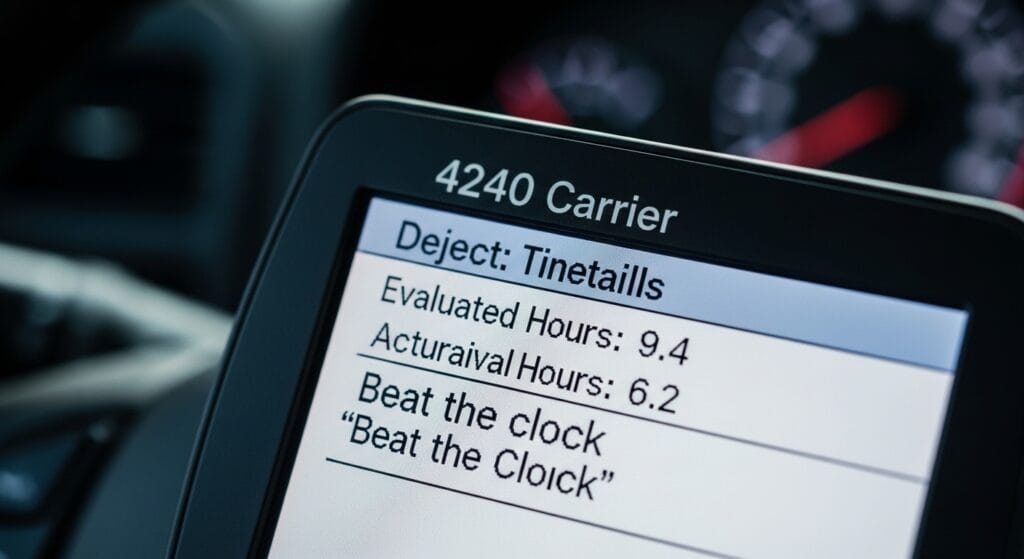
Here is the core incentive that attracts many carriers to rural delivery. If your route evaluates at 9 hours, you receive 9 hours of pay on that route regardless of how long it physically takes you to drive it.
The “Runner’s Premium” in action: A carrier with three years on the same route has learned every shortcut, optimized their loading sequence, and can complete a 9-hour evaluated route in 6.5 hours. Their effective hourly rate on those 6.5 actual hours is approximately $30.46 — nearly $9/hour above their stated rate of $21.50. Multiply that across a five-day week and the carrier earns approximately $107.50 more than their base rate suggests.
This is not a loophole. It is the intended design of the system, and experienced rural carriers guard their efficiency techniques carefully.
The RRECS Threat to That Premium
However, the 2026 landscape introduces a serious counterweight: the Rural Route Evaluated Compensation System (RRECS). Under the old methodology, routes were evaluated annually via a physical mail count — a supervisor would count the day’s mail and calculate route time using established formulas. A carrier who optimized their route could enjoy a generous evaluation for years.
Under RRECS, evaluation is continuous. Your postal scanner tracks every stop, every departure, every authorized dismount, and every package scan to door. This data feeds algorithms that recalculate your route’s evaluation on a rolling basis. Rural carriers report that RRECS has made route evaluations volatile in ways the old system never was — a route that evaluated at a comfortable 45,000 units (a “45K”) can drop to a 40,000 unit evaluation overnight if scanner data goes missing or scans are performed incorrectly.
The practical implications are significant. Failing to scan “Depart to Route” at the start of your day, or neglecting to scan “Authorized Dismount” before walking a package to a door, signals to the RRECS algorithm that you performed less work than you actually did. The system interprets absent data as absent activity. A carrier who loses 5,000 units of evaluation loses approximately 30 minutes of daily paid time — roughly $540 annually at current rates.
The takeaway: working fast earns you a premium. But working fast and scanning correctly preserves your route’s baseline evaluation. Both disciplines are now required.

The 40-Hour Cliff: The Rule That Costs Carriers Real Money
No aspect of rural carrier compensation causes more financial harm to new employees than the 40-hour rule. It is also the most counterintuitive policy in all of federal employment.
The rule, plainly stated: If your actual hours worked in a service week exceed 40.00 hours, the evaluated pay system is suspended entirely. You revert to being paid actual hours at your hourly rate, with standard 1.5x overtime for hours beyond 40.
This sounds reasonable until you run the numbers.
The Pay Comparison That Changes Everything
| Scenario | Evaluated Hours | Actual Hours Worked | Weekly Gross |
|---|---|---|---|
| Scenario A (Under 40 – Evaluated Pays) | 45 hrs (5 × 9-hr route) | 38 hrs actual | $945.00 |
| Scenario B (Over 40 – Hourly Kicks In) | 45 hrs (same route) | 41 hrs actual | $863.69 |
| Difference | — | Worked 3 more hours | Lost $81.31 |
Based on $21.00/hr rate. Scenario B: 40 hrs × $21.00 + 1 hr × $31.50 OT = $863.50.
Scenario B’s carrier worked three additional hours and received $81.31 less than Scenario A’s carrier. The evaluated time they would have been paid for those 45 hours (worth $945) was replaced by compensation for only their actual 41 hours (worth ~$863).
This creates a very real and very practical decision that rural carriers face regularly. When a supervisor offers Saturday auxiliary assistance and you’re already at 37 actual hours for the week, accepting a 4-hour Saturday shift pushes you to 41 hours — triggering the rule and potentially costing more in lost evaluated pay than the auxiliary hours provide.
Experienced carriers track their actual hours vigilantly every week. Many decline auxiliary work when their hour count is dangerously close to 40. It is not laziness; it is basic pay optimization.
Route Classifications: H, J, and K Explained
Your route designation controls your schedule, your days off, and your annual earning ceiling. This “alphabet soup” confuses nearly every new hire.
| Route Type | Days Worked (Per 2 Weeks) | Scheduled Relief Days | Pay Potential |
|---|---|---|---|
| K-Route | 10 days | 2 days off (1/week) | Highest — typically 40K–48K evaluation |
| J-Route | 11 days | 1 day off (every other week) | Medium — work 6 days one week, 5 the next |
| H-Route | 12 days | 0 days off | Lower — work Mon–Sat every week |
| Aux Route | Variable | N/A | Hourly only — no evaluated pay |
K-Routes are the most coveted assignments in rural delivery. They are the largest routes by volume, evaluate highest, and provide the best schedule flexibility — four days off per month. Waiting lists for K-Routes can extend 5–8 years at busy offices, as seniority governs all bid awards.
H-Routes demand the most schedule sacrifice — no scheduled day off means working every delivery day, including Saturdays. However, because evaluation is based on volume rather than days worked, some H-Routes provide competitive hourly equivalents for carriers who can complete them efficiently.
Auxiliary (Aux) Routes are part-time assignments paid strictly on actual hours at the hourly rate. No evaluation applies. These are common entry points for new RCAs before a regular assignment is available.
Salary by State: Rural Demand
Rural carrier need is driven by population density, geography, and local retirement rates. High-demand states consistently struggle to maintain full staffing in rural offices.
| State | Rural Route Density | Avg RCA Starting Rate | Avg EMA (est. daily) | Notes |
|---|---|---|---|---|
| Texas | Very High | $21.00–$21.50 | $42–$55 | Long routes, flat terrain; high mileage = strong EMA return |
| Montana | Very High | $21.00–$21.50 | $55–$75 | Remote distances; EMA essential; difficult winter conditions |
| Iowa | High | $21.00–$21.50 | $38–$48 | Dense rural network; stable demand due to agricultural areas |
| Kentucky | High | $21.00–$21.50 | $35–$45 | Appalachian terrain; moderate volume, high dismount frequency |
| North Carolina | High | $21.00–$21.50 | $38–$50 | Rapid rural growth; new routes being added; conversion opportunities |
Note: USPS pay rates are nationally standardized by NRLCA agreement. State-level variation appears in route length (EMA) and conversion speed (career opportunities), not base hourly rates.
Vehicle Economics: Understanding EMA
Rural carriers are, in many respects, independent fleet managers. Approximately two-thirds of rural routes require the carrier to use a Personally Owned Vehicle (POV) — their own car, van, or Jeep — to deliver the mail. Routes equipped with a government vehicle (an LLV or Metris van) provide zero EMA; the government absorbs vehicle costs directly.
For POV routes, USPS compensates carriers through the Equipment Maintenance Allowance at $0.97 per mile as of January 10, 2026. This rate is paid on every mile driven on the route and is not included in taxable wages — it arrives as a separate line item on the paycheck.
The EMA math for a 40-mile route:
- 40 miles × $0.97 = $38.80/day (tax-free)
- $38.80 × 260 delivery days = $10,088 annually in vehicle compensation
Whether this amount actually covers your costs depends entirely on your vehicle choice. Rural carriers who use fuel-efficient right-hand-drive (RHD) imports or modified vehicles with good gas mileage often turn a modest profit on EMA. Carriers driving older, fuel-heavy vehicles in remote areas with high maintenance needs frequently find EMA insufficient.
The RHD requirement is frequently misunderstood by new hires. USPS does not mandate a specific vehicle type, but the practical delivery model — pulling up to a mailbox on the right side of the road and depositing mail without exiting the vehicle — requires access to the passenger side. This means either a factory right-hand-drive vehicle (purpose-built postal Jeeps, certain imports) or a vehicle that allows “straddling” — positioning the driver to reach across the center console to the right window. Many RCAs begin with a left-hand-drive vehicle rigged for straddling and upgrade to an RHD once they secure a regular route.
Green Card Pay: The First 10 Weeks
New RCAs do not enter the evaluated system immediately. For the first five pay periods (10 weeks), all time is recorded on a PS Form 4240 — colloquially called the “Green Card” — and paid at the straight hourly rate for every minute worked.
This probationary hourly period protects new employees from financial penalties while they learn route layouts, postal procedures, and scanning protocols. It also means new RCAs have no upside from efficiency during this phase; there is no evaluated time premium to capture.
Green Card pay also applies to auxiliary assistance regardless of tenure. When an RCA is pulled to cover a different route (because the regular carrier called in sick, for example), those hours are paid at the actual hourly rate rather than any evaluation. Accepting auxiliary work is therefore a straight-hours proposition — useful income, but without the evaluated time multiplier.
Frequently Asked Questions
What kind of car do I need to be a rural carrier?
You need a vehicle from which you can physically access the right-side window while the vehicle is positioned next to a curbside mailbox. The most common solutions are factory RHD vehicles (Postal Jeep Wranglers, RHD Sprinters/Metris imports) or conventional left-hand-drive vehicles large enough to allow center-seat straddling. A standard sedan driven from the driver’s seat is generally impractical. Most RCAs consult with experienced carriers at their specific office before purchasing a vehicle, since route characteristics (speed limits, dismount frequency, mailbox proximity) affect which vehicle type works best.
Do I get gas money? How does EMA work?
Yes — if your route requires a personally owned vehicle, you receive the Equipment Maintenance Allowance at $0.97 per mile driven on route as of January 2026. This is not a flat gas stipend; it is mileage-based and calculated from your route’s official measured distance. It appears on your paycheck as a tax-free reimbursement, separate from your evaluated pay. If your route is assigned a government vehicle (LLV or Metris van), you receive no EMA.
How long does it take to become a regular rural carrier?
Conversion from RCA (associate/part-time flexible) to Regular career status depends entirely on seniority and vacancies at your assigned post office. In busy suburban offices, conversions can occur within 2–4 years. In small, stable rural offices where the regular carrier intends to work until retirement, RCAs have waited 7–10 years. There is no guaranteed conversion timeline. Upon converting to career status, carriers gain access to FERS retirement, federal health insurance, annual leave accrual, and COLA adjustments.
What happens if I forget to scan while on route?
Under RRECS, missing scans directly impact your route’s evaluation. The system assumes work was not performed if it was not recorded. Key scans include “Depart to Route,” “Authorized Dismount” (before leaving vehicle for a package delivery), individual package scans, and “Arrive Back at Office.” Developing a consistent scanning discipline from day one is not optional — it is a direct financial protection measure.
Do RCAs get overtime?
Yes, but not the “Penalty Overtime” (double time) that city carriers (CCAs) can earn. RCAs are capped at 1.5x the hourly rate for hours exceeding 40 in a workweek. Critically, overtime only applies in weeks where actual hours exceed 40 — and triggering that threshold simultaneously eliminates the evaluated pay system, which is often worth more than the overtime premium itself.
Data Methodology
The compensation figures in this guide reflect the November 2025 general wage increase implemented under the current NRLCA–USPS Collective Bargaining Agreement, including applicable Cost of Living Adjustments. The EMA rate of $0.97 per mile reflects the rate effective January 10, 2026, as published in USPS postal bulletins.
Route classification descriptions (H, J, K) are sourced from the NRLCA agreement and USPS HR documentation. RRECS behavioral data (scan impacts on evaluation) is drawn from NRLCA carrier bulletins and field reports from rural carrier associations. State-level salary data reflects national pay standardization under the NRLCA agreement; state notations reflect route characteristics (mileage, terrain, dismount frequency) rather than pay rate variation. Pay comparison figures use the $21.00/hr base rate for illustrative purposes; actual rates vary by tenure and pay period.
This guide reflects information available as of February 2026. Rural carrier pay is subject to change through collective bargaining and USPS administrative action. For the most current rates, consult the NRLCA website or your local postmaster.
“If you are looking for Government & USPS jobs, check out our guides on [USPS Mail Carrier ] and [USPS Mail Carrier ].
NRLCA (National Rural Letter Carriers’ Association)