Border Patrol Salary 2026: Real Pay Is $73k–$145k
Border Patrol Agent Salary
Thousands of Americans look up Border Patrol Agent salaries every month and come away confused—or worse, discouraged. They see a USAJOBS posting showing a GL-5 salary of $52,912 and assume that’s the job. It isn’t. The real story involves a congressionally mandated overtime structure, aggressive recruitment bonuses, and one of the best early-retirement packages in all of federal employment.
This guide breaks down exactly what U.S. Border Patrol Agents earn in 2026: base pay, the 25% BPRA overtime supplement, location-based salary multipliers, and the $30,000 signing bonus that most recruitment posts bury in the fine print. Whether you’re weighing a career change or trying to understand your first offer letter, this is the complete picture.
Quick Border Patrol Salary Summary (2026 Update)
New agents start between $64,000–$75,000 in real take-home pay (Year 1) once the mandatory 25% overtime supplement is applied—not the $52k base figure shown on USAJOBS. By Year 3, agents in the Rest of U.S. locality routinely clear $85,000–$101,000. Journeyman agents (GL-12, Year 4+) earn $102,000–$120,000+ in standard localities, and agents in high-cost sectors like San Diego or San Francisco can exceed $145,000 annually. A new hire at a “hard-to-fill” remote station can collect $30,000 in recruitment bonuses on top of that salary.
Paycheck Calculator
Calculate your Weekly, Monthly & Yearly Take-Home Pay
⚠️ These are estimates for a single filer using 2026 tax rates (IRS Rev. Proc. 2025-32). Results do not include local taxes, pre-tax deductions (401k, health insurance), or tax credits. Consult a tax professional for personalized advice.
The Pay Formula: How Border Patrol Compensation Actually Works
Understanding the bpa pay scale 2026 requires looking at three separate components that stack on top of each other. Most people only look at the first one.
Step 1: GL Base Pay
Border Patrol Agents are not paid on the standard General Schedule (GS) scale. They fall under the Law Enforcement Officer (GL) pay scale, which is specifically calibrated for federal agents and runs approximately 15–20% higher than equivalent GS grades. New hires enter at GL-5, GL-7, or GL-9 depending on their education and experience background.
Step 2: Locality Pay
Locality pay is added before the overtime calculation—a detail that matters enormously. The federal government divides the country into pay localities based on regional cost of labor. “Rest of U.S.” (RUS) is the baseline, providing a 16.82% supplement above raw base pay. High-cost metropolitan areas can add 30% to 46% above the same base. Your duty station’s locality table determines your effective base salary.
Step 3: The BPRA 25% Supplement
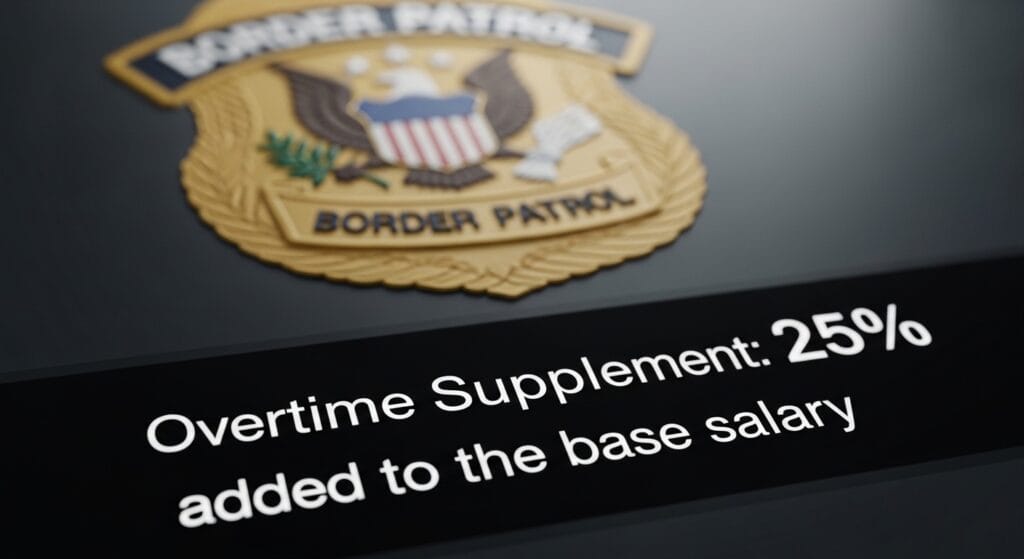
After locality pay is applied, the Border Patrol Agent Pay Reform Act (BPRA) adds another 25% on top. This is the number most job seekers miss entirely.
The 2026 Formula:
(GL Base Pay + Locality Adjustment) × 1.25 = Real Annual Salary
A GL-7 agent in a Rest of U.S. locality with a $51,440 raw base receives approximately $58,688 after locality adjustment, then $73,360 after the BPRA supplement. That’s the actual number to budget around—not the $51,440 on the pay table.
The 25% Bonus: Understanding AUO Pay
The term “AUO” (Administratively Uncontrollable Overtime) was the historical predecessor to the current system. For clarity: the operative legal authority today is the Border Patrol Agent Pay Reform Act (BPRA), signed into law to permanently codify the overtime structure that had existed informally for decades.
Agents in the field confirm that BPRA overtime is a guaranteed income mechanism—not a bonus subject to budget cycles or supervisor discretion.
Here is how it works in practical terms:
The Level 1 Election: Agents elect “Level 1” status, committing to a 50-hour workweek (ten-hour days, five days per week). This is the standard working schedule for Border Patrol. In exchange, agents receive an automatic 25% salary supplement calculated on their locality-adjusted base pay.
Why almost every agent takes it: CBP recruitment data for 2026 confirms that approximately 95% of all active agents operate under Level 1. Declining this election is financially punitive—you would be doing the same job for 20% less pay. There is no functional opt-out for operational agents.
The retirement multiplier: This is the most underappreciated aspect of the BPRA supplement. Standard federal overtime is generally excluded from your retirement “High-3” calculation. The BPRA supplement is included. Your High-3—the average of your three highest consecutive salary years—is the foundation of your pension calculation. An agent whose base + locality is $90,000 at GL-12 has a pensionable income of $112,500 because of BPRA. Over a 25-year career, this difference adds thousands of dollars to every annual retirement check, for life.
The practical impact on USAJOBS listings: Most customs border protection jobs (CBPOs) at ports of entry receive double-time overtime under different authority; Border Patrol Agents in green uniforms receive the flat 25% BPRA supplement instead. The CBPO listings on USAJOBS may look similar at the GL-5/7 level, but the overtime calculation and structure differ significantly. Never compare postings without accounting for each position’s specific overtime authority.
Career Ladder: Year-by-Year Pay Progression
One of Border Patrol’s most compelling structural advantages is its non-competitive promotion ladder. Agents don’t compete against their peers for promotions—advancement is tied to time-in-grade and satisfactory performance. As long as you do your job, you advance.
| Time in Service | Grade | Real Income (Rest of U.S.)* |
|---|---|---|
| Year 1 (Rookie / Academy) | GL-7 | $64,000 – $75,000 |
| Year 2 | GL-9 | $71,000 – $84,000 |
| Year 3 | GS-11 | $85,000 – $101,000 |
| Year 4 (Journeyman) | GS-12 | $102,000 – $120,000 |
All figures include the 25% BPRA Level 1 supplement and Rest of U.S. locality pay. Agents in high-cost areas earn significantly more.
Reaching GS-12—the top of the non-supervisory career ladder—in four years is among the fastest progressions in all of federal service. By comparison, many GS positions require six to eight years to reach GS-12 through competitive processes. The Border Patrol ladder is guaranteed.
Agents who pursue supervisory roles (Border Patrol Agent Supervisor, GS-13) or headquarters positions can continue advancing beyond GS-12, with salaries in high-cost localities regularly exceeding $170,000.
Salary by Location: The Highest Paying Sectors
Here is the truth the recruiting brochures don’t emphasize: the highest-paid Border Patrol agents don’t work the Southern Border. The Northern Border and coastal sectors sit in metropolitan federal pay localities that can add 30–46% above the base GL salary—before the BPRA multiplier is applied.
| Rank | Sector / Location | Locality Bump | Real Income (GS-12, Year 4+) |
|---|---|---|---|
| 1 | San Francisco Bay Area Stations, CA | ~46% | $145,000+ |
| 2 | San Diego Sector, CA | ~35% | $135,000+ |
| 3 | Blaine Sector, WA (Seattle locality) | ~31% | $131,000+ |
| 4 | Detroit Sector, MI | ~30% | $130,000+ |
| 5 | Buffalo Sector, NY | ~23% | $124,000+ |
Southern Border Reality Check: Most of the Texas and Arizona border falls under “Rest of U.S.” locality (approximately 16.82% above raw base). While that produces lower gross numbers than San Diego, the cost of living in Del Rio, TX or Douglas, AZ is dramatically lower than San Diego or Seattle. An agent earning $112,500 in Laredo often has more purchasing power than an agent earning $130,000 in Seattle.
The border patrol salary Texas listings often include the extra $10,000 hard-to-fill incentive because stations like Big Bend and Presidio are extremely remote and difficult to staff. That bonus, combined with low housing costs, can accelerate savings goals considerably for financially motivated recruits.
The $30,000 Recruitment Bonus (2026)
CBP recruitment data for 2026 highlights a massive push to fill thousands of vacant agent positions across all sectors. The agency has structured its incentive package in tiers:
Standard New Hire Bonus: $20,000
All new Border Patrol Agents hired in 2026 are eligible for a $20,000 recruitment incentive, paid in two installments:
- $10,000 upon graduation from the Border Patrol Academy (Artesia, NM)
- $10,000 after completing three years of continuous service
Hard-to-Fill Location Bonus: +$10,000
An additional $10,000 is available to agents who accept assignment to designated “priority” stations. These are generally remote, under-staffed locations far from major metropolitan areas. Current priority stations include Sierra Blanca, Presidio, Sanderson, and Comstock in Texas; Lordsburg in New Mexico; and Ajo in Arizona.
Retention Incentives: Up to 25% of Base Pay Per Year
Beyond the initial bonuses, certain remote and high-hardship locations offer annual retention incentives worth up to 25% of an agent’s base salary for each year they remain. These are not guaranteed and are subject to annual appropriations, but they represent a significant financial upside for agents willing to commit long-term to difficult stations.
Total First-Year Financial Picture (Presidio, TX Example):
An agent entering at GL-7 assigned to Presidio, TX would receive approximately $73,360 in salary (BPRA included), plus $10,000 upon academy graduation, plus eligibility for the hard-to-fill location bonus—putting total Year 1 compensation well above $83,000, with another $20,000 in delayed bonuses still coming.
The “6c” Retirement: Retire Before Your Kids Graduate College
This is the benefit that experienced agents cite as the true reason to stay. Border Patrol falls under the FERS 6(c) Special Category Retirement—the same retirement system used by FBI agents, DEA agents, and federal firefighters. It is categorically different from regular federal employment.
The retirement formula:
- 1.7% of your High-3 average salary for each of the first 20 years of service
- 1.0% of your High-3 average salary for each year beyond 20
Eligibility thresholds:
- Retire at any age with 25 years of service
- Retire at age 50 with a minimum of 20 years of service
An agent who enters at age 22 can retire at 47 with 25 years of service and a full, unreduced pension for life.
The FERS Bridge Supplement: Agents who retire before age 62 receive a monthly “bridge supplement” paid by the government—approximately $1,500 to $2,000 per month—designed to replicate Social Security income until the agent becomes eligible to collect real Social Security. This supplement continues until age 62 and is not reduced by outside employment.
Pension Example: A GS-12 journeyman agent with a High-3 average of $112,500 who retires after 25 years:
- Years 1–20: 20 × 1.7% = 34%
- Years 21–25: 5 × 1.0% = 5%
- Total: 39% of $112,500 = $43,875/year, indexed for inflation, for life
Combined with the bridge supplement and Thrift Savings Plan (TSP) contributions, a disciplined agent can retire at 47 with total income exceeding $65,000 annually in retirement.
Frequently Asked Questions
Is the polygraph hard to pass?
The polygraph is the single biggest obstacle in the Border Patrol hiring process—not the physical fitness test, not the background investigation, not the written exam. Data from the hiring pipeline suggests approximately 60–65% of applicants fail or are disqualified during the polygraph phase. This is the #1 reason otherwise qualified candidates are rejected.
The exam covers drug use, theft, associations with criminal organizations, and other conduct issues. The standard advice from agents who passed: be radically, completely honest about everything—past drug use, petty theft as a teenager, anything. Examiners are trained to detect deception and minimization. A minor past transgression disclosed honestly is almost always survivable. The same transgression discovered through deception is typically disqualifying.
Do I get paid during academy training?
Yes. You are a federal employee from your first day. From the moment you begin training at the Border Patrol Academy in Artesia, New Mexico—an approximately six-month residential program—you are earning your full GL-5 or GL-7 salary. Housing and meals at the academy are provided. Most recruits arrive with no debt accumulated during training and their first $10,000 bonus already processing upon graduation.
Can I choose my duty station?
You can express preferences, but CBP retains final assignment authority based on operational needs. In practice, the agency’s most critical staffing shortages are in remote South Texas and southern Arizona sectors, which is why the $10,000 hard-to-fill bonus exists to incentivize voluntary placement there. Agents who are willing to accept remote stations often find the financial package compelling enough to offset the isolation. Transfers to preferred locations become more realistic after three to five years of service and are typically granted based on seniority and operational availability.
What are the age limits?
Candidates must be referred for selection before their 40th birthday. This is a statutory requirement for 6(c) law enforcement positions, ensuring agents can complete a full 20-year career before mandatory retirement age. Veterans and candidates with prior federal civilian law enforcement experience (CBP Officer, Bureau of Prisons, TSA, etc.) may qualify for age waivers and should check directly with CBP human resources for their specific circumstances.
Do I need a college degree?
No. Border Patrol is one of the few federal law enforcement careers that does not require a bachelor’s degree. Candidates can qualify at GL-5 with one year of general work experience—retail, construction, military service, or essentially any full-time employment counts. A bachelor’s degree or one year of specialized experience qualifies at GL-7, the higher starting grade. Prior law enforcement experience, military background, or bilingual proficiency in Spanish can accelerate both hiring and initial grade placement.
The Honest Assessment: What the Salary Is Compensating For
The compensation structure exists for a reason, and transparency demands that it be stated plainly.
Border Patrol is a rotating-shift, remote-deployment, high-attrition career. Agents work overnight “mids” on a regular rotation. Many stations are 90+ minutes from the nearest hospital, full-service grocery store, or airport. The work involves human trafficking interdiction, migrant distress calls in extreme temperatures, cartel surveillance activity, and humanitarian encounters that carry significant psychological weight.
The 25% BPRA supplement is not a bonus for doing something extra. It is structured compensation for a 50-hour workweek in conditions that many Americans would find genuinely difficult to sustain. Attrition during the academy runs near 10%. Many agents leave within five years due to burnout, family strain, or location hardship.
None of that is a reason not to serve. Tens of thousands of agents have built honorable, financially secure careers in Border Patrol. But no salary guide serves you well by pretending the compensation exists in a vacuum. The money is real. So is the sacrifice.
If you are drawn to the mission—protecting the border, enforcing immigration law, working in a team-based law enforcement environment—the 2026 compensation package is genuinely competitive with most private-sector careers that require equivalent physical and professional demands. The retirement structure is exceptional by any measure.
Data Methodology
The salary figures in this guide are derived from the 2026 OPM GL and GS pay tables as projected from 2025 actuals, incorporating the standard federal pay increase. Locality pay percentages reflect the official OPM Locality Pay Area tables. BPRA Level 1 calculations apply the statutory 25% supplement to locality-adjusted base pay as specified under the Border Patrol Agent Pay Reform Act. Career ladder timelines reflect standard non-competitive promotion schedules under CBP policy.
Recruitment bonus figures are drawn from CBP official vacancy announcements and agency recruitment materials published through early 2026. Retirement calculations use the FERS Special Category (6c) formula at statutory rates. All figures represent estimates based on publicly available federal compensation data; individual salaries vary based on step, locality, bonus eligibility, and TSP elections. Candidates should verify current figures at usajobs.gov and cbp.gov/careers.
“If you are looking for Government & USPS jobs, check out our guides on [USPS PSE Clerk] and [TSA Officer ].
CBP (Customs and Border Protection)