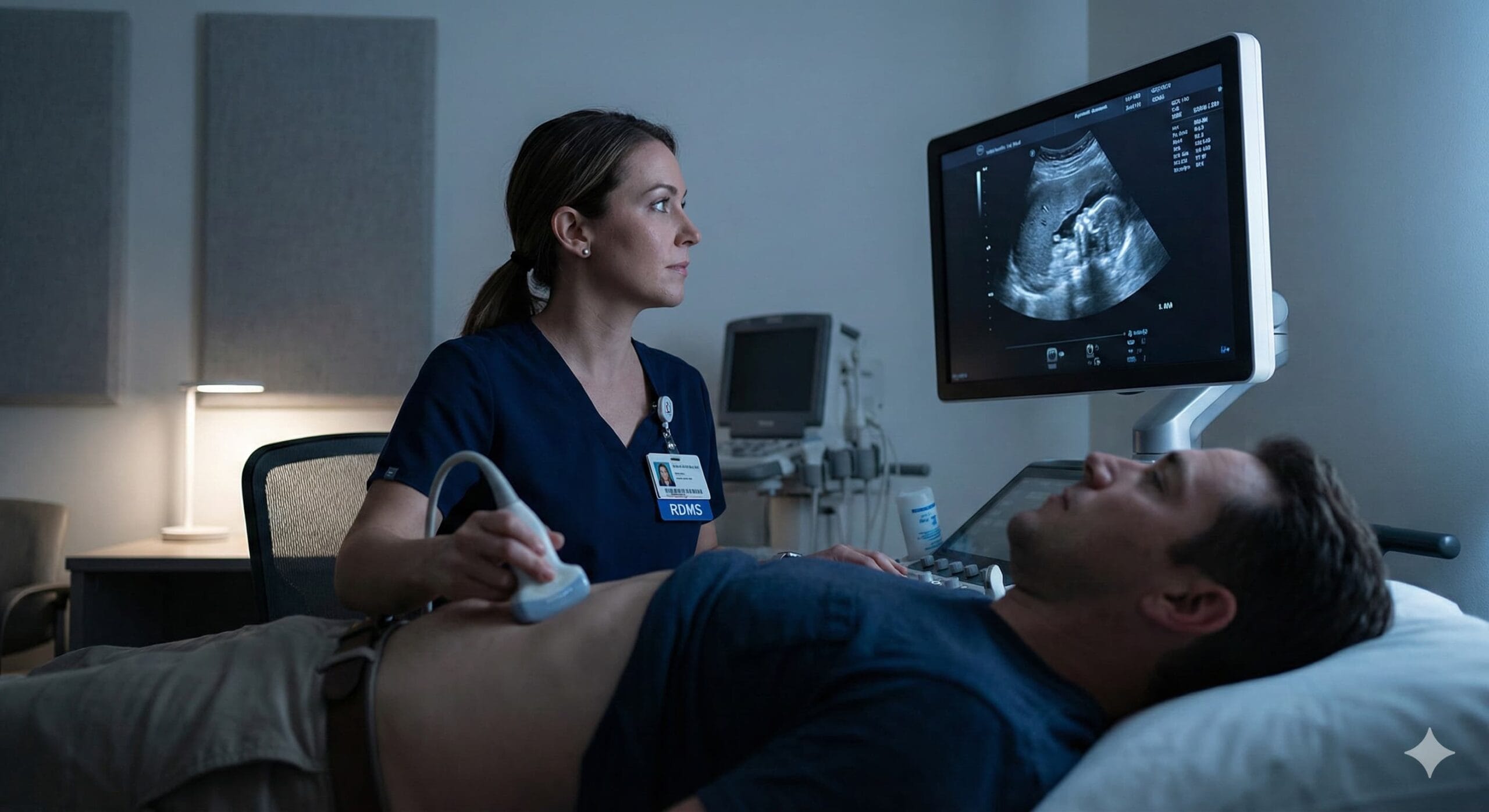
Diagnostic Medical Sonographer salary 2026: Earn $45–$60/hr
Diagnostic Medical Sonographer salary
The sonography field in 2026 is not a single career—it’s a spectrum. Where you land on that spectrum depends almost entirely on which specialty you choose and whether you hold an ARDMS credential. Those two variables explain the difference between a $73,000 general ultrasound position and a $125,000 cardiac role at a major hospital system.
Quick Sonographer Salary Summary (2026 Update)
Here are the headline figures by specialty:
- Cardiac (Echo): $93,600 – $124,800 per year ($45–$60/hr)
- Vascular: $87,300 – $114,400 per year ($42–$55/hr)
- Neuro/Pediatric: $83,200 – $108,100 per year ($40–$52/hr)
- OB/GYN: $79,000 – $99,800 per year ($38–$48/hr)
- General Ultrasound: $72,800 – $93,600 per year ($35–$45/hr)
Entry-level graduates with a fresh ARDMS credential typically start around $70,000. Unregistered technologists face a pay penalty of $5–$10 less per hour compared to credentialed peers.
Sonography Earnings Calculator
Paycheck Calculator
Calculate your Weekly, Monthly & Yearly Take-Home Pay
⚠️ These are estimates for a single filer using 2026 tax rates (IRS Rev. Proc. 2025-32). Results do not include local taxes, pre-tax deductions (401k, health insurance), or tax credits. Consult a tax professional for personalized advice.
Cardiac vs Vascular vs OB/GYN: Who Earns More?
Cardiac sonography sits at the top of the pay scale. Echocardiographers image the beating heart in real time, measuring chamber dimensions, valve function, and blood flow velocities. The work requires deep knowledge of cardiac physics and hemodynamics, and the clinical stakes are high—physicians make surgery and medication decisions based on these studies. That complexity and liability drive the premium. Experienced cardiac techs in high-demand markets regularly reach $60 per hour, particularly with on-call differentials factored in.
Vascular sonography ranks second. Vascular techs map arteries and veins throughout the body, performing carotid studies for stroke risk, lower extremity scans for deep vein thrombosis, and abdominal aorta surveillance for aneurysm. Demand for this specialty has grown steadily as the population ages and cardiovascular disease becomes more prevalent. Registered vascular technologists (RVT) in understaffed vascular labs carry strong negotiating leverage, and those who add a second credential push toward the top of the pay range.
OB/GYN sonography is the most popular specialty by job posting volume, and that popularity is part of what keeps the ceiling lower than cardiac or vascular. When many qualified practitioners compete for the same positions, employers have more leverage. Hospital-based OB sonographers earn solidly in the $79,000–$100,000 range, but boutique 3D/4D elective ultrasound studios—which attract applicants for lifestyle reasons—rarely match hospital compensation.
General ultrasound is where most careers begin. Abdominal scanning, thyroid imaging, breast ultrasound, and small parts studies are all covered under this umbrella. It is the baseline credential (ARDMS-AB) and the entry point into the profession. Many experienced general sonographers later add a cardiac or vascular registry to achieve a meaningful pay increase without changing employers.
Salary by State: Top Markets for Sonographers
Top 5 Highest-Paying States:
| Rank | State | Avg. Annual Salary |
|---|---|---|
| 1 | California | $114,000 – $135,000 |
| 2 | Hawaii | $105,000 – $120,000 |
| 3 | Washington | $103,000 – $118,000 |
| 4 | Oregon | $101,000 – $115,000 |
| 5 | Massachusetts | $95,000 – $110,000 |
Bottom 5 Lowest-Paying States:
| Rank | State | Avg. Annual Salary |
|---|---|---|
| 46 | West Virginia | $63,000 – $70,000 |
| 47 | South Dakota | $65,000 – $72,000 |
| 48 | Mississippi | $66,000 – $73,000 |
| 49 | Louisiana | $64,000 – $74,000 |
| 50 | Alabama | $60,000 – $68,000 |
California leads primarily because of the large Kaiser and Sutter health systems, where overtime and on-call pay compound significantly. The lowest-paying states reflect a mix of lower hospital budgets, rural pay scales, and in some markets, an oversupply of general-credential technologists.
The ARDMS Credential: Why It Matters
Every sonography salary conversation starts and ends with ARDMS certification. Legally, registration is not always required. Financially, it is. Unregistered technologists are frequently barred from hospital positions entirely and are limited to lower-paying outpatient settings. The pay gap—$5 to $10 less per hour—compounds to $10,000–$20,000 in lost annual income.
The path to credentialing runs through the SPI (Sonography Principles & Instrumentation) physics exam first, then a specialty exam such as AB (Abdomen) or AE (Adult Echo). Passing the SPI requires genuine competency in acoustic physics, Doppler principles, and image formation—not something that can be crammed without preparation.
Frequently Asked Questions
Is it hard to get into sonography school?
Yes. Accredited AAS programs typically receive three to eight applications per available seat. Most programs require prerequisite coursework in anatomy, physiology, and medical terminology before an application is considered. Strengthening a candidacy means earning strong grades in science courses and accumulating patient-contact experience in a healthcare role before applying.
Do I need to be good at physics?
You need to be comfortable with physics concepts at the algebra level. The SPI registry exam tests acoustic principles, transducer physics, the Doppler effect, attenuation, and basic hemodynamics. Students who struggled with high school physics should invest in serious preparation before attempting the exam. The concepts are learnable, but they require deliberate study.
What is the RSI risk in sonography?
High. Research indicates that up to 90% of sonographers experience work-related musculoskeletal disorders during their careers. Shoulder, wrist, and neck injuries are the most common, caused by applying sustained transducer pressure while reaching across patients for hours at a time. Repetitive strain injury is the primary reason experienced sonographers leave clinical practice early. Proper ergonomic technique, physical conditioning, and equipment advocacy are not optional—they are career longevity strategies.
Does an Associate degree pay the same as a Bachelor’s degree?
For direct clinical work, yes. Hospitals pay based on ARDMS credentials and experience, not degree level. A Bachelor’s degree adds value only in leadership roles, academic teaching, or commercial equipment sales. For clinical practice, the two-year AAS is the financially optimal path.
Data Methodology
Salary figures are drawn from 2026 national median compensation data based on ARDMS registry surveys and labor market reporting. Ranges reflect the 25th–75th percentile for credentialed practitioners. State figures represent averages across all employment settings and experience levels. Individual results will vary based on employer, location, experience, and shift differentials.
“If you are looking for Medical & Nursing jobs, check out our guides on [Pharmacy Technician] and [Surgical Technologist].”