Shipt Shopper Pay 2026: Earn Real $38/hr
Shipt Shopper Pay
If you’ve been exploring the gig economy, you’ve probably noticed that most platforms treat shoppers like interchangeable parts in a machine. Shipt is different — and in 2026, that difference is worth anywhere from $10,000 to $30,000 more per year for shoppers who understand why. This guide breaks down exactly how Shipt’s pay model works, what the Preferred Member program can do for your income, and how to build what veteran shoppers call their “book of business.”
Whether you’re brand new to grocery delivery or a seasoned Instacart driver wondering if the grass is greener, this is your complete salary picture.
Quick Shipt Salary Summary (2026 Update)
At a Glance — What Shipt Shoppers Actually Earn in 2026:
- Rookie / Part-Time Shoppers: $16.00 – $22.00/hr
- Veteran (Preferred Member Matched): $28.00 – $38.00/hr
- Holiday Surge (Thanksgiving/Christmas): $40.00 – $50.00/hr
- Base Pay Per Order: $6.00 – $18.00 (effort-based algorithm)
- Promo Pay Add-On: +$1.00 – +$10.00 per urgent order
- Tips: 100% to the shopper, always
- Shipt Earnings Floor Target: $16.00/hr (active time, most metros)
- Top “Pro” Shoppers (100+ Preferred Members): $50,000 – $100,000+/year
These aren’t aspirational numbers — they reflect a clear strategic split between shoppers who rely on the algorithm and shoppers who have replaced the algorithm entirely with loyal, high-tipping regulars.
Shipt Pay Calculator
Paycheck Calculator
Calculate your Weekly, Monthly & Yearly Take-Home Pay
⚠️ These are estimates for a single filer using 2026 tax rates (IRS Rev. Proc. 2025-32). Results do not include local taxes, pre-tax deductions (401k, health insurance), or tax credits. Consult a tax professional for personalized advice.
How Shipt Actually Pays You: The Effort-Based Model
Before diving into the Preferred Member strategy, it’s essential to understand what makes Shipt’s pay structure fundamentally different from competitors. Instacart uses a batch-pay model loosely tied to receipt totals. Shipt uses what insiders call the “V3 Effort-Based Algorithm” — a black box formula that estimates the actual work involved in each order.
The algorithm weighs three core factors: estimated drive time to the store and the customer’s home, estimated shop time based on item count and store layout complexity, and order difficulty factoring in special requests, heavy items, and multi-store runs. This produces a base pay ranging from $6.00 to $18.00 per order.
Here’s the critical nuance most new shoppers miss: Shipt does not show you the tip before you accept an order. You see only the base pay figure. This is the single biggest psychological adjustment shoppers make when transitioning from Instacart, where full payout (including tip) is visible upfront. On Shipt, you are making a trust-based decision — which is exactly why the Preferred Member system becomes so powerful. Once you know a customer tips 20% consistently, that uncertainty evaporates entirely.
The Promo Pay Opportunity
Orders that approach their delivery window unclaimed receive Promo Pay boosts — typically $1 to $10 added to the base rate. Some shoppers adopt a “Promo Hunter” strategy, waiting exclusively for these urgent, premium orders during Open Metro hours. It can yield strong short-term results, but Shipt monitors acceptance rate patterns and may deprioritize shoppers who consistently ignore non-promo orders. Think of Promo Pay as a bonus tool, not a primary strategy.
Building Your Business: Preferred Shoppers
This is the chapter that separates a Shipt side hustle from a Shipt career. Read it carefully.
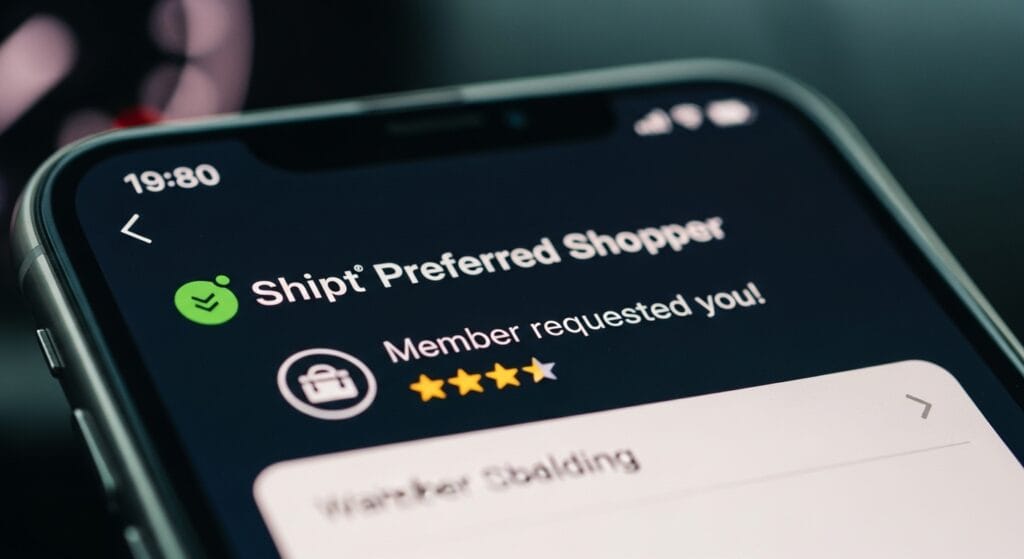
When you deliver a five-star order, the Shipt app asks your customer a simple question: “Would you like to make [Your Name] a Preferred Shopper?” If they say yes, something remarkable happens: the next time that customer places an order, you receive the offer first — even if you’re not currently on the schedule. You have effectively jumped the priority queue for that customer, permanently.
The implications compound over time. This isn’t about speed or volume the way Instacart is. This is about relationships. Veteran shoppers describe building their Preferred Member roster the same way a freelance consultant builds a client list — with intentionality, communication, and consistent delivery of value.
The Four-Step Preferred Member Flywheel
Step 1 — The Perfect First Impression: Your first order with any new customer is an audition. Send a friendly intro text when you arrive at the store (“Hi, I’m [Name] and I’m starting your order now! Any questions before I begin?”). This single message dramatically increases the likelihood of a five-star rating.
Step 2 — The Communication Standard: Veteran shoppers emphasize that communication is the #1 tip factor — more than speed, more than accuracy. Customers who feel informed tip more generously and prefer shoppers more readily. When an item is out of stock, don’t just substitute silently. Text a photo of the alternative and ask. This “white glove” standard is exactly why Shipt’s average tips exceed those on other grocery platforms.
Step 3 — The Five-Star Conversion: A perfect rating triggers the Preferred Shopper invitation. Some shoppers accelerate this by politely mentioning at drop-off: “Feel free to request me again anytime — I’d love to be your regular shopper!” It’s not pushy; it’s professional.
Step 4 — The Book of Business: Once you’ve accumulated 30, 50, or 100+ Preferred Members, you begin operating differently. You now have historical data on every customer. You know that the Williams family on Oak Street always tips $15 cash at the door. You know that the apartment complex on 5th Avenue orders weekly and tips 22% in-app. You can accept their orders confidently and — just as importantly — decline lower-value anonymous orders without financial anxiety.
The “Pro” Shopper Math
A veteran shopper with 100 Preferred Members operating in a market like Minneapolis or Miami can realistically earn $30,000 – $50,000/year part-time and $75,000 – $100,000+/year full-time. The math works because preferred orders allow shoppers to stack two deliveries per hour efficiently, both to customers they know tip well. The algorithm becomes a secondary tool rather than your primary income source.
This is the core philosophical difference from Instacart. On Instacart, you are always dependent on the platform’s batch distribution. On Shipt, experienced shoppers effectively build a parallel system within the app — one where they control who they serve and, by extension, what they earn.
Salary by State: Best Target Markets
Shipt’s footprint correlates directly with Target store density, which explains dramatic earnings differences across states. Here are the top five markets to maximize your income in 2026:
| Rank | State | Avg Hourly (Veteran) | Key Advantage |
|---|---|---|---|
| 🥇 1 | Minnesota (MN) | $35 – $40/hr | Target HQ state; highest store density + most loyal Shipt user base in the country |
| 🥈 2 | Florida (FL) | $32 – $38/hr | Large elderly population deeply values personal service and tips generously |
| 🥉 3 | Texas (TX) | $30 – $36/hr | Massive H-E-B + Target volume in DFW and Houston; high order frequency |
| 4 | New York (NY) | $30 – $35/hr | NYC Metro suburbs (Long Island, Westchester) offer premium tips + high base pay |
| 5 | Michigan (MI) | $28 – $34/hr | Meijer partnership drives large family orders = consistently higher tips per order |
Lowest-Paying Markets to Approach with Caution: States where Walmart’s Spark program dominates (Arkansas, Mississippi, Oklahoma) offer thin Shipt order volume. Rural areas suffer because the effort-based algorithm underestimates long drive times. College towns produce high order frequency but notoriously low tip rates from student customers on small Target hauls.
The Target Prepaid Reality
Because Target acquired Shipt in 2017, approximately 60% of your orders will be “Target Prepaid” — meaning the customer ordered through Target.com rather than the Shipt app directly. For shoppers, this has a distinct operational flavor.
The upside is logistical speed. No checkout line. You scan a barcode on your phone at a designated Shipt station and bag items at your vehicle. During peak hours, this efficiency allows you to complete more orders per shift than on any competing platform.
The downside is tip timing. Target Prepaid customers cannot tip at the time of ordering — they must return to the app post-delivery. This introduces the uncertainty that Instacart shoppers find unsettling. The community consensus is that roughly 60–70% of Target Prepaid customers do eventually tip, but it may arrive hours or even the following day. Managing cash flow expectations is a practical reality of the Shipt experience.
Frequently Asked Questions
Shipt vs Instacart: Which Is Better in 2026?
The honest answer is: it depends on your working style and timeline. Instacart shows you the full payout (tip included) before you accept a batch, making it better for shoppers who need predictable, immediate income. Shipt hides tips upfront but offers the Preferred Member program — a relationship-building system with no equivalent on Instacart. If you’re willing to invest 4–6 weeks building your customer roster, Shipt’s ceiling is significantly higher. Many experienced gig workers run both platforms simultaneously: Shipt for their preferred regulars, Instacart to fill scheduling gaps.
Do I Need a Special Card to Pay for Groceries?
For standard Shipt orders, you are provided a Shipt Visa Card to pay at checkout — you are never out-of-pocket for groceries. For Target Prepaid and Meijer Prepaid orders, no card is needed at all. You simply scan a barcode on your phone at the store’s designated station and the order is handled digitally. You will, however, want to track your mileage meticulously for tax deductions — gas and vehicle wear are your primary out-of-pocket costs as an independent contractor.
How Do I Ace the Shipt Video Interview?
Unlike virtually every other gig platform, Shipt requires applicants to record video responses to three behavioral questions — a process that feels closer to a service industry job interview than a standard app sign-up. Common questions include scenarios like handling a missing item or managing a difficult substitution. The community’s top tips: smile naturally, ensure good lighting, and emphasize communication above everything else. Shipt is selecting for shoppers who will represent their brand well. Don’t just describe what you’d do — demonstrate warmth and professionalism in how you deliver your answer. Speak to the camera the way you’d speak to a valued customer. Authenticity matters far more than perfect scripting.
Do I Have to Wear the Shipt Uniform?
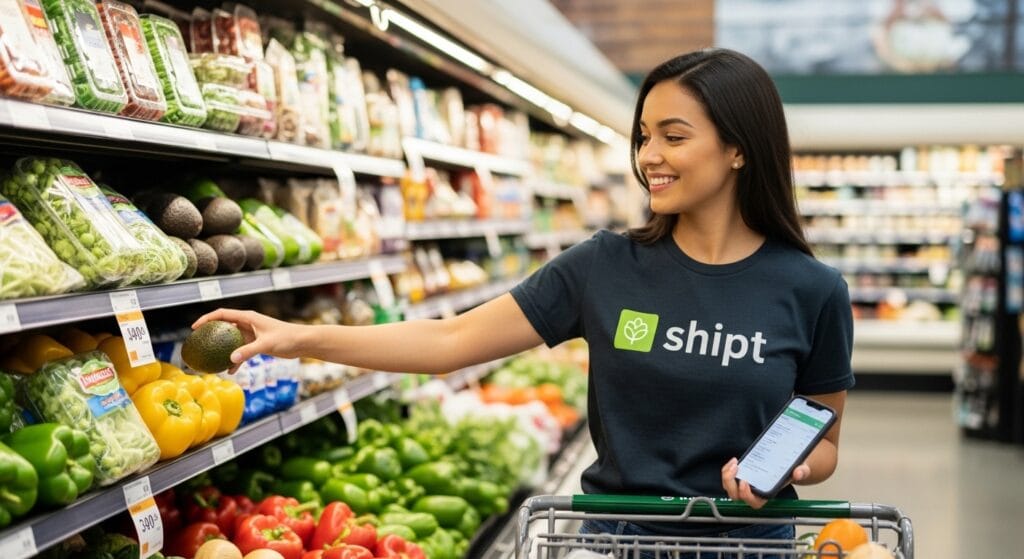
No. You are an independent contractor, and while Shipt sends new shoppers a branded green shirt, wearing it is entirely optional. The majority of veteran shoppers don’t wear it. What matters is that you’re presentable, professional, and — on those warmer delivery days — wearing whatever is comfortable enough to help you maintain the energy for excellent customer service.
When Do I Get Paid?
Shipt pays weekly via direct deposit, with earnings from the previous week deposited every Friday. Tips added by customers after delivery are included in your weekly payment, which is why some weeks feel more unpredictable than others if you’re heavily reliant on post-delivery tipping from Target Prepaid customers.
The Bottom Line: Is Shipt Worth It in 2026?
For shoppers who approach it transactionally — show up, grab orders, deliver, repeat — Shipt is a solid $16–$22/hr gig. Better than most, not spectacular. But that misses the point entirely.
Shipt’s real value proposition is structural: it is the only major gig platform that actively helps you build a clientele. The Preferred Member program transforms an anonymous gig into something resembling a service business, and the shoppers who embrace that philosophy are the ones earning $30–$50/hr and treating Shipt as a genuine career rather than a stopgap.
The investment is time and consistency. The return is income stability, customer relationships, and freedom from the algorithm — which, in the gig economy of 2026, is genuinely rare.
Data Methodology
The earnings figures and market data presented in this guide are derived from a synthesis of the following sources: Shipt’s publicly available shopper pay documentation and community forums; aggregated earnings reports from active shopper communities on Reddit (r/ShiptShoppers) and Facebook Groups with 10,000+ members; gig economy compensation research published through Q1 2026; and platform-level data cross-referenced with Target’s 2024 annual report on subsidiary operations. Hourly figures represent active earning time and do not account for unpaid time spent waiting for orders, commuting to zones, or fuel costs. Individual earnings will vary significantly by market, shift timing, order acceptance strategy, and Preferred Member roster size. All figures should be treated as directional benchmarks rather than guaranteed income projections.
Last Updated: January 2026 | SalaryClear Gig Economy Research Division
“If you are looking for Gig Economy jobs, check out our guides on [Grubhub Driver] and [Walmart Spark].”