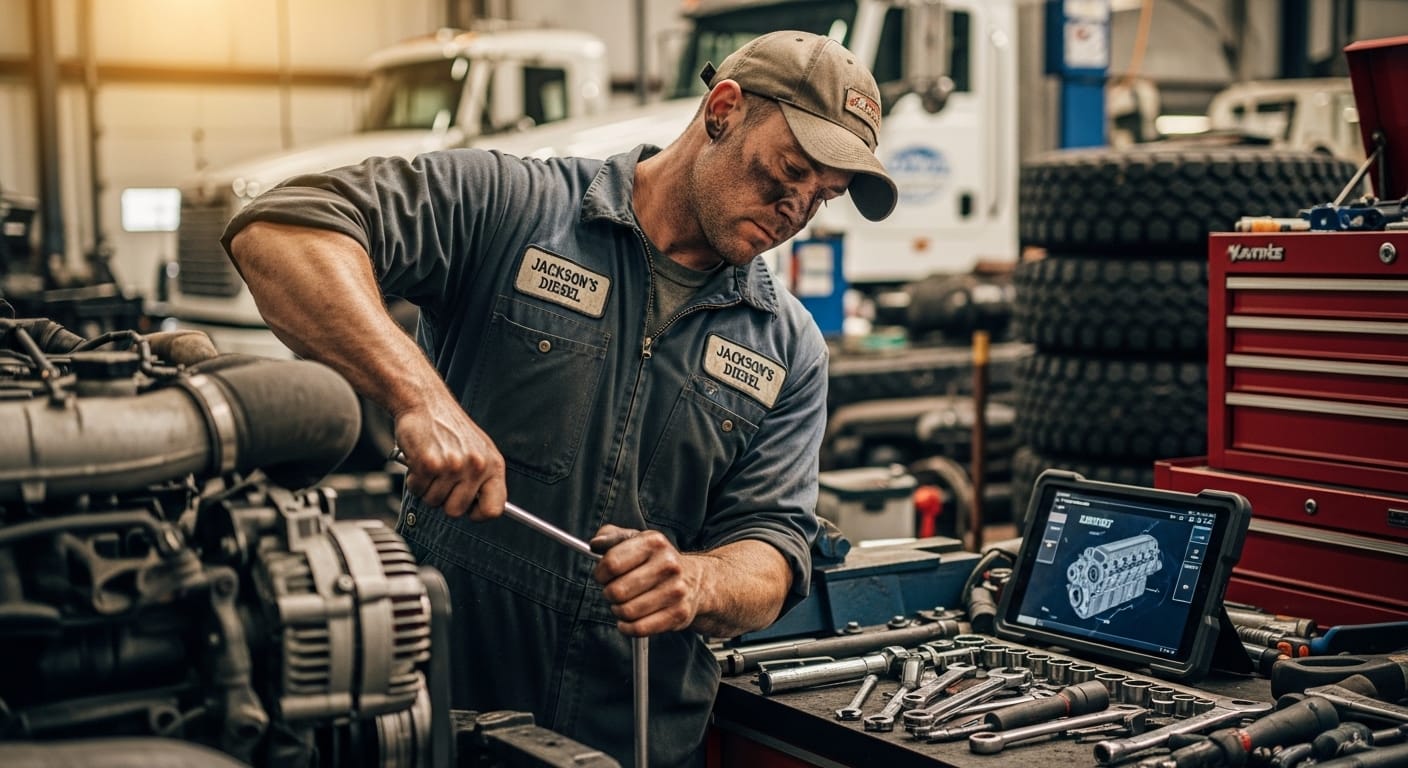
Diesel Mechanic Salary 2026: $28/hr to $100k+
Diesel Mechanic Salary
There’s a moment every diesel tech knows. It’s 11 PM, you’re elbow-deep in a broken turbo on a Peterbilt that’s supposed to be hauling refrigerated goods across three states by morning. Your knuckles are bleeding from where the wrench slipped, your knees ache from kneeling on asphalt, and the dispatcher is calling every 20 minutes. Then the engine turns over. That low, authoritative growl fills the shop. And for a minute, everything is right with the world.
That satisfaction doesn’t pay the mortgage by itself — but in 2026, the paycheck is finally starting to catch up.
The Answer Box: What Diesel Techs Actually Earn in 2026
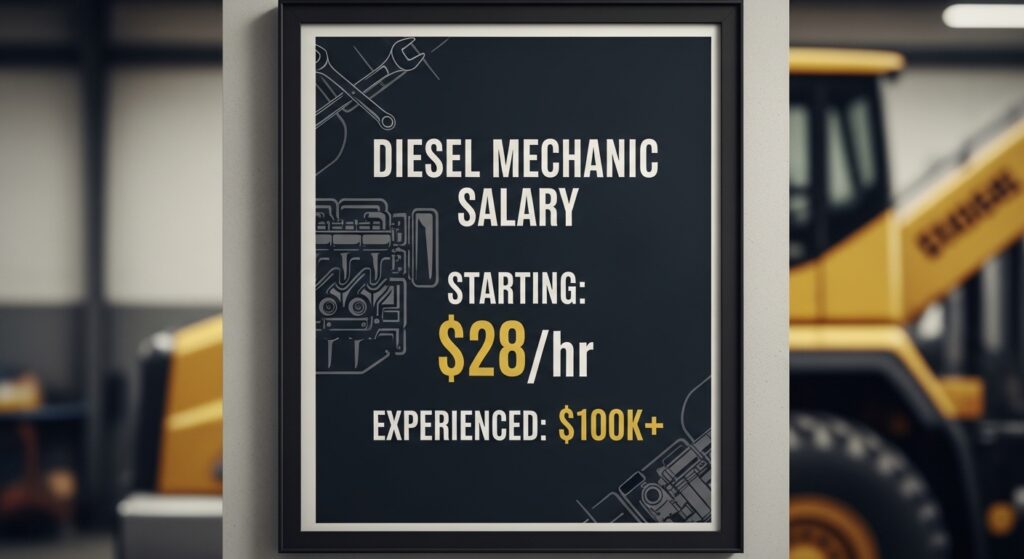
If you came here for a straight answer, here it is: the median diesel mechanic salary in 2026 is approximately $58,970 per year, or about $28.35 per hour, based on the Bureau of Labor Statistics OES data (code 49-3031, May 2024 release — the most current official benchmark available for 2026 planning). Entry-level techs are pulling around $39,000, and the top tier — your master techs, your ASE-certified specialists, the guys who’ve been turning wrenches for 15+ years — are clearing $82,430 and above, with many breaking six figures when you factor in overtime, fleet bonuses, and specialty premiums.
The short version: diesel pays well, pays better than it used to, and pays more than most people working with their hands in a shop expect.
| Role / Tier | Percentile | Annual Salary | Hourly Wage |
|---|---|---|---|
| Lube Tech / Helper | Bottom 10% | $39,020 | ~$18.76 |
| Diesel Technician | Median (50%) | $58,970 | $28.35 |
| Master Tech (ASE) | Top 90% | $82,430+ | $39.63+ |
Source: BLS OES 49-3031, May 2024. High-demand sectors like Marine Diesel and Power Generation frequently push master techs past $100,000 with overtime.
Lube Tech to Master Tech: The Experience Ladder
Nobody starts at the top. The diesel tech career path is one of the most structured, merit-based progressions in the skilled trades — and understanding the ladder is how you plan your earnings, not just hope for them.
The ASE (National Institute for Automotive Service Excellence) certification system is the recognized standard for this trade. Think of it as your college degree, except you earn it with a torque wrench and a scan tool instead of a term paper. The diesel-relevant ASE certifications include T1 through T8 for Medium/Heavy Truck (covering gasoline engines, diesel engines, drive train, brakes, suspension, electrical, HVAC, and preventative maintenance). Stack enough of those, and you get the title of ASE Master Medium/Heavy Truck Technician — and that credential meaningfully changes what employers put on the table.
Here’s how the experience and certification ladder translates to your paycheck:
| Experience Level | ASE Status | Typical Annual Salary | What You’re Doing |
|---|---|---|---|
| Entry / Lube Tech (0–2 years) | None or A-Series student | $35,000–$45,000 | Oil changes, filter swaps, tire work, learning the shop |
| Mid-Level Tech (3–7 years) | 2–4 ASE certs (T4, T5, T6) | $50,000–$65,000 | Brakes, suspension, diagnostics, some engine work |
| Senior / Master Tech (8–15+ years) | ASE Master Certified | $70,000–$100,000+ | Full engine rebuilds, advanced diagnostics, warranty work, fleet oversight |
The jump from mid-level to senior isn’t just about time on the clock — it’s about the certifications you stack while you’re there. A T2 (Diesel Engines) and T8 (Preventative Maintenance) combined will do more for your hourly rate than three extra years of doing the same brake jobs. Test prep isn’t glamorous, but neither is leaving $15,000 a year on the table.
One more thing about experience: specialty knowledge multiplies your earning power in ways the BLS median doesn’t fully capture. Master techs who cross-train into emissions compliance, DEF/SCR systems, or advanced electronic diagnostics (think Cummins INSITE or Detroit Diesel Diagnostic Link) can command premium rates because that knowledge is genuinely rare and in genuinely high demand.
Calculate Your Flat-Rate Earnings
“Calculate your flat-rate earnings based on your hourly rate and billed hours:”
Paycheck Calculator
Calculate your Weekly, Monthly & Yearly Take-Home Pay
⚠️ These are estimates for a single filer using 2026 tax rates (IRS Rev. Proc. 2025-32). Results do not include local taxes, pre-tax deductions (401k, health insurance), or tax credits. Consult a tax professional for personalized advice.
Best States for Diesel Techs: Where the Money Is
Not all zip codes are created equal in this trade. Geography affects your paycheck for reasons that make real mechanical sense — island economies that run entirely on imported goods, coastal states with active maritime industries, and resource extraction states where diesel keeps the entire supply chain alive.
| State | Estimated Mean Annual Wage | Primary Driver |
|---|---|---|
| Hawaii | $79,010+ | Import-heavy island logistics; everything runs on diesel |
| Washington | $76,940+ | Maritime industry + Pacific Northwest logging |
| Alaska | $73,180+ | Mining, oil & gas field premiums |
| Maryland | $71,620+ | Port of Baltimore; major East Coast logistics hub |
| California | $70,650+ | Strict CARB emissions compliance creates specialty demand |
If you’re in the Midwest or Southeast and the wages feel frustrating, there’s a practical calculus here. Cost of living in Hawaii will eat into that $79K number fast. Washington and Maryland, on the other hand, offer a stronger real-dollar advantage when you factor in housing costs versus California. If you’re willing to relocate and are early in your career, Washington state is arguably the best combination of high wages and reasonable cost of living in this table.
Alaska deserves a specific mention for the adventurous: field techs working in oil and gas support — driving out to remote locations to repair heavy equipment — can earn significantly more than the state average, but the working conditions are exactly what you’d expect from a January in the Aleutians.
Diesel vs. Auto Mechanic: Why Diesel Pays ~20% More
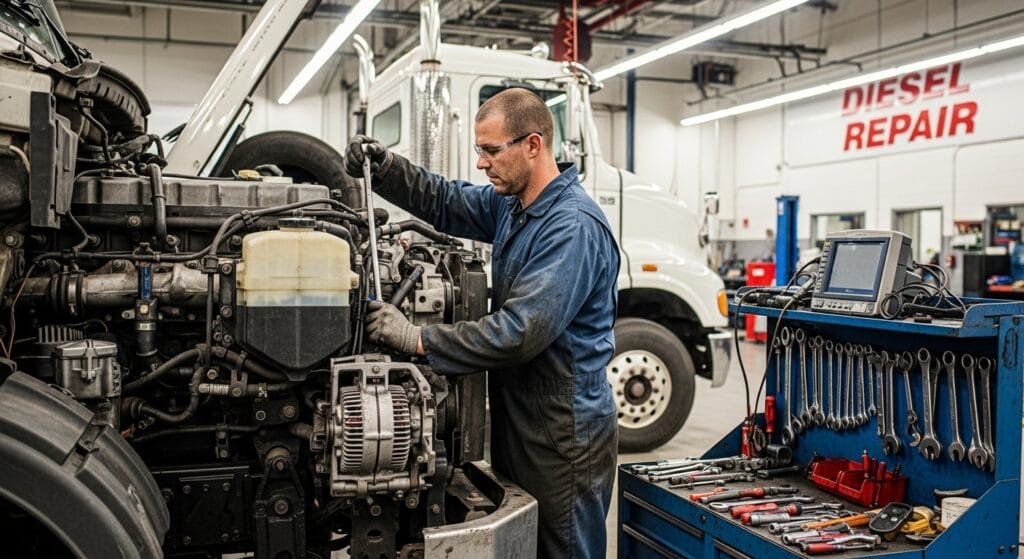
This comes up constantly, and the answer isn’t complicated: diesel is infrastructure. When a semi truck breaks down, freight stops moving. When your neighbor’s Honda Civic needs a water pump, life continues. That criticality — that leverage — is priced into diesel wages at every level of the market.
| Trade | Median Annual Salary | Primary Pain Point |
|---|---|---|
| Auto Tech (OES 49-3023) | $49,670 | Flat-rate stress (paid by the job, not the hour) |
| Diesel Tech (OES 49-3031) | $58,970 | Physicality (heavy parts, outdoor breakdowns) |
| Heavy Equipment Tech (OES 49-3042) | $62,740 | Field conditions (remote mining/construction sites) |
That $9,300 annual gap between auto and diesel isn’t accidental — it reflects the physical demands, the specialized knowledge base, and the fact that diesel technicians are dealing with Class 6, 7, and 8 vehicles where a single diagnostic job might bill $800–$1,200. The flat-rate system common in auto shops is also a significant quality-of-life issue: you’re paid per completed job, which means a tricky diagnosis where you spend three hours finding a ghost fault pays the same as a straightforward brake job. Many diesel shops — particularly fleet accounts — pay by the hour, which provides more predictable income.
Heavy Equipment (bulldozers, excavators, mining haul trucks) is worth flagging for any diesel tech in their career planning. The skill overlap is enormous — you’re still working diesel engines and hydraulic systems — but the remote, physically demanding nature of the work commands a premium. If you’ve got 5+ years on trucks and are comfortable working field conditions, moving into heavy equipment is the clearest path to the upper end of the skilled trades pay scale.
FAQ
Is a diesel mechanic career hard on your body?
Yes — more so than automotive, and significantly more than the job postings tend to advertise. Semi-truck brake drums run around 100 lbs each. A cylinder head can top 200 lbs. You’re not always working in a clean shop with a lift; roadside calls mean you’re laying under a loaded trailer in the snow or kneeling in a gravel lot off a highway exit. Chemical exposure is daily: diesel soot, hydraulic fluid, and industrial solvents are part of the environment. The trade takes a physical toll, and smart techs plan for it — ergonomic habits, proper lifting technique, and building your shop tools so you’re not muscle-powering things that a chain hoist should be handling.
What’s the real deal with the tool bill?
This is the part career guides tend to gloss over, so let’s be direct about it. The Snap-on truck is a beautiful and financially dangerous thing. Those red rolling cabinets and lifetime-warranty ratchets are genuinely excellent tools — and they will cost you more than a used car if you’re not careful. A new diesel tech typically needs $3,000–$5,000 in personal hand tools to be functional on day one; that’s your wrenches, sockets, torque wrenches, pliers, and basic diagnostic tools. The shop generally provides the heavy infrastructure: floor jacks, engine hoists, alignment equipment, and the proprietary diagnostic computers.
The trap is the tool truck payment plan. A lot of young techs end up with $400–$600 per month in tool truck payments by year three, which effectively cancels out a good chunk of their wage gains. The practical advice from experienced techs: buy quality used tools from retiring mechanics, be selective about what goes on the payment plan, and treat major tool purchases like any other financial decision rather than an impulse buy when the truck pulls up on a Tuesday.
On the positive side of this equation: most dealerships and larger fleet shops now offer tool allowances as a retention incentive, typically $200–$400 per month or a dedicated tool account credit. When you’re comparing job offers, that allowance is real money — treat it that way in your evaluation.
Is diesel recession-proof?
More resistant than most trades, yes. Freight doesn’t stop moving in a recession — if anything, fleet operators defer replacement purchases and keep aging trucks running longer, which means more repair work. The 2008–2009 cycle and COVID disruptions both demonstrated that diesel technicians saw lighter layoff impacts than manufacturing workers or white-collar employees. It’s not bulletproof, but the infrastructure dependency of the industry provides a genuine floor.
How long does it take to become a Master Tech?
Realistically, 8–12 years to hit full ASE Master certification with the experience to back it up credibly. Some accelerated paths exist through manufacturer-specific training programs (Cummins, Detroit Diesel, Volvo all have structured pipelines), and military diesel MOS experience can compress the timeline significantly for veterans entering the civilian workforce.
Sources
All salary data in this article is sourced from the U.S. Bureau of Labor Statistics, Occupational Employment and Wage Statistics (OEWS) program, OES Code 49-3031 (Bus and Truck Mechanics and Diesel Engine Specialists), May 2024 release — the most current official data available for 2026 workforce planning.
State wage data draws from the same BLS state-level OEWS files. Trade comparison figures reference OES 49-3023 (Automotive Service Technicians) and OES 49-3042 (Mobile Heavy Equipment Mechanics) from the same release.
For certification requirements and ASE exam structure, see the National Institute for Automotive Service Excellence at ase.com.
The diesel tech trade is not a glamour career. The trucks are heavy, the hours can be brutal, and the Snap-on debt is real. But the work matters in a way that’s hard to replicate behind a desk — when that engine fires up and a driver can get back on the road, there’s a direct, tangible chain of value that runs from your hands to the supply chain to the grocery store shelf. In 2026, the market is starting to compensate that value more appropriately. Dirty hands, increasingly, means clean money.
If you are looking for Trades & Blue Collar jobs, check out our guides on [Heavy Equipment Operator] and [CDL Truck Driver].