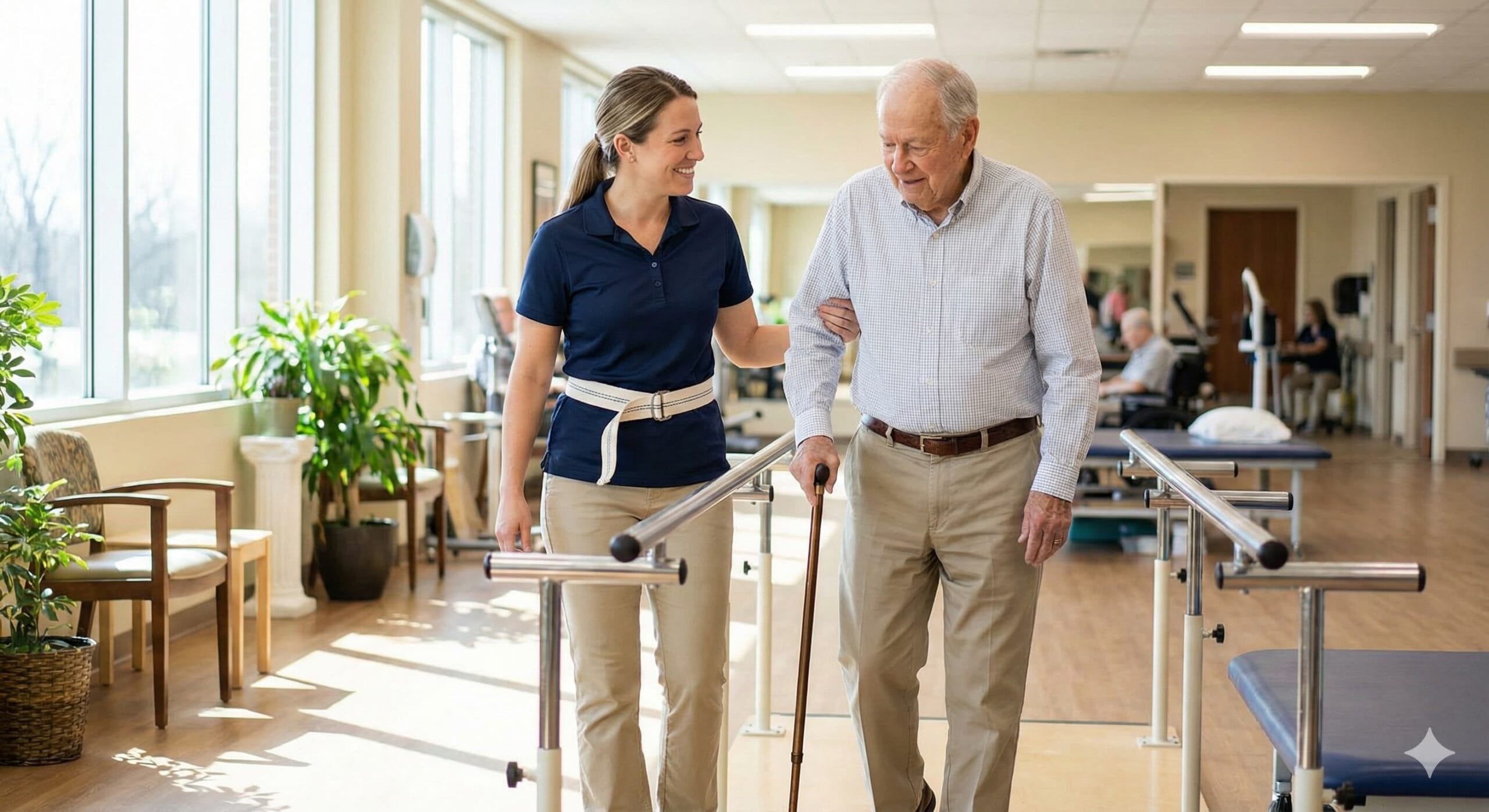
Physical Therapist Assistant Salary 2026: Real $48/hr Home Health Pay
Physical Therapist Assistant Salary
Introduction: The Smarter Path Into Healthcare
If you want a healthcare career that pays real money, demands real physical effort, and doesn’t require you to spend a decade in school racking up six figures of student debt, the Physical Therapist Assistant (PTA) profession deserves your serious attention in 2026.
Here’s the core argument: a two-year Associate degree from a community college costing $5,000–$20,000 can get you into a career earning $64,000–$100,000+ annually. Compare that to the Doctor of Physical Therapy (DPT) pathway—seven years of education, $100,000–$150,000+ in debt, for a salary that’s only about 40–55% higher. The math strongly favors the PTA route for the right candidate.
But this isn’t a get-rich-easy story. PTA work is physically demanding, emotionally layered, and comes with real professional boundaries you need to understand before you commit. This guide breaks down every dollar of the 2026 compensation landscape—by setting, by state, and by career strategy—so you can make an informed, energized decision about whether this is the right move for you.
Quick PTA Salary Summary (2026 Update)
National Snapshot — Physical Therapist Assistant Salary 2026
- National Median Annual Salary: $64,000 – $68,000
- Home Health PTA: $79,000 – $100,000+ (highest-paying setting)
- Skilled Nursing Facility (SNF): $66,500 – $79,000
- Hospital (Inpatient): $58,000 – $70,000
- Outpatient Ortho/Sports: $50,000 – $62,400 (entry-level anchor)
- Travel PTA (Standard Contract): $1,400 – $1,800/week (~$90k net annualized)
- Travel PTA (Crisis Rate): $1,900 – $2,300/week
- Top-Paying State: California ($36–$45/hr)
- Projected Job Growth Through 2034: 24–26% (BLS)
- Education Cost: $5,000 – $20,000 (Associate Degree)
- Time to First Paycheck: ~24 months from enrollment
PTA Earnings Calculator
Paycheck Calculator
Calculate your Weekly, Monthly & Yearly Take-Home Pay
⚠️ These are estimates for a single filer using 2026 tax rates (IRS Rev. Proc. 2025-32). Results do not include local taxes, pre-tax deductions (401k, health insurance), or tax credits. Consult a tax professional for personalized advice.
The Two-Year ROI: PTA vs. PT Side by Side
Let’s talk money with full transparency. The comparison between a PTA and a Physical Therapist (DPT) is not about which role is more prestigious—it’s about which financial structure actually serves your life goals.
Physical Therapist Assistant: A two-year AAS program at a community college runs $5,000–$20,000 total. You’re licensed, employed, and earning $64,000+ by age 22–24. By the time a DPT student finishes their doctorate, you’ve already accumulated three to five years of work experience and likely eliminated your student debt entirely. The average physical therapist assistant salary offers one of the best debt-to-income ratios in all of healthcare—a fact that’s easy to overlook when the glamour of “doctor” credentials dominates the conversation.
Doctor of Physical Therapy (DPT): The DPT pathway demands a Bachelor’s degree (4 years) followed by a 3-year doctoral program—seven years total. Doctoral program costs range from $100,000–$150,000+, and that’s before accounting for undergraduate debt. The resulting salary of $95,000–$110,000 annually is meaningful, but when you factor in debt repayment timelines, the DPT graduate often doesn’t surpass the PTA’s cumulative net earnings until their mid-to-late 30s.
The Verdict: When comparing PTA vs. PT salary, consider that the DPT degree costs roughly 4–8x more for a 40–55% higher wage. For candidates who want to help patients, earn a solid income, and avoid financial servitude to student loans, the PTA pathway is a strategically sound choice.
Why Home Health PTAs Earn the Most
If maximizing your physical therapist assistant salary is a priority, home health is the setting that changes the financial equation entirely.
The national average for home health PTAs in 2026 sits at $79,000–$100,000 annually, with experienced clinicians in high-demand states pushing past that ceiling regularly. But why does leaving the clinic and driving to patients’ homes command such a dramatic pay premium? There are several compounding reasons.
Autonomy Commands Pay. When you walk into a patient’s home, you are the entire clinical team. There’s no supervising PT in the next room, no tech to hand you supplies, no nurse at the station. You assess the environment, adapt your treatment plan to whatever furniture, floor space, and equipment is available, and manage any situation that arises solo. That level of independent clinical judgment is compensated accordingly.
Travel Time Is Billable Labor. Home health PTAs typically see 6–8 patients per day across a geographic territory. The driving time between visits—often 30–40% of the workday—is compensated through mileage reimbursement ($0.58–$0.67 per mile) and is factored into the per-visit or hourly rate structure. Clinics that don’t require this travel don’t need to pay for it.
Per-Visit Pay Models Reward Efficiency. Many home health agencies pay $60–$85 per completed visit rather than an hourly wage. A PTA who completes 8 visits per day at $75 per visit earns $600 in a single day—$3,000 in a five-day week, or $156,000 annualized for a full caseload. Even at modest productivity levels, the income potential is transformative.
The Trade-Off Is Real. Home health is not for everyone. You’ll spend significant time in your car, often in traffic. You’ll encounter cluttered, unpredictable environments without proper equipment. You’ll manage patients with complex social situations and limited caregiver support. And you’ll do it all without immediate colleague support. New graduates especially should spend 1–2 years building clinical confidence in a facility setting before transitioning to home health—the autonomy that makes it lucrative also makes it demanding.
“Chasing the Snowbirds” — The Travel Strategy. One of the most effective income strategies in 2026 is the seasonal travel approach: work winter contracts in Florida and Arizona (where retired populations migrate), then pivot to northern states for summer contracts in underserved rural facilities. This approach can generate $90,000–$110,000+ annually while building diverse clinical experience across patient populations and practice settings.
The Setting Spectrum: Every Work Environment Ranked by Pay
Understanding the full compensation landscape by setting allows you to strategically target your first job and map your career progression toward higher earnings.
Home Health ($79,000–$100,000/yr | $38–$48/hr) sits at the top of the ladder for reasons already detailed. High autonomy, high driving miles, high compensation. Best for experienced clinicians with strong time management and independent problem-solving skills.
Skilled Nursing Facilities ($66,500–$79,000/yr | $32–$38/hr) represent the middle ground that many PTAs call home long-term. SNF work is physically demanding—you’re lifting, transferring, and supporting patients who have recently survived strokes, hip fractures, or major surgeries. Productivity expectations are rigorous (90%+ efficiency is standard), but you work within a facility that provides all necessary equipment and has nursing staff immediately available for emergencies. No driving required.
Hospitals/Inpatient ($58,000–$70,000/yr | $28–$34/hr) offer stability, excellent benefits packages, and access to acute care populations. The pace is fast—patients are medically complex and discharge timelines are aggressive—but the schedule is predictable and the benefit structures (health insurance, pension, PTO) are typically superior to outpatient or home health roles.
Outpatient Ortho/Sports ($50,000–$62,400/yr | $24–$30/hr) is, counterintuitively, the lowest-paying setting despite often being the most desirable. High competition for these jobs—sports medicine, orthopedic clinics, athletic training rooms—drives wages down. This is what experienced PTAs call the “Cool Tax”: you pay financially for the privilege of working with younger, active patients in a modern clinic environment. It’s a legitimate trade-off if lifestyle and patient population matter more to you than maximum compensation, but enter with eyes open.
Salary by State: Best Places for PTAs
Geography matters enormously in PTA compensation. Medicare reimbursement rates, cost of living adjustments, population density, and local demand for geriatric services all drive significant interstate salary variation.
Top 5 Highest-Paying States for PTAs (2026)
| Rank | State | Avg. Hourly Rate | Annual Range | Key Driver |
|---|---|---|---|---|
| 1 | California (CA) | $36.00 – $45.00 | $74,880 – $93,600 | High COL; large aging population; strong labor protections |
| 2 | Texas (TX) | $34.00 – $40.00 | $70,720 – $83,200 | Massive home health demand across Houston/Dallas metro areas |
| 3 | New Jersey (NJ) | $33.50 – $39.00 | $69,680 – $81,120 | High density of SNFs drives competitive wages |
| 4 | Florida (FL) | $32.00 – $38.00 | $66,560 – $79,040 | “Retirement Capital” — endless geriatric mobility rehab demand |
| 5 | Massachusetts (MA) | $32.00 – $37.50 | $66,560 – $78,000 | High educational standards and COL adjustments |
Bottom 5 Lowest-Paying States for PTAs (2026)
| Rank | State | Avg. Hourly Rate | Annual Range | Key Driver |
|---|---|---|---|---|
| 46 | Alabama (AL) | $23.00 – $27.00 | $47,840 – $56,160 | Low COL; lower Medicare reimbursement density |
| 47 | Kentucky (KY) | $23.50 – $27.50 | $48,880 – $57,200 | Oversupply of PTA programs in some regions |
| 48 | Mississippi (MS) | $22.00 – $26.00 | $45,760 – $54,080 | Lowest regional labor costs |
| 49 | West Virginia (WV) | $22.50 – $26.50 | $46,800 – $55,120 | Economic factors limit clinic budgets |
| 50 | South Dakota (SD) | $21.00 – $25.00 | $43,680 – $52,000 | Rural pay scales lag behind national inflation |
Strategic Takeaway: A PTA earning $45/hr in California earns more than double the $21/hr rate in South Dakota—for the identical credential, identical scope of practice, and identical patient care responsibilities. Geographic mobility is one of the most powerful levers you have to maximize your physical therapist assistant salary, particularly in the early and mid-stages of your career.
The Physical Reality: What “Sweat Equity” Actually Means
This section won’t sugarcoat it, because you deserve to know what you’re committing to before you invest two years of your life in a PTA program.
APTA reports indicate growing demand in geriatric care settings where physical demands on therapist assistants are highest—and that trend accelerates through 2034. PTAs working in SNF and home health environments spend 85–90% of their shifts standing, kneeling, squatting, lunging, and maneuvering in tight spaces.
The defining physical task is patient handling: you will function as a human support structure for patients who cannot fully bear their own weight. Transferring a 200 lb post-stroke patient from a bed to a wheelchair, catching a patient who stumbles during gait training, supporting a 180 lb hip replacement patient through their first standing pivot—these are daily expectations, not occasional events.
Back injuries are the single most common occupational hazard for PTAs. The mechanism is consistent: repetitive lumbar flexion and rotation during transfers, combined with sustained awkward postures during floor-level treatment. The PTAs who build 25–30 year careers without chronic pain treat body mechanics not as a classroom concept but as a daily survival discipline—deadlift technique, core bracing, proper squat mechanics, and positioning strategies that protect their spine on every single transfer.
If you have pre-existing lumbar issues, a history of disc pathology, or significant weight-bearing limitations, have a candid conversation with your physician before pursuing this credential. This is meaningful, necessary work—but it is physical labor, and you need to bring your body to it prepared.
The Travel PTA Strategy: Maximum Earnings, Maximum Flexibility
Travel PTA assignments represent the profession’s high-velocity income model, with compensation that can deliver a full-time salary of $90,000–$120,000+ depending on specialty and location.
Standard Contract Rates (2026):
- Weekly gross: $1,400 – $1,800
- Structure: taxable hourly wage ($18–$25/hr) + non-taxable housing stipend ($900–$1,200/week) + meal stipend ($300–$400/week)
- Net income feel: equivalent to a $90,000 annual salary due to tax-free stipend structure
Crisis/High-Demand Contracts:
- Weekly gross: $1,900 – $2,300
- Locations: Rural Central California, West Texas, hard-to-fill SNF positions, and underserved Midwest markets
- Specialty premium: Travel PTAs with SNF or home health experience command higher rates due to the physical demands these settings require
The Entry Requirement: Travel agencies typically require one year of clinical experience before placing candidates on contracts. Use your first year in a permanent role to build clinical competency, speed, and the productivity discipline that travel positions demand.
Frequently Asked Questions
Can a PTA Become a PT?
Technically yes—but it is significantly harder than most prospective students assume, and this reality should shape your decision before you enroll.
There is no widely available “bridge program” from PTA to DPT. A small number of DPT programs offer advanced standing credits for PTAs, but these are rare, competitive, and require substantial additional prerequisites. The majority of DPT programs require a full Bachelor’s degree (including science prerequisites), GRE scores, documented observation hours, and letters of recommendation—none of which your AAS credits satisfy.
The honest advice: If you ultimately want to be a Physical Therapist with full evaluation and diagnosis authority, pursue the DPT pathway directly. Do not treat the PTA credential as a stepping stone—treat it as a destination. The PTAs who thrive long-term are those who find genuine professional fulfillment in therapeutic relationship-building, hands-on exercise instruction, and the satisfaction of watching a patient regain function day by day.
Is PTA Work Hard on Your Body?
Yes—and the degree of physical demand varies significantly by setting.
Outpatient ortho and sports medicine clinics involve the least physical strain: patients are generally younger, weight-bearing capable, and your role centers on exercise instruction, manual therapy, and modality application. SNF and home health settings represent the opposite end of the spectrum, requiring maximal patient handling with high-acuity, often obese or neurologically impaired populations.
The PTAs who sustain long careers without injury share common habits: they maintain personal strength and conditioning outside of work, they enforce proper body mechanics on every transfer without exception, and they advocate for appropriate staffing ratios when patient-to-PTA assignments exceed safe handling thresholds.
Is the PTA Job Market Growing?
Unambiguously yes—and the growth trajectory is driven by demographics that cannot be reversed.
The Bureau of Labor Statistics projects 24–26% employment growth for PTAs through 2034, driven by what demographers call the “Silver Tsunami”: all 73 million Baby Boomers will be age 65+ by 2030, creating unprecedented demand for post-surgical rehabilitation, stroke recovery programs, fall prevention therapy, and chronic pain management.
Importantly, Medicare reimbursement adjustments that now pay PTAs at 85% of the PT billing rate have paradoxically increased PTA hiring volume. Clinic owners respond to reduced per-visit revenue by hiring more PTAs to maintain treatment volume at lower labor cost—making PTAs the efficiency hire of choice across SNF, outpatient, and home health settings. APTA reports indicate growing demand in geriatric care specifically, a trend that will compound through the 2030s as the aging population’s rehabilitation needs intensify.
Conclusion: Is the PTA Credential Worth It in 2026?
The physical therapist assistant salary in 2026 makes a compelling case for this two-year credential as one of healthcare’s most strategically sound career entries. Starting near $64,000 with minimal debt, scaling toward $100,000+ in home health, and backed by 24–26% job growth through 2034—the financial architecture is strong.
But the deeper answer to “is it worth it?” depends on your relationship with physical work, your desire for clinical autonomy (limited in this role), and your comfort with the professional ceiling. PTAs who thrive are those who find authentic satisfaction in executing care plans with precision, building deep patient relationships across weeks and months of treatment, and showing up every day to do work that is genuinely, measurably helping human beings recover function they thought they’d lost.
If that sounds like you—train hard, protect your back, choose your setting strategically, and consider home health or travel contracts when experience allows. This career will reward you well.
Data Methodology
The salary figures, hourly rates, and state-level compensation data presented in this guide are derived from the 2026 Rehabilitation Therapy Analysis research brief, cross-referenced against Bureau of Labor Statistics Occupational Employment and Wage Statistics (OEWS) program data for Physical Therapist Assistants (SOC 31-2021). State-level figures reflect 2026 national median pay based on blended data from BLS regional surveys, major healthcare staffing agency rate cards, and APTA workforce research publications.
Travel contract rates reflect published agency rate schedules from national travel healthcare staffing firms and are represented as gross weekly compensation inclusive of taxable wages and non-taxable stipend components. All figures represent national medians and regional averages; individual compensation may vary based on employer, experience level, credential history, shift differential eligibility, and negotiated benefits packages. This guide was last updated for the 2026 compensation cycle.
“If you are looking for Medical & Nursing jobs, check out our guides on [Dental Hygienist] and [Radiologic Technologist ].”