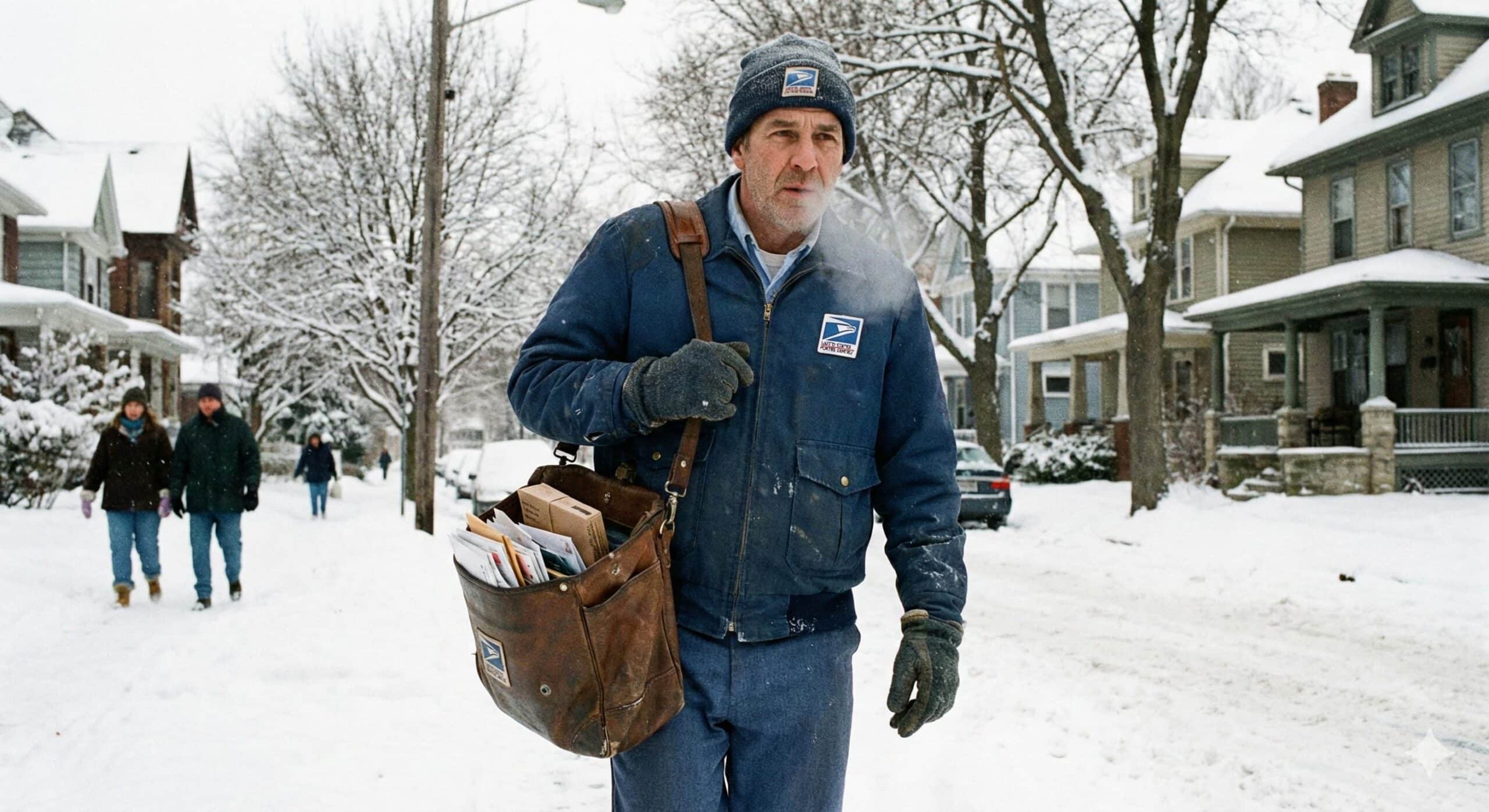
USPS Mail Carrier Salary 2026: $57k-$115k Real Pay Data
USPS Mail Carrier Salary
Working as a USPS mail carrier represents one of the last true pathways to a middle-class federal career without a college degree. But if you’re researching “USPS mail carrier salary” right now, you’ve probably noticed something confusing: the pay structure is completely different depending on whether you’re delivering in cities or rural areas, and the official job postings rarely explain what you’ll actually take home after taxes, union dues, and the mandatory waiting period before you become a “career” employee.
This guide breaks down exactly what USPS carriers earn in 2026, using the official pay tables from the NALC (National Association of Letter Carriers) 2023-2026 contract and the NRLCA (National Rural Letter Carriers Association) 2024-2027 agreement. We’ll explain the difference between City Carrier Assistants (CCAs) and career carriers, why rural carriers might work 35 hours but get paid for 44, and how penalty overtime at $83/hour changes the math for anyone willing to grind through mandatory overtime periods.
The reality is this: your first two years as a mail carrier are a test. You’ll work as a non-career employee (CCA or RCA) earning $20-$21/hour with limited benefits, irregular schedules, and mandatory overtime. But if you survive the gauntlet and convert to career status, you’re looking at $57,000-$86,000 base salary with federal benefits, pension eligibility, and the potential to clear six figures once overtime is factored in.
Let’s break down the numbers, the timeline, and the trade-offs between city and rural routes.
Quick Facts — USPS Mail Carrier Salary 2026
Entry Level (CCA): $20.50–$21.50/hr ($42,640–$44,720/year)
Entry Level (RCA): $20.80–$21.40/hr ($43,264–$44,512/year)
Career Starting: $27.41/hr ($57,012/year)
Top Pay (Step P): $41.65/hr ($86,632/year base)
With Overtime: $100,000–$115,000/year
BLS OES Code: 43-5052
Last Updated: 2026
Quick USPS Salary Summary (2026 Update)
City Carriers (NALC):
- CCA Starting Rate: $20.50 – $21.50/hour (non-career)
- Career Starting Rate (Step A): $27.41/hour ($57,012 annually)
- Top Step (Step P): $41.65/hour ($86,632 annually)
- Penalty Overtime Rate: $83.30/hour (double time, Step P carriers)
- Conversion Timeline: Maximum 24 months as CCA before career conversion
Rural Carriers (NRLCA):
- RCA Starting Rate: $20.80 – $21.40/hour (non-career, hourly for first 5 pay periods)
- Career Pay Structure: Evaluated system (paid by route assessment, not hours worked)
- Average Route Evaluation: 44 hours/week (~$78,000 annually for regular carriers)
- RRECS System: Route evaluations updated quarterly based on package scans and delivery data
Key Insight: A maxed-out city carrier working regular overtime can clear $100,000-$115,000 annually. Rural carriers benefit from efficiency—if you complete a 44-hour evaluated route in 38 hours, you still get paid for 44.
USPS Paycheck Calculator
Estimate your bi-weekly check including overtime and penalty overtime. USPS carriers are paid bi-weekly (26 pay periods per year), and most stations require 50-60 hour weeks during peak periods and when short-staffed. The calculator below helps you understand how base pay, overtime (1.5x), and penalty overtime (2.0x for city carriers) combine to determine your actual take-home.
Important: This calculator shows gross pay before deductions. Expect to lose approximately 25-30% to federal taxes, FICA, state taxes (if applicable), and union dues (~$30-$35 per pay period).
Paycheck Calculator
Calculate your Weekly, Monthly & Yearly Take-Home Pay
⚠️ These are estimates for a single filer using 2026 tax rates (IRS Rev. Proc. 2025-32). Results do not include local taxes, pre-tax deductions (401k, health insurance), or tax credits. Consult a tax professional for personalized advice.
The 2026 Contract Landscape: What Changed
The pay structures for both city and rural carriers were solidified by major contract negotiations that concluded in 2025, bringing significant updates to compensation and working conditions.
City Carriers: The Nolan Award
City carriers operate under the 2023-2026 National Agreement, which was finalized through binding arbitration (known as the “Nolan Award”) in March 2025. The most recent general wage increase (GWI) took effect in November 2025, bringing the following adjustments:
- CCAs received a 2.5% raise, pushing starting rates to $20.50-$21.50/hour depending on local supplement agreements
- Career carriers saw step adjustments maintaining the progression from $27.41/hour (Step A) to $41.65/hour (Step P)
- Penalty overtime protections were maintained except during the December peak season
The Nolan Award preserved the 24-month maximum timeline for CCA-to-career conversion, a critical win for union members who had watched non-career employees languish in limbo for years under previous contracts.
Rural Carriers: RRECS Implementation
Rural carriers are working under the 2024-2027 Contract, ratified in June 2025. The most significant change is the full implementation of RRECS (Rural Route Evaluated Compensation System), a data-driven route evaluation system that has fundamentally altered how rural pay is calculated.
What RRECS Changed:
- Routes are now evaluated quarterly based on actual package scan data and delivery times
- Evaluations can be adjusted up or down based on performance metrics
- Carriers who scan inefficiently or miss scans risk route downgrades worth $5,000-$7,000 annually
- The system creates transparency but also introduces volatility that didn’t exist under the old evaluation method
RCAs (Rural Carrier Associates) received a $0.55/hour increase plus 1.0% GWI in late 2025, bringing their starting rate to competitive parity with CCAs.
City (Hourly) vs. Rural (Evaluated): The Difference
This is where USPS diverges from every other employer: city and rural carriers doing essentially the same job are paid using completely different systems.
City Carriers: Straightforward Hourly Pay
Pay Structure: Hourly wage with guaranteed overtime
Work Schedule: Fixed routes, 8-10 hour days, 5-6 days per week
Overtime Rules: 1.5x after 8 hours/day or 40 hours/week, 2.0x after 10 hours/day or 56 hours/week
City carriers know exactly what they’re earning. If you’re a Step J carrier making $37.53/hour and you work 50 hours this week, the math is simple:
- 40 hours × $37.53 = $1,501.20
- 10 hours × $56.30 (1.5x) = $563.00
- Weekly total: $2,064.20
The Grind: Mandatory overtime is the norm in understaffed stations. During peak season (November-January) and summer vacations, 60-hour weeks become standard. Some carriers love this—it’s overtime pay. Others burn out from the relentless schedule.
Career Timeline:
- Months 0-24: Work as CCA at $20.50-$21.50/hour with minimal benefits
- Month 24-25: Convert to PTF (Part-Time Flexible) or Regular at Step A ($27.41/hour)
- Every 46 weeks: Advance one step up the pay table
- After ~12-15 years: Reach Step P ($41.65/hour, $86,632 base)
Rural Carriers: The Evaluated System Mystery
Pay Structure: Paid for route evaluation, not actual hours worked
Work Schedule: Varies by route—could be 4 hours, could be 10 hours
Evaluation System: RRECS assigns each route an “evaluated time” based on delivery volume, packages, terrain, and other factors
Here’s where rural carriers either love or hate their job: you get paid for the route evaluation regardless of how long it takes you.
Example Scenario:
- Your route is evaluated at 44K (44 hours per week)
- You’re a career regular at Step 1 earning approximately $40.50/hour equivalent
- Your annual pay is roughly $78,000 (44 hours × $40.50 × 52 weeks ÷ 12 months)
If you’re efficient and finish the route in 38 hours? You still get paid for 44. If it takes you 48 hours because of weather or heavy package volume? You still only get paid for 44.
The RRECS Factor:
The new evaluation system updates quarterly based on:
- Package scan accuracy and timing
- Delivery confirmation data
- Route changes (new developments, business closures)
- Seasonal volume adjustments
Real Consequence: A rural carrier in Montana reported his route was downgraded from 46K to 42K in December 2025 because RRECS determined he was scanning packages inefficiently at centralized delivery points. The result? An instant $7,200 annual pay cut.
RCA Reality: The Hourly Hybrid
Rural Carrier Associates (the non-career equivalent of CCAs) start with hourly pay:
First 5 Pay Periods: Paid $20.80-$21.40/hour for actual time worked
After “Green Card” Period: Paid the evaluated time of whatever route you’re covering
This creates unpredictability. One week you might cover a 48K route (great pay). The next week you might only get called for a 20-hour route (terrible pay). RCAs have no guaranteed hours and can go weeks without work in small offices.
Climbing the Ladder: Steps & COLAs
The USPS step system rewards longevity, but it’s a slow climb that requires patience.
The Step Progression (Table 2 – Career City Carriers)
| Step | Hourly Rate | Annual Base (2,080 hrs) | Time to Next Step | Cumulative Service |
|---|---|---|---|---|
| A | $27.41 | $57,012 | 46 weeks | 0 years |
| B | $28.53 | $59,342 | 46 weeks | 0.9 years |
| C | $29.66 | $61,692 | 46 weeks | 1.8 years |
| D | $30.79 | $64,043 | 46 weeks | 2.6 years |
| E | $31.92 | $66,394 | 46 weeks | 3.5 years |
| F | $33.05 | $68,744 | 46 weeks | 4.4 years |
| G | $34.18 | $71,094 | 46 weeks | 5.3 years |
| H | $35.30 | $73,424 | 46 weeks | 6.1 years |
| I | $36.43 | $75,774 | 46 weeks | 7.0 years |
| J | $37.53 | $78,062 | 46 weeks | 7.9 years |
| K | $38.66 | $80,413 | 46 weeks | 8.8 years |
| L | $39.78 | $82,742 | 46 weeks | 9.6 years |
| M | $40.91 | $85,093 | 46 weeks | 10.5 years |
| N | $41.40 | $86,112 | 46 weeks | 11.4 years |
| O | $41.53 | $86,382 | 46 weeks | 12.3 years |
| P | $41.65 | $86,632 | Top Step | 13.1 years |
Timeline Reality: From CCA to top step takes approximately 15 years total (2 years as CCA + 13 years of step progression). This is a marathon, not a sprint.
Each step increase happens automatically after 46 weeks of service—you don’t need to apply, interview, or prove anything. Just show up, don’t get fired, and the raises keep coming.
Cost of Living Adjustments (COLA)
Unlike most federal positions, USPS carriers do not receive locality pay based on geographic cost of living. A carrier in San Francisco earns the same base wage as a carrier in rural Mississippi.
The Critical Exception: Carriers in non-contiguous U.S. territories receive TCOLA (Territorial Cost of Living Allowance), a tax-free supplement:
- Alaska: +1.49% to +30% depending on location (Juneau vs. remote villages)
- Hawaii: +8.64% to +22% depending on county (Oahu vs. outer islands)
- Puerto Rico: +2.49%
- Guam: +11.88%
- U.S. Virgin Islands: Varies by island
Example: A Step P carrier in rural Alaska making $41.65/hour base receives an additional 30% TCOLA = $12.50/hour supplement = $54.15/hour total rate.
For carriers in the lower 48 states, there is no geographic adjustment regardless of housing costs or local economics.
Overtime & Penalty Pay: The Hidden Money
Base salary tells only part of the story. For city carriers, overtime fundamentally changes the compensation picture.
Regular Overtime (1.5x Rate)
Triggers:
- After 8 hours in a single day
- After 40 hours in a week
- Any work on the 6th consecutive day
Rate Calculation:
Base hourly × 1.5 = overtime rate
Example (Step J Carrier):
$37.53 base × 1.5 = $56.30/hour overtime

Penalty Overtime (2.0x Rate) – City Carriers Only
This is where experienced city carriers dramatically increase their earnings. Penalty overtime (also called “V-time”) pays double time and is triggered by:
Daily Trigger: After 10 hours of work in a single day
Weekly Trigger: After 56 hours of work in a single week
Rate Calculation:
Base hourly × 2.0 = penalty rate
Example (Step P Carrier):
$41.65 base × 2.0 = $83.30/hour penalty overtime
The December Exception: Penalty overtime is suspended during the entire month of December—the busiest time of year when carriers most need it. This contract provision allows USPS to work carriers 12+ hour days during peak season without paying penalty rates.
Real-World Overtime Scenario
Carrier Profile: Step P city carrier, busy urban station
Base Rate: $41.65/hour
Typical Week:
- Monday-Friday: 10 hours/day = 50 hours
- Saturday: 8 hours (6th consecutive day)
- Total: 58 hours
Pay Breakdown:
- 40 hours regular: $41.65 × 40 = $1,666.00
- 10 hours overtime: $62.48 × 10 = $624.80
- 8 hours penalty: $83.30 × 8 = $666.40
- Weekly gross: $2,957.20
- Annual projection: $153,774
This is why you’ll see veteran carriers with base salaries of $86,000 filing W-2s showing $110,000-$120,000 in gross income. The overtime isn’t optional in many stations—it’s mandatory and constant.
Rural Carrier Overtime: The Complication
Rural carriers on evaluated routes don’t have traditional “overtime” because they’re not paid hourly. However:
When RCAs Work Overtime: They receive 1.5x their hourly rate after 40 hours
When Career Rurals Exceed Evaluation: If a 44K route consistently requires 50+ hours, the route should be re-evaluated upward—but RRECS has made this process contentious and unpredictable
Many rural carriers report being stuck in a gray area where their routes regularly exceed evaluation but RRECS algorithms don’t reflect the reality, leaving them unpaid for 5-10 hours of work weekly.
Benefits Beyond the Paycheck
USPS compensation includes substantial benefits that don’t show up on the pay table but significantly impact total compensation value.
Federal Employee Health Benefits (FEHB)
Career carriers access the same health insurance marketplace as all federal employees, with USPS covering approximately 75% of premiums. Plans range from basic coverage ($100-$150/month employee share) to comprehensive family plans ($300-$400/month employee share).
Thrift Savings Plan (TSP)
The federal 401(k) equivalent with extremely low fees and automatic matching:
- USPS contributes 1% automatically
- USPS matches up to 4% of employee contributions
- Total possible: 5% employer contribution
Pension (FERS)
Career carriers are enrolled in FERS (Federal Employees Retirement System):
- Defined benefit pension based on years of service and high-3 salary average
- Full retirement benefits after 30 years of service or at age 62 with 5 years
- Typical pension: 30-40% of final salary for life
Example: A carrier who retires after 30 years at Step P ($86,632) could receive a pension of approximately $26,000-$35,000 annually for life, plus Social Security and TSP withdrawals.
Annual Leave & Sick Leave
Annual Leave Accrual:
- Years 0-3: 13 days/year
- Years 3-15: 20 days/year
- Years 15+: 26 days/year
Sick Leave: 13 days/year, no cap on accumulation (can be applied toward retirement service credit)
CCAs and RCAs receive significantly reduced leave benefits until career conversion.
The CCA/RCA Gauntlet: What They Don’t Tell You
The non-career phase is the hardest part of being a USPS carrier, and it’s deliberately designed that way.
Limited Benefits
What CCAs/RCAs Get:
- Hourly pay ($20.50-$21.40)
- Overtime at 1.5x
- Limited health insurance (higher employee cost-share)
- No pension accrual
- Minimal leave (1 hour per 20 hours worked)
What They Don’t Get:
- FEHB premium sharing (pay full price or go without)
- TSP matching
- FERS pension credits
- Career protections against arbitrary firing
- Guaranteed hours or schedule
The Schedule Reality
CCAs and RCAs are the flexible workforce that fills gaps:
- Called in on days off with 2 hours notice
- Scheduled for “split days off” (e.g., Tuesday/Thursday instead of Saturday/Sunday)
- Forced to work 12+ hour days regularly
- No route ownership (different route every day)
- Last hired, first to have hours cut when volume drops
The Mental Health Toll: Turnover among CCAs exceeds 40% within the first year. The combination of irregular schedules, physical demands, and lack of job security breaks many people before they reach career status.
The 24-Month Clock
Under the current NALC contract, CCAs must be converted to career status (PTF or Regular) within 24 months of their start date. This is a hard cap—management cannot extend it.
What Happens at Conversion:
- Immediate raise from ~$21/hour to $27.41/hour (Step A)
- Access to full FEHB premium sharing
- TSP matching begins
- Pension credits start accruing
- Enhanced job protections
For most carriers, conversion day represents a 30-40% pay increase and the psychological shift from “temp worker” to “federal employee.”
Geographic Reality: Same Pay, Different Cost of Living
USPS’s lack of locality pay creates bizarre economic realities across the country.
High-Cost Areas (Raw Deal):
- San Francisco Bay Area carrier: $57,012 base (Step A) where median rent is $3,000/month
- New York City carrier: Same $57,012 where median rent is $3,500/month
- Los Angeles carrier: Same $57,012 where median rent is $2,800/month
Low-Cost Areas (Relative Bargain):
- Rural Mississippi carrier: $57,012 base where median rent is $700/month
- Small-town Iowa carrier: $57,012 where median rent is $650/month
- West Virginia carrier: $57,012 where median rent is $600/month
A Step P carrier earning $86,632 lives comfortably in rural America but struggles in coastal cities. Many carriers in expensive areas rely heavily on overtime just to cover cost of living, creating a trap where they can’t afford to stop working 60-hour weeks.
Data Methodology
This analysis synthesizes official union contract data and federal employment records to provide accurate 2026 USPS carrier compensation information:
Primary Sources:
- NALC 2023-2026 National Agreement: Official pay tables (Table 1 and Table 2) effective November 15, 2025, following the Nolan Award arbitration
- NRLCA 2024-2027 Contract: Ratified June 2025, including RRECS implementation details and RCA wage adjustments
- USPS ELM (Employee and Labor Relations Manual) Section 434: Official penalty overtime rules and V-time triggers
- Office of Personnel Management (OPM): FERS pension calculation methodologies and FEHB premium cost-sharing ratios
Pay Table Verification:
- Step progression verified against NALC official publications
- GWI (General Wage Increase) percentages confirmed through contract language
- TCOLA percentages sourced from OPM non-foreign area cost-of-living tables
Overtime Calculations:
- Based on standard FLSA overtime rules as applied to USPS carriers
- Penalty overtime triggers confirmed via USPS ELM 434.53 and union grievance precedents
- Annual projections assume industry-standard 50-55 hour average workweeks in understaffed stations
Benefits Information:
- TSP matching percentages from Thrift Savings Plan official guidelines
- FEHB premium sharing ratios from OPM benefits documentation
- FERS pension formulas from OPM retirement calculators
All salary figures represent gross pay before taxes, union dues (approximately $30-35 per pay period for NALC/NRLCA members), and other voluntary deductions. Take-home pay typically ranges from 70-75% of gross depending on tax filing status, state taxes, and benefit elections.
The Bottom Line: A USPS mail carrier position offers a genuine path to middle-class stability with federal benefits, pension security, and six-figure earning potential for those willing to grind through overtime. But the first two years as a non-career employee will test your resilience, and the lack of geographic pay adjustments means your quality of life varies wildly depending on where you’re stationed. If you can survive the CCA/RCA phase and reach career status, you’re looking at one of the most secure jobs in America—but it’s earned, not given.
“If you are looking for Delivery Driver jobs, check out our guides on [FedEx Ground] and [UPS Driver].”