Hot Shot Trucking Salary 2026: $75K-$115K Real Net Profit
The promise of six-figure income, being your own boss, and hitting the open road with nothing but a pickup truck and trailer has made hot shot trucking one of the most searched business opportunities in 2026. But here’s what the YouTube gurus won’t tell you: the difference between grossing $252,000 and netting $115,000 comes down to understanding expenses that can bankrupt you in 90 days. The Gold Rush mentality of 2021 is over. What remains is a legitimate business opportunity for entrepreneurs willing to run the numbers, avoid the traps, and build real customer relationships instead of chasing bottom-dollar loads on broker boards.
This comprehensive guide breaks down the real hot shot trucking salary data for 2026, startup costs that actually matter, the CDL versus non-CDL decision, and the state-by-state opportunities that separate thriving owner-operators from those limping back to W-2 employment after their first insurance renewal.
Quick Hot Shot Salary Summary (2026 Update)
Weekly Earnings (Owner-Operator):
- Non-CDL Hot Shot: $3,000 – $4,500 gross / $1,500 – $2,500 net
- CDL Hot Shot: $4,500 – $7,000+ gross / $2,350 – $4,000+ net
Annual Income Reality:
- Gross Revenue: $150,000 – $230,000 (what you invoice)
- Net Profit (Take-Home): $75,000 – $115,000 (what you actually keep)
- Rate Per Mile 2026: $1.50 – $2.50 (varies by weight class and cargo type)
The Critical Expense: First-year insurance costs $15,000 – $24,000 annually, with $3,000 – $5,000 due upfront. This single expense destroys more hot shot businesses than all other factors combined.
Hot Shot Profit Calculator
Paycheck Calculator
Calculate your Weekly, Monthly & Yearly Take-Home Pay
⚠️ These are estimates for a single filer using 2026 tax rates (IRS Rev. Proc. 2025-32). Results do not include local taxes, pre-tax deductions (401k, health insurance), or tax credits. Consult a tax professional for personalized advice.
What Is Hot Shot Trucking and Why It Matters in 2026
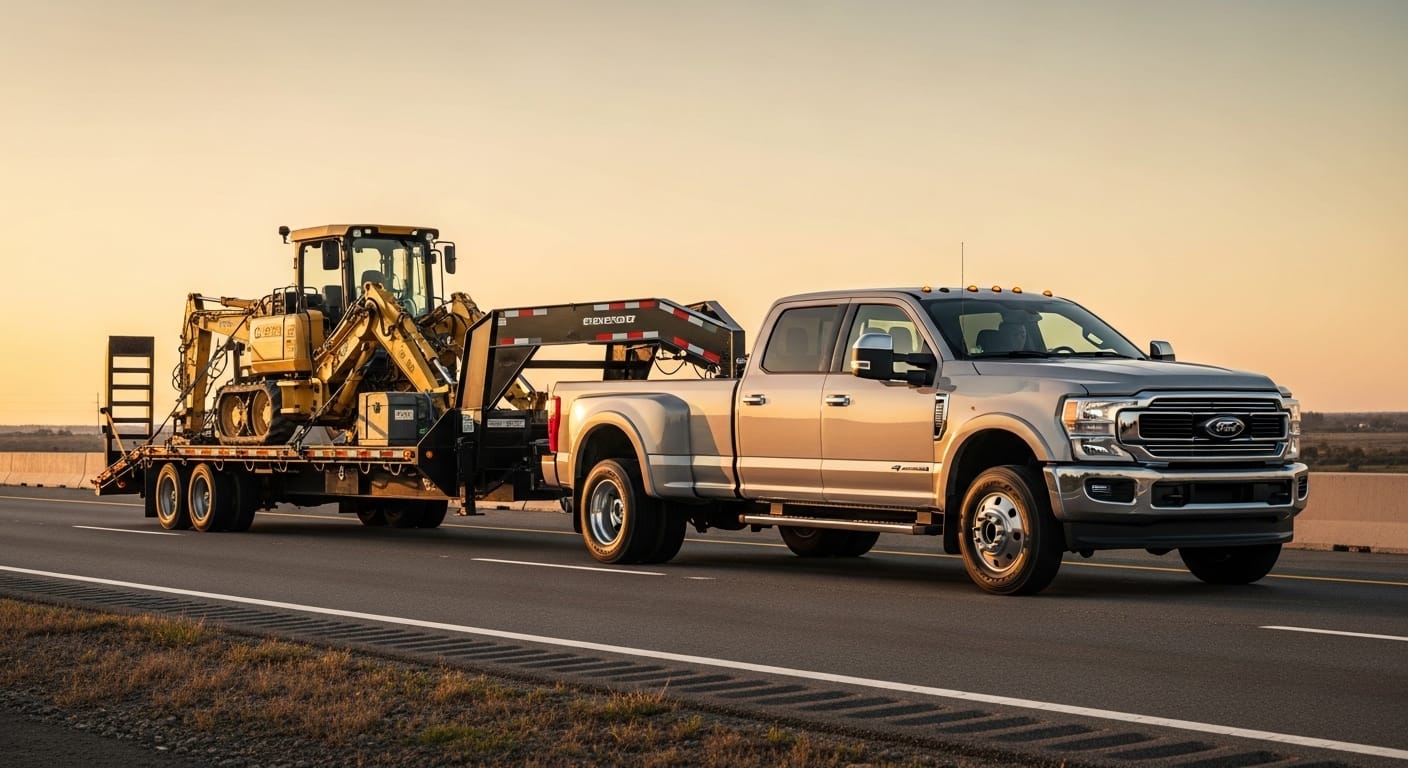
Hot shot trucking is the expedited delivery of time-sensitive freight using a Class 3-5 pickup truck (typically a 1-ton dually like a Ford F-350, Ram 3500, or Chevy Silverado 3500HD) pulling a flatbed or gooseneck trailer. You’re the emergency responder of the freight world—delivering construction equipment to job sites that can’t wait, rush-ordering manufacturing parts to prevent production line shutdowns, hauling drilling equipment to oil fields, or moving vehicles between dealerships and auctions.
The business model exploded because it offers the lowest barrier to entry in commercial trucking. Unlike traditional semi-trucking that requires a Commercial Driver’s License, a $150,000 tractor investment, and months of training, hot shot trucking lets you start with equipment you might already own or can finance with a decent credit score.
However, what makes this accessible also makes it brutally competitive. In 2026, the market has stabilized into a volume game where margins matter and operational efficiency separates profitable businesses from expensive hobbies. Load board analysis from DAT shows rates have stabilized after the pandemic spike, settling into the $1.80 – $2.20 per mile range for most non-specialized loads.
The opportunity still exists, but “easy money” is dead. You need direct customer relationships, not just load board dependency.
The Real Hot Shot Trucking Salary: Breaking Down Gross vs. Net
The single biggest misconception destroying new hot shot businesses is confusing gross revenue with actual income. When someone posts on social media about their “$20,000 month,” they’re talking about revenue—not profit. Let’s examine what actually goes in your pocket.
Non-CDL Hot Shot Economics (Under 26,000 lbs GCWR)
Running 2,000 – 2,500 miles weekly at $1.65 average per mile:
- Weekly Gross Revenue: $3,300 – $4,125
- Fuel Cost: -$1,000 (assuming 10 mpg, $4.50/gallon diesel)
- Insurance: -$300 (first-year rates, improves after clean record)
- Maintenance Reserve: -$200 (tires, oil, repairs you must save for)
- Truck Payment: -$275 (financed used dually)
- Trailer Payment: -$150 (financed gooseneck)
- Load Board/ELD/Software: -$75
- Weekly Net Profit: $1,300 – $2,125
Annual net income: $67,600 – $110,500 (before taxes)
CDL Hot Shot Economics (Over 26,000 lbs GCWR)
Running 2,000 – 2,500 miles weekly at $2.05 average per mile:
- Weekly Gross Revenue: $4,100 – $6,250
- Fuel Cost: -$1,400 (heavier loads, more fuel consumption)
- Insurance: -$450 (CDL + higher coverage limits)
- Maintenance Reserve: -$300 (heavier equipment, more wear)
- Truck Payment: -$350 (newer/larger truck often required)
- Trailer Payment: -$200 (higher capacity trailer)
- Load Board/ELD/Software: -$100
- Weekly Net Profit: $1,300 – $3,450
Annual net income: $67,600 – $179,400 (before taxes)
The CDL hot shot operation has significantly higher potential because you can legally haul 12,000 – 16,000 lbs of cargo instead of being capped at 7,000 – 9,000 lbs. This opens up machinery transport, multi-vehicle loads, and construction equipment that pays premium rates.
The Expense Reality Check
Notice that even at the high end, expenses consume 40-55% of gross revenue. The hot shot operators failing in 2026 are the ones treating that $20,000 monthly deposit like it’s all theirs to spend. Then reality hits:
- Six new tires: $7,200
- Transmission rebuild: $6,500
- Annual insurance renewal: $18,000
- Quarterly tax payment: $8,500
Successful hot shot trucking requires treating yourself like an employee of your own company. Pay yourself a reasonable salary, and save the rest for both expected and unexpected expenses.
CDL vs. Non-CDL: The 26,000 lbs Rule
This is the most confusing regulation for new hot shot truckers, and misunderstanding it can result in massive DOT fines, voided insurance, and even criminal charges. Let’s break down the exact rules for 2026.
The Federal Rule: Gross Combined Weight Rating (GCWR)
You can operate without a CDL if your Gross Combined Weight Rating stays at or below 26,000 pounds. Here’s the critical detail that trips up beginners: this is not about what your truck weighs on a scale. It’s about the maximum weight your vehicles are rated to carry according to manufacturer specifications.
The formula: Truck GVWR (door sticker) + Trailer GVWR (VIN plate) = GCWR
If that total exceeds 26,000 lbs, you need a Class A CDL. Period.
The Non-CDL Setup That Actually Works
A legal non-CDL configuration looks like this:
- Truck: Ram 3500 or Ford F-350 with GVWR of 14,000 lbs
- Trailer: 40-foot gooseneck flatbed “de-rated” to 12,000 lbs GVWR
- Total GCWR: 26,000 lbs exactly
Many trailer manufacturers will de-rate a trailer (reduce its legal capacity via documentation) to help you stay non-CDL legal. However, here’s the painful trade-off: you can only haul about 5,000 – 7,000 lbs of actual cargo.
Once you subtract the trailer’s empty weight (3,000-4,000 lbs) and your truck’s weight, you’re severely limited in what loads you can legally accept. This forces you to turn down high-paying machinery loads, multi-vehicle transports, and construction equipment moves.
The CDL Advantage: Why Most Successful Operators Upgrade
With a Class A CDL, you can operate a truck with GVWR over 26,000 lbs and haul 12,000 – 16,000 lbs of cargo. This isn’t just slightly better—it’s transformative for your business:
- Rate Premium: CDL loads pay 20-35% more per mile ($1.80 – $2.50 vs. $1.50 – $1.85)
- Load Availability: You can accept 3x more loads from load boards
- Direct Customer Access: Construction companies and equipment dealers prefer CDL drivers
- Equipment Financing: Banks offer better terms when you have a CDL
The CDL costs about $3,000 – $5,000 to obtain (training + testing) and takes 4-6 weeks. Most successful hot shot operators start non-CDL to test the business model, then get their CDL within 12-18 months once they’ve proven profitability.
The “Loophole” Everyone Asks About
Can you just “not get weighed” and run overweight? Absolutely not. DOT can pull you into any weigh station, and if you’re over your GVWR or operating CDL-required equipment without a license:
- $5,000 – $25,000 in fines
- Truck impounded until violations are corrected
- Insurance immediately voided (you’re driving uninsured)
- Criminal charges possible in some states
The risk isn’t worth it. Run legal or don’t run at all.
Startup Costs: The Real Investment Required
The hot shot business plan starts with honest numbers. In 2026, you need $19,000 – $34,500 in actual liquid capital to launch properly. Here’s the complete breakdown:
Equipment Investment
| Item | Cost Range | Notes |
|---|---|---|
| Truck Down Payment | $5,000 – $10,000 | 15-20% down on $40k-$60k used dually |
| Trailer (Gooseneck) | $8,000 – $15,000 | 40ft Big Tex or PJ Trailer (new or late model) |
| Insurance Down Payment | $3,000 – $5,000 | Most insurers require 20% upfront on $15k-$24k policy |
| Registration (IRP/Apportioned Plates) | $1,500 – $2,500 | Interstate operating authority plates |
| Equipment (Chains/Tarps/Binders) | $1,500 – $2,000 | Grade 70 chains, heavy-duty tarps, load binders |
| MC Number & DOT Authority | $300 – $500 | FMCSA registration and BOC-3 filing |
| ELD Device & Software | $200 – $500 | Electronic logging device (federally required) |
| Load Board Subscription | $150 – $300 | First month DAT or Truckstop access |
| Emergency Operating Fund | $2,000 – $5,000 | Fuel for first loads, unexpected repairs |
| TOTAL CASH NEEDED | $19,000 – $34,500 | This is minimum viable capital |
The Insurance Shock That Kills Dreams
Let’s focus on the expense that destroys more hot shot businesses than any other: commercial trucking insurance for a new authority costs $15,000 – $24,000 annually in 2026. This isn’t a typo or worst-case scenario—this is the standard market rate.
Insurance companies view new Motor Carrier (MC) authorities as extremely high-risk. You have no claims history, no safety record, and statistically, new trucking companies have a 30% failure rate within 24 months. The insurance industry prices this risk accordingly.
The down payment requirement (typically 20% upfront) means you need $3,000 – $5,000 just to bind the policy and legally operate. Many aspiring hot shot truckers get the truck and trailer financed, then discover they can’t afford to insure them.
After 12-24 months of clean operation (no accidents, no claims, consistent DOT compliance), your rates typically drop 30-40%. But you have to survive those expensive first years.
Alternative Startup Path: Leasing On
If you don’t have $20,000+ in cash, you can “lease on” to an established hot shot company. You either drive their equipment or bring your own truck and operate under their authority and insurance. They take 20-30% of gross revenue, but you avoid the massive insurance down payment and authority startup costs.
This lets you learn the business, build a customer base, and save capital for 6-12 months before launching your own authority. It’s not glamorous, but it’s smart.
Salary by State: Oil Fields & Manufacturing Hubs
Hot shot freight follows industrial activity. Construction equipment, drilling supplies, manufacturing parts, and heavy machinery move where economic development happens. In 2026, these are the hottest and coldest markets:
Top 5 Hot Shot States (Best Markets)
| Rank | State | Average Weekly Gross | Why It’s Prime |
|---|---|---|---|
| 1 | Texas | $5,500 – $7,500 | Permian Basin oil fields + Port of Houston + Dallas construction = endless loads. The undisputed king. |
| 2 | Oklahoma | $4,500 – $6,000 | Geographic center means loads going north, south, east, and west. Low deadhead miles. |
| 3 | Louisiana | $4,800 – $6,500 | Oil refineries, chemical plants, Port of New Orleans. Heavy machinery premium rates. |
| 4 | Alabama | $4,200 – $5,800 | Steel manufacturing, pipe fabrication. Strong outbound rates to Southeast markets. |
| 5 | Ohio | $4,000 – $5,500 | Manufacturing hub with automotive and industrial equipment. Excellent regional runs. |
Bottom 5 Hot Shot States (Worst Markets)
| Rank | State | Average Weekly Gross | Why It’s Difficult |
|---|---|---|---|
| 46 | Florida | $2,800 – $4,000 | “Freight sack”—cheap inbound rates, nearly impossible to find profitable outbound loads. |
| 47 | Colorado | $3,000 – $4,200 | Mountain terrain destroys transmissions. Limited industrial outbound freight. High fuel costs. |
| 48 | California | $3,200 – $4,500 | CARB regulations ban most older diesel trucks. Extreme fuel costs. Overcrowded market. |
| 49 | Montana | $2,500 – $3,800 | Too remote. You’ll deadhead 300-500 miles between loads regularly. |
| 50 | Maine | $2,200 – $3,500 | Geographic endpoint with minimal industrial freight. Almost no high-paying outbound loads. |
The Texas Dominance
Texas isn’t just the best state for hot shot trucking—it’s in a category by itself. The Permian Basin oil fields generate constant demand for drilling equipment, pipe transport, and machinery moves. Port of Houston creates import/export opportunities. Dallas-Fort Worth construction drives equipment transport.
A hot shot operator based in Midland, Texas, can book loads 24/7/365. The same operator based in Portland, Maine, will struggle to fill three loads per week.
If you’re serious about hot shot trucking as a full-time business, strongly consider relocating to Texas, Oklahoma, or Louisiana. Geography is destiny in this industry.
Finding Loads: Beyond the Load Board Trap
Your hot shot business plan means nothing without consistent freight. The two dominant load boards in 2026 are DAT and Truckstop.com, each costing $120 – $150 monthly. Every hot shot trucker needs access to at least one, but here’s the trap: load boards have become a race to the bottom.
How Load Boards Work
Freight brokers and shippers post available loads with origin, destination, weight, dimensions, and rate. You search for loads in your target area, contact the broker, negotiate (though room is limited), and book the load. The board facilitates the connection; you handle the execution.
The problem in 2026: oversaturation. Desperate drivers accept loads at break-even or losing rates just to avoid deadhead miles (driving empty). This pushes rates down for everyone.
The Deadhead Mile Problem
Deadhead miles are the silent killer of hot shot profitability. If you haul a load from Dallas to Denver for $2,100 (1,000 miles at $2.10/mile), then deadhead 1,000 miles back empty, your effective rate just dropped to $1.05 per mile—below your break-even point.
Smart hot shot operators obsess over minimizing deadhead:
- Book backhaul loads before delivering the first load
- Build regular customer relationships in multiple cities
- Specialize in specific lanes you run repeatedly
- Accept slightly lower rates if it eliminates 500 deadhead miles
Direct Customer Relationships: The Real Money
Load board analysis from DAT shows that owner-operators who derive 60%+ of their revenue from direct customers earn 25-40% more annually than those relying solely on brokered loads. Direct customers include:
- Local construction companies needing equipment moved between job sites
- Fabrication shops shipping custom steel and machinery
- Oil field service companies moving drilling equipment
- Auto dealerships moving vehicles between locations
- Manufacturing plants with rush parts delivery needs
These customers pay $2.20 – $2.80 per mile because they value reliability over finding the absolute cheapest rate. Once you prove yourself with on-time delivery and proper cargo securement, they’ll call you directly instead of posting to load boards.
Your first year is about proving yourself on load boards while systematically building direct relationships. By year two, 40-50% of revenue should be direct customers. By year three, you should be selective about which load board freight you accept.
Equipment Selection: What Actually Matters
The “best truck for hot shot” debates rage endlessly on forums, but in 2026, the answer depends on your specific setup and goals.
Truck Selection: The Big Three
All three major manufacturers offer capable 1-ton dually platforms:
Ram 3500:
- Engine: 6.7L Cummins diesel (industry standard for reliability)
- Towing: 37,100 lbs max (highest in class)
- Axle Ratio: 3.73 or 4.10 (mandatory for heavy towing)
- Pros: Best engine reputation, highest towing capacity
- Cons: Interior quality issues, HVAC reliability concerns
Ford F-350:
- Engine: 6.7L Power Stroke diesel
- Towing: 35,750 lbs max
- Axle Ratio: 3.73 or 4.10
- Pros: Best overall truck (ride, handling, interior)
- Cons: DEF system issues in older models (2011-2016)
Chevrolet Silverado 3500HD:
- Engine: 6.6L Duramax diesel
- Towing: 36,000 lbs max
- Axle Ratio: 3.73 or 4.10
- Pros: Excellent transmission (Allison 1000)
- Cons: Lowest towing capacity of the three
The Non-Negotiables:
- Dually rear wheels (Single Rear Wheel trucks lack stability for 40ft trailers)
- Diesel engine (Gas engines can’t handle 15,000+ lbs all day, every day)
- 4.10 axle ratio minimum (3.73 works, but 4.10 is ideal for heavy loads)
- Under 150,000 miles (Buy room for problems, not someone else’s problems)
Avoid the temptation to buy a $25,000 truck with 200,000+ miles to “save money.” The transmission rebuild, turbo replacement, and injector failure will cost you $15,000 in Year One, plus the downtime loses you $20,000 in revenue. Buy the best truck you can afford with under 100,000 miles.
Trailer Selection: Gooseneck vs. Bumper Pull
For serious hot shot trucking, a gooseneck trailer is non-negotiable:
- Stability: Pivot point over rear axle prevents sway
- Capacity: Can legally handle heavier loads
- Marketability: Most high-paying loads require gooseneck
- Resale: Goosenecks hold value better
Bumper-pull trailers work for occasional use or very light freight, but you’ll turn down 60% of profitable loads because they require gooseneck configuration.
Standard spec: 40-foot flatbed gooseneck with dovetail, slide-in ramps, and D-rings for cargo securement. Budget $15,000 – $22,000 for new or late-model used.
Legal Requirements and Compliance
Learning how to start a hot shot business means navigating federal and state regulations. Miss any of these, and you’re operating illegally—which voids your insurance and exposes you to massive fines.
Federal Requirements (FMCSA)
- MC Number (Motor Carrier Authority): $300, 3-4 week approval process
- DOT Number: Included with MC application
- BOC-3 Filing: $30-50 (designates process agents in all 50 states)
- UCR Registration: $76-100 annually (Unified Carrier Registration)
- Insurance: $75,000 liability minimum (most require $1 million)
- Cargo Insurance: $5,000 minimum (most loads require $100,000)
- Bi-Annual Drug Testing Program: $100-150 annually (consortium membership)
- ELD (Electronic Logging Device): Federally required for most operations
State Requirements
- IRP (Apportioned) Plates: $1,500-2,500 for interstate travel
- IFTA License: Free, but required for fuel tax reporting
- State-Specific Permits: Oversize/overweight if needed
The ELD Exemption Question
The Hours of Service regulations require Electronic Logging Devices for most commercial operations, but there are two potential exemptions:
- 150 Air-Mile Radius Exemption: If you operate within 150 air miles of your base and return to base daily, you can use paper logs instead of ELD
- Pre-2000 Vehicle Exemption: Trucks manufactured before 2000 are ELD-exempt
In reality, 99% of hot shot truckers need an ELD because interstate loads regularly exceed 150 miles, and maintaining a 24+ year old truck capable of reliable hot shot work is impractical in 2026.
Budget $200-500 for an ELD device and $30-50 monthly for service subscription. Popular options include KeepTruckin, Samsara, and Gorilla Safety.

Frequently Asked Questions
How much is hot shot trucking insurance really?
For a new Motor Carrier authority in 2026, expect $15,000 – $24,000 annually for the first 1-2 years. This includes:
$1 million general liability (broker requirements)
$100,000 cargo insurance
Physical damage coverage on truck and trailer
The down payment is typically 20% ($3,000 – $5,000) to bind the policy. After 12-24 months of clean operation, rates drop 30-40% to the $10,000 – $15,000 range. Companies like Progressive Commercial, CoverWallet, and Reliance Partners specialize in new authority insurance.
What’s the best truck: Ford, Chevy, or Ram?
For hot shot trucking specifically:
Best Overall: Ford F-350 (ride quality, handling, interior)
Best Engine: Ram 3500 (Cummins 6.7L has legendary reliability)
Best Transmission: Chevy 3500HD (Allison 1000 is bulletproof)
The honest answer: Buy whichever you can get the best deal on from a reputable dealer with service history. All three are capable if properly maintained. Focus on:
Dually configuration (not SRW)
Diesel engine
4.10 axle ratio
Under 100,000 miles
Complete service records
Avoid “fleet trucks” that were abused as work vehicles. Look for private owner sales or dealer certified pre-owned with remaining factory warranty.
Can I sleep in a pickup truck legally?
his is a gray area. DOT sleeper berth regulations technically require a sleeper compartment that meets specific dimensions (75″ x 24″ minimum) to count as legal rest time. A pickup truck cab doesn’t meet this requirement.
However, enforcement is inconsistent. Many hot shot operators sleep in their truck cab at rest areas and truck stops without issue. The risk is that if DOT inspects your logs and you’ve logged “sleeper berth” time in a vehicle without a legal sleeper, you can be cited for log falsification.
Safer options:
Crew cab with bench seat removed: Some operators install a platform in back seat area
Truck cap with sleeping platform: Creates separated area that may qualify
Budget motels: $50-70/night is legitimate business expense
Factoring relationships: Most hot shot operators stay in budget motels, expense it
If you’re running CDL hot shot and subject to HOS regulations, consult with a DOT compliance specialist about your specific setup. Non-CDL operators have more flexibility since they’re not subject to HOS rules (though they should still follow basic safety practices).
Is hot shot trucking dying in 2026?
No, but it’s evolved. The “Gold Rush” of 2021 when anyone with a truck could make $10,000/week is over. The market has stabilized into a legitimate business opportunity for operators who:
Build direct customer relationships instead of relying solely on load boards
Understand their true cost per mile and reject unprofitable loads
Maintain equipment proactively rather than running things until they break
Operate legally and professionally with proper insurance and compliance
The hot shot operators failing in 2026 are the ones treating it like a get-rich-quick scheme. The ones succeeding are running it like the small business it actually is—with bookkeeping, customer relationship management, and operational discipline.
Demand remains strong for expedited freight, particularly in oil & gas, construction, and manufacturing. The business isn’t dying; it’s just no longer tolerant of unprofessional operators.
Building a Sustainable Hot Shot Business
Success in hot shot trucking requires treating it as a business, not just a driving job. Here’s the framework that separates six-figure earners from those who wash out:
Year One Goals (Survival & Foundation)
- Generate $150,000 – $180,000 gross revenue
- Net $75,000 – $90,000 profit
- Complete 40+ successful loads with 95%+ on-time delivery
- Build relationships with 5-10 direct customers
- Maintain zero accidents and DOT violations
- Survive the expensive first-year insurance period
Year Two Goals (Growth & Optimization)
- Generate $200,000 – $220,000 gross revenue
- Net $100,000 – $115,000 profit
- Increase direct customer revenue to 50%+ of total
- Reduce insurance costs through clean record
- Consider CDL upgrade if running non-CDL
- Potentially add second truck (if capital allows)
Financial Management Systems
Set up separate bank accounts:
- Business Checking: All revenue deposits here
- Maintenance Savings: Transfer 20% of gross automatically
- Tax Savings: Transfer 25-30% of net profit
- Personal Pay: What remains after savings
Use QuickBooks Self-Employed, Wave, or similar accounting software to track every expense by category. You need precise cost-per-mile data to make smart decisions about which loads to accept.
The Metric That Matters
Your single most important metric is Cost Per Mile (CPM). Calculate it monthly:
Total Monthly Expenses ÷ Total Miles Driven = CPM
If your CPM is $1.45, any load paying less than $1.75/mile loses money (you need margin for profit and unexpected expenses). Know this number and use it as your acceptance floor.
Data Methodology
This guide synthesizes data from multiple authoritative sources to provide accurate hot shot trucking salary and operational information for 2026:
Rate Data: Analysis based on DAT and Truckstop load board rate reports (Q4 2025 – Q1 2026), showing stabilized rates in the $1.80 – $2.20/mile range for standard hot shot freight.
Insurance Costs: Average premium data from Progressive Commercial, CoverWallet, and Reliance Partners for new authority operators (MC numbers less than 2 years old).
Equipment Pricing: Used truck valuations from Kelley Blue Book Commercial and NADA Guides for 2019-2023 model year 1-ton dually trucks. Trailer pricing from Big Tex, PJ Trailers, and Diamond C manufacturer MSRPs and dealer quotes.
Operational Expenses: Fuel calculations based on EIA diesel price averages ($4.35 – $4.65/gallon national average), 10 mpg average for loaded 1-ton dually, and DEF consumption rates.
State Rankings: Based on FMCSA freight movement data, construction spending statistics from the Census Bureau, and oil/gas production data from the EIA showing industrial freight demand by state.
Income Projections: Conservative estimates based on 2,000 – 2,500 miles weekly (standard for active owner-operator), current market rates, and typical expense ratios verified through operator interviews and industry forums.
All financial projections assume proper business operation including legal authority, adequate insurance, and ethical load selection. Individual results will vary based on geographic market, operational efficiency, customer relationships, and economic conditions.
The opportunity in hot shot trucking remains real in 2026, but it requires the mindset of an entrepreneur, not just someone who wants to drive a truck. The $115,000 annual income is there for operators who understand their numbers, build direct customer relationships, maintain equipment proactively, and treat their business professionally. The path to failure is equally clear: load board dependency, ignoring maintenance, under-budgeting for insurance, and mistaking gross revenue for profit.
Your choice is whether to join the 30% who fail in the first two years or the 70% who build sustainable businesses. The highway doesn’t care about your intentions—only your execution.
“If you are looking for Delivery Driver jobs, check out our guides on [Beverage Truck ] and [Sysco Delivery].”