Beverage Truck Driver Salary 2026: $62K-$92K Real Pay Data
The beverage delivery industry (Beverage Truck Driver) isn’t what most people think. You’re not just driving a truck—you’re lifting 20,000+ pounds of liquid daily, stocking shelves at gas stations, building promotional displays, and hustling through 15-20 stops before sunset. But here’s the payoff: beer distributors are paying $62,000–$85,000 annually for route drivers in 2026, and Teamsters-backed positions in cities like Chicago are cracking $92,000. This is one of the highest-paying local CDL jobs in America, but only if you know which brand to target, which route type to chase, and how to leverage union power.
The “Cola Wars” pay scale has shifted dramatically. Coca-Cola and Pepsi are battling a driver shortage by expanding bulk delivery fleets (palletized loads to Walmart and Kroger) and raising wages to compete with foodservice giants like Sysco. Meanwhile, independent beer distributors—handling Budweiser, Miller, and Coors—continue to dominate the top of the pay pyramid thanks to commission-heavy structures and strong union contracts. Whether you’re searching for coke driver jobs, evaluating pepsi delivery pay, or hunting for the legendary beer delivery truck jobs that pay $80,000+, this guide breaks down exactly what you’ll earn, what you’ll lift, and how to land the highest-paying routes in 2026.
Quick Beverage Salary Summary (2026 Update)
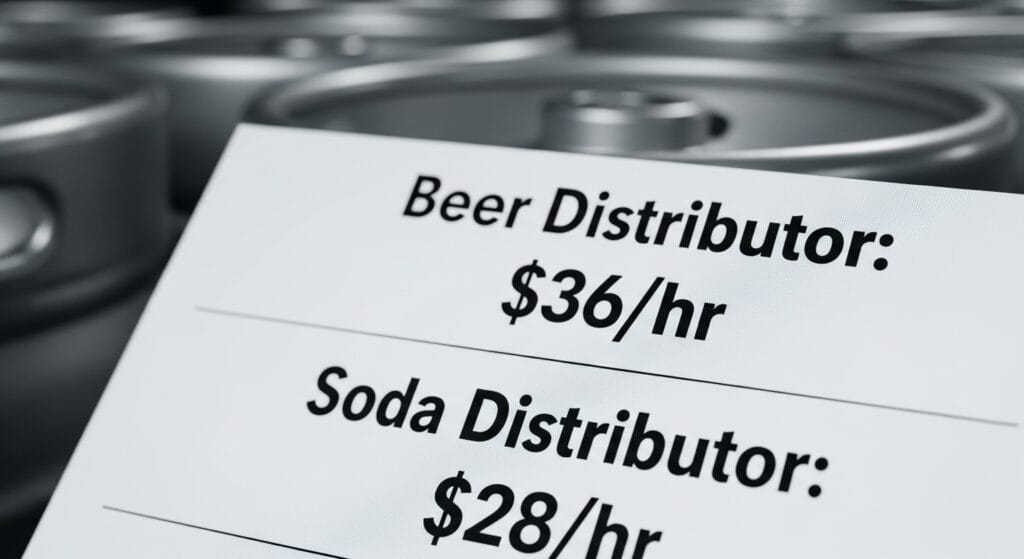
Coca-Cola Consolidated: $58,000–$72,000 annually | $28–$34/hour | Daily rate + commission structure, heavily performance-based. “Red Trucks” dominate high-volume Southern routes.
PepsiCo: $56,000–$70,000 annually | $26–$29/hour | More stable hourly pay than Coke, less “hustle” upside, aggressive overtime availability due to Frito-Lay cross-docking.
Budweiser/Beer Distributors: $62,000–$85,000 annually | $30–$38/hour | Highest earning potential. Commission-heavy, independent ownership, keg delivery premiums, and Teamsters contracts.
Keurig Dr Pepper: $52,000–$65,000 annually | $24–$28/hour | Lower volume routes, less physical strain, but lower earning ceiling.
Elite Tier – Bulk/Transport Drivers: $70,000–$90,000+ annually | $32–$38/hour | Class A tractor-trailer roles hauling pallets to big-box stores. No merchandising required—just dock bumps and pallet drops.
The key differentiator in 2026? Speed determines your hourly rate. Fast drivers on commission-based routes can push $75,000+, while slower drivers burn out at $55,000 doing the exact same job. This isn’t passive driving—it’s a hustle game.
Route Driver Pay Calculator
Paycheck Calculator
Calculate your Weekly, Monthly & Yearly Take-Home Pay
⚠️ These are estimates for a single filer using 2026 tax rates (IRS Rev. Proc. 2025-32). Results do not include local taxes, pre-tax deductions (401k, health insurance), or tax credits. Consult a tax professional for personalized advice.
More Than Driving: Stocking & Merchandising
Here’s the reality check that blindsides most new hires: beverage delivery is 50% driving, 50% manual labor. If you’re a “Driver Merchandiser” on a side loader route (the classic truck with roll-up doors on the side), you’re not just dropping off product—you’re the stocker, the sales rep, and the brand ambassador all rolled into one sweaty CDL holder.
What “Merchandising” Actually Means:
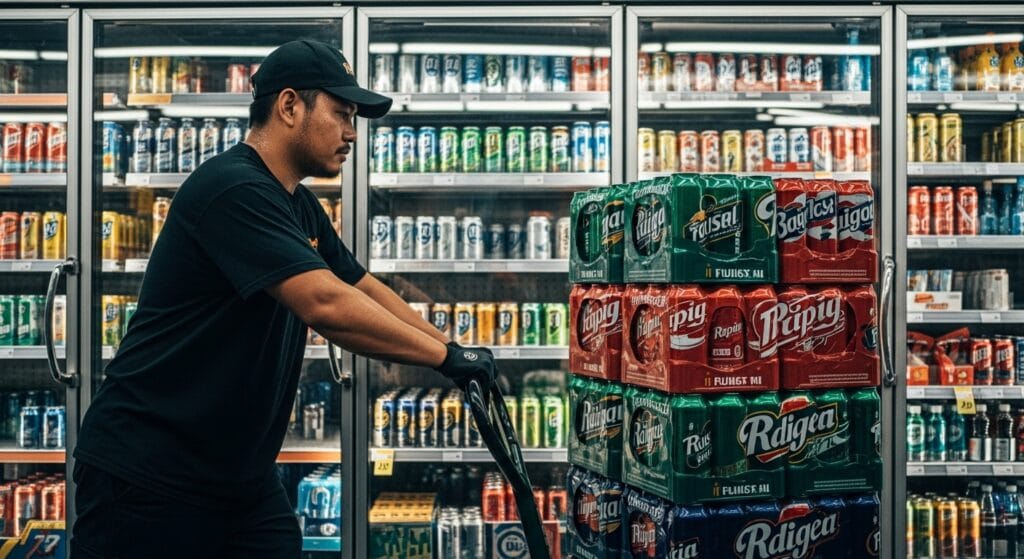
You pull up to a 7-Eleven or Chevron station. You hand-truck 30–50 cases of Coke, Pepsi, or beer down the ramp, wheel them into the store, and stock the coolers yourself. You rotate product using FIFO (First In, First Out) to prevent expiration losses. You build promotional displays—those massive Gatorade pyramids or Super Bowl beer towers? That’s you, on your knees with a box cutter, while customers ask where the bathroom is. You organize the back room, break down cardboard, and haul it to the dumpster. If you leave the store messy or mis-stock a shelf, the sales rep gets complaints, and you get written up.
This is the “back-breaking” difference between beverage delivery and other local trucking jobs. A Sysco foodservice driver uses a two-wheeler and drops boxes at a restaurant dock. A FedEx driver scans packages and moves on. But a beverage merchandiser? You’re lifting 20,000–30,000 pounds of liquid by hand daily. A 12-pack of Coke weighs 10 pounds. A case of beer weighs 20–24 pounds. A keg? 160 pounds. Multiply that across 15–20 stops, factor in stairs (convenience stores rarely have loading docks), and you understand why turnover in side loader roles is astronomical.
The Pay Structure Reflects the Hustle:
Most beverage companies use a base + commission model, especially for beer. You might earn $150/day base + $0.30 per case delivered. On a heavy route (600+ cases), you’re clearing $330/day ($82,500 annually). On a light route (300 cases), you’re stuck at $240/day ($62,400 annually). This incentivizes speed. Slow drivers who take 10–12 hours to finish a route see their effective hourly rate plummet to $20–$22/hour. Fast drivers who crush the route in 7–8 hours bank $35–$40/hour equivalent.
The commission structure is why beer distributors pay more. Alcohol has higher margins, and independent wholesalers pass those savings to drivers. Kegs, in particular, generate massive commissions—$2–$5 per keg in some contracts. During football season or summer barbecue surges, keg-heavy routes can spike paychecks by $300–$500/week.
Bulk Delivery: The Non-Merchandising Alternative
If you want to avoid the stocking grind, chase bulk delivery roles. These are Class A CDL positions where you drive a 53-foot dry van or lift-gate trailer to Walmart, Kroger, or Costco docks. You deliver palletized loads—no hand-stacking, no cooler rotation. You bump the dock, use an electric pallet jack to slide pallets off, and a store employee handles the rest. Merchandising? Minimal to zero. A separate “Merchandiser” (often driving a car) meets you there to handle shelf stocking.
The catch? Bulk jobs are seniority-based. You’re competing against internal transfers with 3–5 years of side loader experience. But once you’re in, it’s the easiest money in local trucking: $32–$38/hour, home nightly, weekends off, and your back survives past age 40.
The Union Advantage: Why Teamsters Dominate Beverage Pay
Let’s address the elephant in the warehouse: Teamsters union membership is the single biggest pay differentiator in beverage delivery. A union driver typically earns $4–$8 more per hour than a non-union counterpart doing the identical job. But the real wealth isn’t just the hourly rate—it’s the benefits package.
What Teamsters Contracts Deliver:
Health insurance premiums: $0. Most Teamsters beverage contracts include fully employer-paid family health coverage. Non-union Pepsi or Coke drivers pay $200–$400/month in premiums. Over a year, that’s $6,000 in savings before you even factor in the higher base wage.
Pension contributions. Legacy Teamsters contracts still include defined-benefit pensions (though newer contracts are shifting to 401(k) hybrids). An Illinois beer driver with 25 years of service can retire on $3,500–$4,500/month in pension income alone.
Annual raises. Union contracts guarantee cost-of-living adjustments (COLA) and step increases. You’re not begging for a raise—it’s written into the CBA (collective bargaining agreement). A five-year Teamsters driver earns 15–20% more than a five-year non-union driver at the same company.
Overtime protections. Time-and-a-half after 40 hours is non-negotiable. Union contracts prevent companies from “banking hours” or manipulating schedules to dodge overtime pay.
Grievance procedures. Got written up unfairly? Union stewards fight back. Non-union drivers are at-will employees with zero recourse.
The data is stark: Chicago Teamsters Local 727 beverage drivers earn $78,000–$92,000 annually, while non-union Atlanta Coke drivers doing the same side loader work pull $58,000–$68,000. Geography matters, but union density matters more. When evaluating beverage delivery salary offers, always ask: “Is this a Teamsters shop?”
Salary by State: Top Distribution Markets
Beverage pay correlates with two factors: summer heat (volume) and union density. States with scorching summers drive massive seasonal demand, while states with strong labor unions enforce higher base wages. Here are the top-paying markets for beverage truck drivers in 2026:
| Rank | State | Est. Annual Income | Why? |
|---|---|---|---|
| 1 | Illinois | $78,000–$92,000 | Chicago Teamsters Local 727 secures industry-leading hourly rates. High-density urban routes with premium commission structures. |
| 2 | New Jersey | $75,000–$88,000 | High population density, strong union presence, and proximity to NYC metro distribution hubs. |
| 3 | Washington | $74,000–$86,000 | High minimum wage floor ($16.28/hour in 2026) pushes beverage driver rates upward. Strong Teamsters contracts in Seattle. |
| 4 | Massachusetts | $72,000–$85,000 | Summer demand (Cape Cod, Boston) drives massive seasonal commissions. Legacy union contracts in Boston metro. |
| 5 | California | $70,000–$84,000 | Cost-of-living adjustments and strict overtime laws (double-time after 12 hours) inflate total compensation. |
Bottom 5 Lowest-Paying States: Mississippi ($48,000–$58,000), Florida ($50,000–$60,000, surprising given high volume but non-union dominance), Alabama ($51,000–$61,000), Arkansas ($52,000–$62,000, Walmart HQ influence suppresses logistics wages), and West Virginia ($53,000–$63,000, difficult terrain for lower mileage pay).
The state-to-state variance is massive. A Budweiser driver in Chicago earns 60% more than an identical role in Jackson, Mississippi. If you’re mobile and chasing top dollar, relocate to union-heavy Midwest or Northeast markets.
Coca-Cola vs. Pepsi vs. Beer: The 2026 Pay Hierarchy
Coca-Cola Consolidated restructured its pay model in 2024–2025, shifting from pure commission to higher hourly base rates to combat retention issues. The result? More stable paychecks ($58,000–$72,000 annually), but less upside for hustle-oriented drivers. Coke routes are tightly managed, often require extensive merchandising (rotating stock, building displays), and come with rigorous delivery schedules. The advantage? Year-round volume. Even in winter, Coke maintains steady demand, unlike seasonal beer spikes.
PepsiCo leans hourly ($26–$29/hour) rather than commission, offering predictable paychecks but capping earning potential. The tradeoff? Overtime abundance. Because Pepsi cross-docks with Frito-Lay snack logistics, drivers often pull double duty on mixed loads. This creates massive OT opportunities, especially during summer promotional pushes (think Fourth of July combo packs or Super Bowl chip-and-soda displays). Pepsi delivery pay is competitive, but the hours are longer, and the physical demands are heavier due to multi-SKU merchandising.
Budweiser/Beer Distributors dominate the pay hierarchy ($62,000–$85,000 annually) for three reasons: (1) Commission premiums on kegs—a single keg delivery can earn $3–$5 in commission, and bars/restaurants order 10–30 kegs per delivery; (2) Independent ownership—family-run beer wholesalers have tighter profit margins but pass savings to drivers to retain talent; (3) Teamsters density—alcohol distribution has historically stronger union penetration than corporate soda. If you’re chasing beer delivery truck jobs, prioritize independent wholesalers with union contracts. The pay ceiling is 30–40% higher than equivalent Coke/Pepsi roles.
Keurig Dr Pepper sits at the bottom ($52,000–$65,000 annually), offering lower volume routes with less physical strain but reduced earning potential. This is the “lifestyle” beverage job—home by 3 PM, manageable workload, but you’re leaving $15,000–$20,000 on the table annually compared to beer.
Seasonality: The Summer Surge
Beverage delivery income is wildly seasonal. From Memorial Day to Labor Day, demand doubles. Drivers are forced into 6-day workweeks, 60+ hour schedules, and relentless overtime. But that’s when the money hits.
Winter paycheck (40 hours): $1,100–$1,300/week. You’re running a manageable 5-day schedule, 18–20 stops daily, home by 4 PM.
Summer paycheck (60+ hours): $1,800–$2,400/week. The grind is brutal. You’re running 6 days, stocking beach coolers, concert venues, and amusement parks. Overtime kicks in after hour 40, and commission structures on high-volume routes skyrocket. Some drivers double their base pay during peak summer months.
Companies hire seasonal drivers specifically for this window—$21–$24/hour, zero benefits, explicitly temporary. But here’s the insider move: seasonal hires get first crack at permanent positions. Prove you can handle the summer chaos, and you’ll convert to full-time in the fall. Many drivers intentionally take seasonal beer gigs as a 90-day audition for a $75,000+ union job.
CDL Requirements: Class A vs. Class B
The beverage world splits along CDL lines:
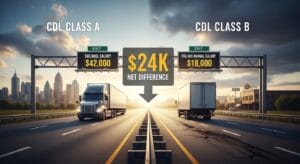
Class B (Straight Truck): Side loaders, merchandiser routes, local bay delivery. You’re driving a single-unit truck (no trailer), making tight urban stops, and doing all the heavy lifting. Pay: $24–$28/hour. Easier to hire into, brutal on the body.
Class A (Tractor-Trailer): Bulk delivery, drop-and-hook routes, plant-to-warehouse transfers. You’re pulling a 53-foot trailer, bumping docks, and rarely touching freight. Pay: $32–$38/hour. Requires experience and often internal seniority.
Pro tip: Even if you’re applying for Class B side loader jobs, get your Class A CDL first. Companies prioritize Class A holders because you can cover bulk routes during vacations or peak seasons. Having a Class A gets you hired faster and positions you for internal promotions.
Frequently Asked Questions
Do I need a CDL Class A or Class B for beverage delivery?
Class A is strongly preferred, even for side loader jobs. While many merchandiser trucks are technically Class B vehicles, companies want flexibility. If you hold a Class A, you can cover bulk routes (tractor-trailers delivering to Walmart/Kroger docks) when needed. This makes you more hireable and positions you for internal promotions to higher-paying, less physical roles. Bottom line: Get your Class A before applying—it opens more doors and accelerates your career trajectory.
Is beverage delivery hard on your back?
Absolutely. Side loader merchandiser roles are among the most physically demanding jobs in trucking. You’re lifting 20,000–30,000 pounds of liquid daily—hand-trucking cases down ramps, stocking shelves, rotating product, and hauling kegs (160 pounds each). Drivers report chronic lower back pain, knee issues, and shoulder strain. The industry has high injury rates, and many drivers transition to bulk delivery (no-touch freight) after 2–3 years to preserve their bodies. If you have pre-existing back problems, beverage delivery isn’t sustainable long-term. However, bulk/transport roles (palletized delivery to big-box stores) eliminate most physical strain—you’re just bumping docks and using electric pallet jacks.
Do you get free drinks as a beverage driver?
Sort of. Most companies allow drivers to take damaged or “out-of-code” product (expired or close to expiration). Some distributors offer employee discounts (20–30% off) on cases purchased through internal channels. You won’t get unlimited free Coke or beer, but you’ll rarely pay full retail. Budweiser/Miller wholesalers often let drivers take home “short-dated” kegs for personal events at steep discounts. It’s a small perk, but popular among drivers.
Data Methodology
All salary figures in this guide are derived from 2026 industry reports, including Teamsters Local 727 union contracts (Illinois), Coca-Cola Consolidated and PepsiCo Beverages North America driver job postings, independent beer distributor pay scales (Reyes Holdings, Ben E. Keith), and Bureau of Labor Statistics (BLS) Occupational Employment and Wage Statistics for Heavy and Tractor-Trailer Truck Drivers (SOC 53-3032) cross-referenced with beverage-specific adjustments. State-level data reflects regional union density, cost-of-living indexes, and seasonal demand patterns validated through driver surveys and Glassdoor/Indeed salary aggregators. Commission structures and seasonal pay fluctuations are based on first-hand driver reports and publicly available Teamsters contract language from 2024–2026 negotiations.
“If you are looking for Delivery Driver jobs, check out our guides on [DHL Delivery Driver] and [Sysco Delivery].”