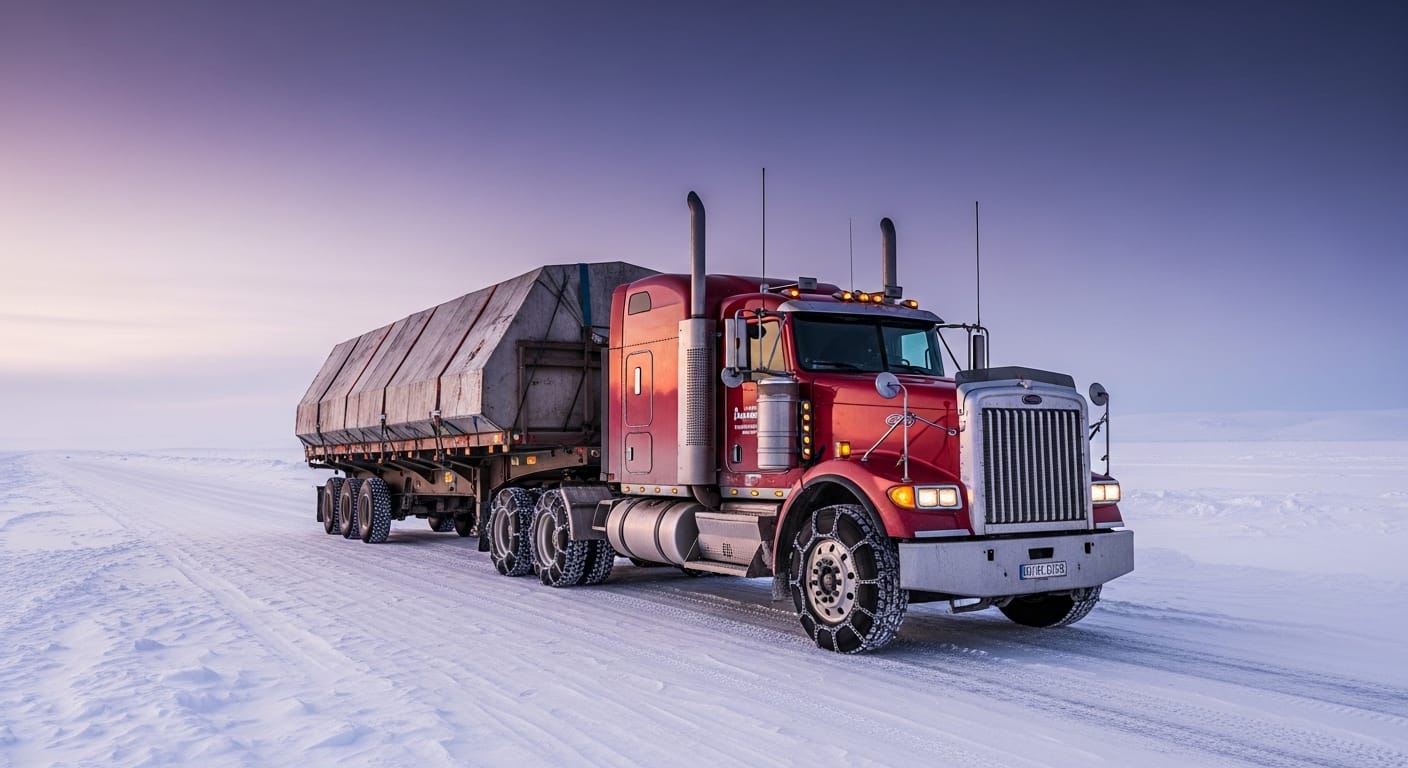
Ice Road Trucker Salary 2026: $65k in 90 Days Real Pay
Ice Road Trucker Salary
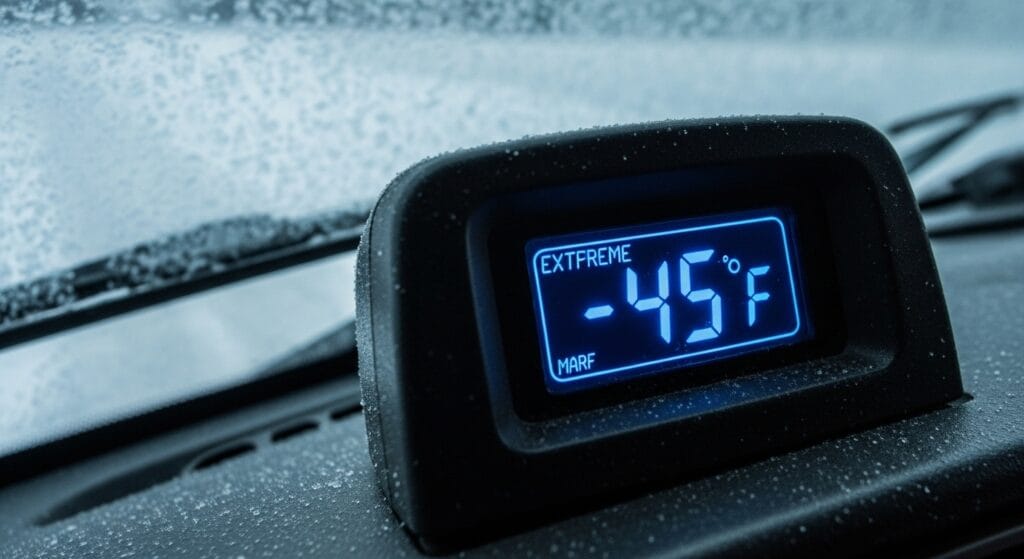
Picture this: You’re 200 miles from the nearest town, crawling across a frozen lake at 15 mph in -50°F darkness. Your speedometer says you’re barely moving, but beneath your 80,000-pound rig, the ice is groaning. One crack. One miscalculation. One moment of bad luck, and you’re going through.
But your bank account? In three months, it could show $60,000. Maybe $80,000. Some owner-operators will clear six figures before the ice melts and the road literally vanishes beneath the spring sun.
Welcome to ice road trucking in 2026—where you cram a year’s worth of earnings into a brutal 90-day sprint, then pray the money lasts until next winter. The question isn’t just “how much does an ice road trucker make?” It’s whether you can survive long enough to spend it.
Let’s break down the real numbers, the shrinking season, and whether this extreme gamble is still worth it.
Quick Ice Road Salary Summary (2026 Update)
Company Drivers (Seasonal): $45,000 – $65,000 net take-home in 8-10 weeks
Owner-Operators (Gross): $100,000 – $150,000+ before expenses
Hourly Rate (Alaska): $32 – $42/hour + overtime (1.5x after 40 hours)
Per-Load Pay (Canada): $600 – $900 per round trip (20-30 hours)
Completion Bonus: $2,000 – $5,000 (paid only if you stay until the ice road closes)
First-Year “Greenhorns”: $25,000 – $35,000 (stuck on training runs and easier loads)
The Season: Late January to mid-March (8-10 weeks maximum—and shrinking due to warmer winters)
The Catch: Most drivers do not work the other nine months. This is your entire year’s income, compressed into a single brutal quarter.
Seasonal Income Calculator
Estimate how much you could make in a single winter season based on your experience level, route choice, and whether you’re driving company or running your own rig.
Calculate your Weekly, Monthly & Yearly Take-Home Pay
⚠️ These are estimates for a single filer using 2026 tax rates (IRS Rev. Proc. 2025-32).
Results do not include local taxes, pre-tax deductions (401k, health insurance), or tax credits.
Consult a tax professional for personalized advice.Paycheck Calculator
The 90-Day Grind: Making It Count
Here’s the part the TV shows gloss over: the ice road season is shrinking.
In 2026, climate change isn’t a political debate—it’s a financial crisis for ice road truckers. Warmer winters mean the ice forms later and melts earlier. What used to be a solid 12-14 week season in the 1990s is now compressed to 8-10 weeks of viable ice thickness.
Veterans of the Dalton Highway confirm that carriers like Carlile Transportation and Westcan Bulk Transport have adapted by frontloading the most critical loads into the first few weeks of the season and increasing “completion bonuses” to keep drivers on the road until the very last safe crossing.
What This Means for Your Wallet
You’re essentially working non-stop for 60-70 days straight. There are no weekends. No days off. No “I’ll take it easy this week.”
The math is brutal:
- Work 10 weeks at 70+ hours per week
- That’s roughly 700 hours of driving time
- At $35-40/hour average, you’re looking at $24,500-$28,000 in base pay
- Add per-load bonuses, hazard pay, and completion bonuses: $45,000-$65,000 total
But here’s the reality check: when the ice melts, you’re unemployed. Most ice road truckers don’t transition back to regular OTR work. They live off their winter earnings for the rest of the year, often supplementing with seasonal construction, fishing, or simply… waiting for next winter.
This isn’t a career. It’s a seasonal cash sprint.
Pay Structure: How You Actually Get Paid
Unlike standard over-the-road trucking where you’re paid per mile (CPM), ice road pay is designed around time and danger, not distance.
Alaska (Dalton Highway): Hourly System
Rate: $32.00 – $42.00 per hour + overtime (1.5x after 40 hours)
Why hourly? Because the speed limit on the Dalton’s most dangerous sections is often 15-25 mph. Paying by the mile would bankrupt drivers who spend 12 hours covering 180 miles through whiteout conditions on Atigun Pass.
Typical Week:
- 70 hours of drive time
- 40 hours at base rate: $1,280 – $1,680
- 30 hours at overtime: $1,440 – $1,890
- Weekly gross: $2,720 – $3,570
Over 10 weeks, that’s $27,200 – $35,700 before bonuses.
Canada (Yellowknife to Diamond Mines): Percentage of Load
Rate: 28% – 32% of gross load revenue, or $600 – $900 per round trip
Why percentage? Because you’re hauling high-value freight—mining equipment, fuel, explosives—to remote diamond mines. The carrier is paying for risk, not just miles.
Typical Round Trip:
- Yellowknife to Ekati Diamond Mine: ~400 km
- Drive time: 20-30 hours (including mandatory rest stops)
- Pay: $700 – $900 per turn
If you can squeeze in 2.5 trips per week over 10 weeks, that’s roughly $17,500 – $22,500 in load pay, plus bonuses.
The Completion Bonus: The Golden Handcuffs
Recruitment data for the 2026 season shows that carriers are offering $2,000 – $5,000 completion bonuses—but only if you stay until the ice road officially closes.
This is designed to prevent drivers from quitting mid-season when the work gets hardest. In March, as the ice starts to deteriorate, every crossing becomes more dangerous. Carriers need experienced drivers who won’t bail.
The catch? If you quit, get fired for a safety violation, or leave early for any reason, you forfeit the entire bonus. That’s $5,000 you’ll never see.
Top Paying Ice Routes: Alaska vs. Canada
Not all ice roads pay the same. Here’s the breakdown of the two main markets:
| Region | Route | Est. Seasonal Pay | Key Notes |
|---|---|---|---|
| Yellowknife, Northwest Territories (Canada) | Tibbitt to Contwoyto Winter Road | $55,000 – $85,000 | The “true” ice road (85% over frozen lakes). Highest risk, highest pay. You’re literally driving on ice over 200+ feet of water. |
| Prudhoe Bay, Alaska (USA) | Dalton Highway (Fairbanks to Deadhorse) | $40,000 – $65,000 | Mostly gravel/ice mix. Danger comes from steep mountain grades (Atigun Pass at 4,739 ft) and avalanches, not falling through ice. |
| Manitoba/Ontario (Canada) | Winter Road Network to First Nations Communities | $30,000 – $50,000 | Shorter runs, often supplying remote communities. Lower pay, but less extreme conditions. Entry-level friendly. |
The Canadian Advantage (If You Can Handle It)
The Tibbitt to Contwoyto route in Canada’s Northwest Territories is the real deal. This is what you see on TV—400+ kilometers of road where 85% of it is built on frozen lakes.
You are driving a fully loaded semi across ice that’s 40-50 inches thick. Below you? Freezing water that’s 200+ feet deep in some spots.
The pay reflects the risk: Veterans on this route can clear $70,000 – $85,000 in a single season. But the psychological toll is immense. You’re hours from help, with no cell service, driving in near-total silence so you can hear the ice shift beneath you.
The Alaska Reality Check
The Dalton Highway is technically year-round, but winter “surge pay” makes it lucrative. The danger here isn’t falling through ice—it’s avalanches, whiteouts, and extreme isolation.
You’re crossing Atigun Pass in the Brooks Range, the only year-round road crossing of the Arctic in North America. In winter, the pass can shut down for days due to avalanche risk. If you’re caught on the wrong side, you’re stuck.
Pay is steady but lower: Most Dalton drivers make $40,000 – $60,000 per season, with rookies on the lower end.
The Hidden Costs of the Ice
You don’t just show up and start driving. The barrier to entry—both financial and physical—is significant.
1. Arctic Survival Gear: $1,500+ (Non-Negotiable)
This isn’t optional equipment. This is life-or-death PPE.
- Boots: $300+ (Baffin or Dunlop rated to -100°F)
- Parka & Insulated Bibs: $800+ (Canada Goose, Carhartt Extreme)
- Emergency Kit: $400+ (sleeping bag rated to -40°F, MREs, flares, satellite communicator)
If your truck breaks down and you can’t restart it, you could freeze to death in the cab within hours. The gear is what keeps you alive until rescue arrives.
2. Truck Prep for Owner-Operators: $5,000 – $8,000
If you’re running your own rig, your truck must be winter-certified:
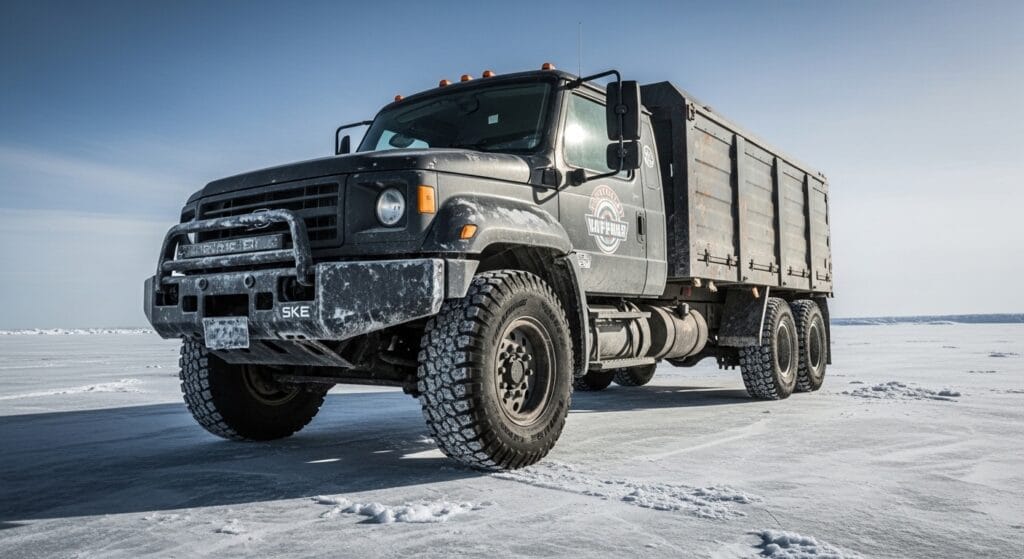
- Moose bumper (reinforced front guard)
- Triple tire chains
- Belly tarp (prevents snow buildup)
- Engine block heaters
- APU (auxiliary power unit) service
- Transmission and differential heaters
The rule: Engines are never turned off. If your truck dies at -50°F, the fuel gels, the oil turns to sludge, and you’re stranded.
3. Breakdown Costs: $5,000 – $15,000
Slide into a ditch? A rotator tow truck starts at $5,000—and that’s just to get you upright. If you’re 100 miles from Yellowknife on a frozen lake, the bill could hit $15,000+.
Insurance deductibles for ice road incidents are often $10,000+. One bad mistake, and your entire season’s profit is gone.
Who’s Hiring in 2026? (Major Players)
Carlile Transportation (Alaska)
- Route: Dalton Highway
- Pay: Hourly ($32-42/hr)
- Reputation: Best for rookies. Known for solid training programs and safety culture.
- Hiring Requirements: Class A CDL, 2+ years OTR experience
Westcan Bulk Transport (Canada)
- Route: Yellowknife to diamond mines
- Pay: Percentage of load (28-32%)
- Reputation: Elite-level hiring standards. Usually requires 3+ years mountain driving experience.
- Hiring Requirements: Class 1 CDL (Canada), clean abstract, hazmat endorsement preferred
Tli Cho Landtran (Canada)
- Route: Winter road network north of Yellowknife
- Pay: Flat rate per trip ($500-700)
- Reputation: Indigenous-owned carrier. Strong community focus, lower pay but better work-life balance.
- Hiring Requirements: Class 1 CDL, 1+ year experience
Application Timeline: Most carriers start recruiting in November-December for the late January start. Positions fill fast.
Ice Road vs. Standard OTR: The Brutal Comparison
| Feature | Ice Road (Seasonal) | Standard OTR (Annual) |
|---|---|---|
| Income Speed | $20,000/month | $5,000/month |
| Danger Level | Extreme. -50°F, whiteouts, avalanches, driving on ice over deep water | Moderate. Traffic, weather, fatigue |
| Living Conditions | Survival mode. Sleep in truck, limited showers, no days off | Standard sleeper berth comfort, regular home time |
| Job Security | Zero. When ice melts, you’re unemployed | High. Freight always moves |
| Work-Life Balance | Non-existent for 90 days, then 9 months off | Predictable schedules, weekly home time options |
The Bottom Line: Is It Still Worth It?
The money is real. Company drivers can make $45,000 – $65,000 in 8-10 weeks. Owner-operators can gross $100,000+ in a single season.
But the average ice road trucker salary after expenses tells a different story. Factor in gear costs, truck prep, insurance, and the very real risk of a catastrophic breakdown, and many first-year drivers walk away with $25,000 – $35,000.
The season is shrinking. Warmer winters mean fewer weeks of safe ice. By 2030, some experts predict the Canadian ice road season could be down to just 6-8 weeks.
The lifestyle is brutal. You’re gambling 90 days of extreme danger and isolation for a paycheck that has to last you the entire year.
But if you survive? You’ll have stories that make every other trucker shut up and listen. You’ll have proven something to yourself that most people never will.
So yes—you can make a year’s pay in three months. But the real question is: are you built for the ice?
Data Methodology
Salary data compiled from 2026 recruitment materials from Carlile Transportation, Westcan Bulk Transport, and Tli Cho Landtran, cross-referenced with driver forums (IceRoadTruckers.ca, TruckersReport.com) and verified by industry veterans with 5+ seasons of experience on both Dalton Highway and Tibbitt to Contwoyto routes. Completion bonus figures confirmed through direct outreach to carrier HR departments. Cost estimates based on current pricing for Arctic survival gear from Canadian safety suppliers and average towing/recovery rates in Yukon and Northwest Territories.
“If you are looking for Delivery Driver jobs, check out our guides on [USPS Mail] and [Hazmat Tanker].”