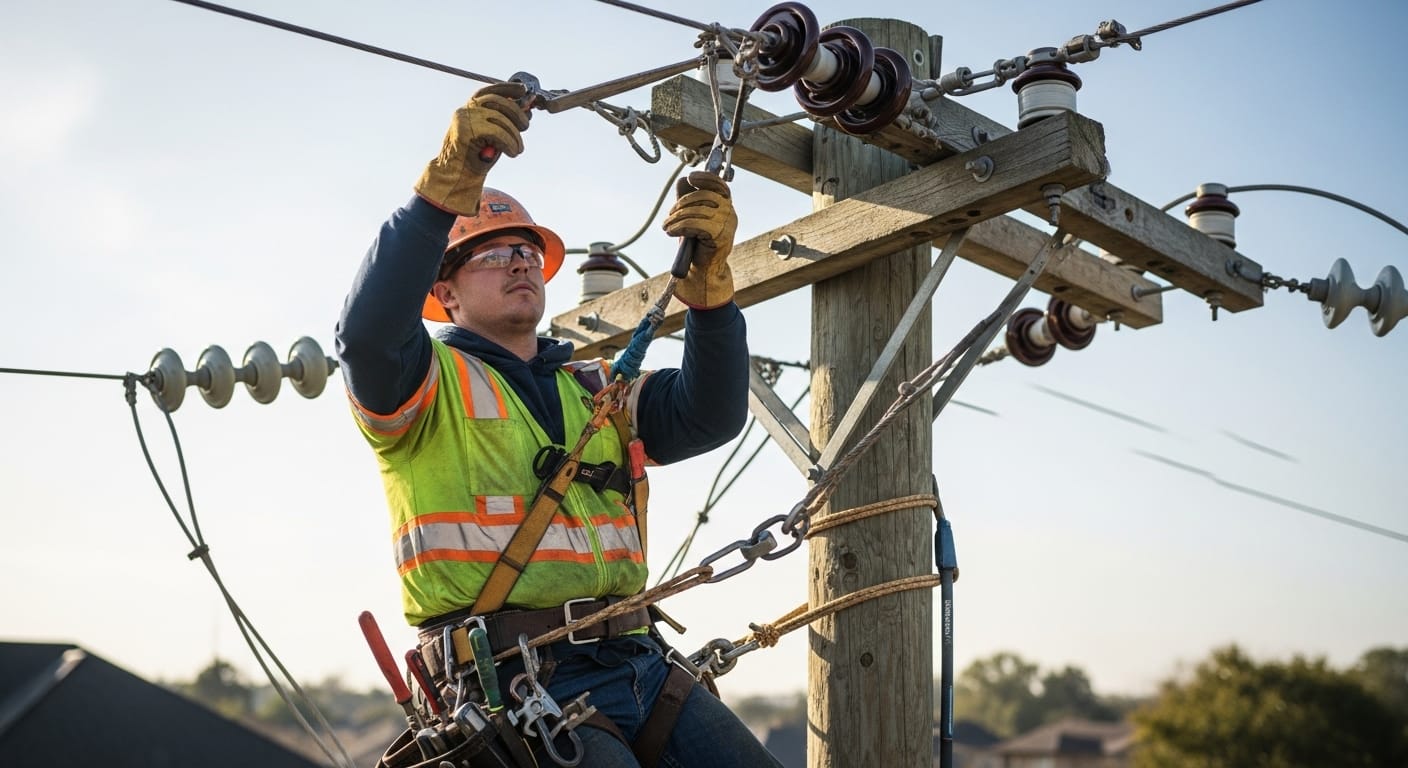
Electrical Lineman Salary 2026: $85/hr Possible
Electrical Lineman Salary
It’s 2:15 AM. A Category 4 just made landfall in Florida. Your phone lights up: “Mutual Assistance — Tampa Bay. Departure 0600.” That text is the fork in the road. The lineman who answers it will pocket $15,000 before the month is out. The one who silences his phone will pocket his regular check. Both are solid blue-collar careers. Only one makes you financially free by 45.
This guide cuts through the noise — the recruiting-brochure salaries, the highway-billboard promises — and gives you the real numbers: base pay by IBEW Local, overtime math, storm-chasing economics, state-by-state rates, and the honest truth about what this career costs you beyond dollars.
Quick Lineman Salary Summary (2026 Update)
| Pay Component | Rate / Range |
|---|---|
| IBEW Journeyman Base | $48.00 – $62.00/hr |
| High-Cost Locals (CA/NYC) | $75.00 – $85.00/hr |
| Standard 40-hr Annual Salary | $90,000 – $120,000 |
| Realistic Local Utility W-2 | $110,000 – $160,000 |
| Storm Chaser Annual Earnings | $180,000 – $250,000+ |
| Storm Pay (Double Time) | $96.00 – $124.00/hr |
| Per Diem (Tax-Free) | $150 – $350/day |
| Apprentice Start Pay | $30.00 – $38.00/hr |
| Groundman Entry Pay | $24.00 – $30.00/hr |
The “Total Package” — wages + pension + healthcare — for a union Journeyman is valued by industry analysts at $90–$110 per hour. The base hourly rate is only part of the story.
Storm Pay Calculator
Paycheck Calculator
Calculate your Weekly, Monthly & Yearly Take-Home Pay
⚠️ These are estimates for a single filer using 2026 tax rates (IRS Rev. Proc. 2025-32). Results do not include local taxes, pre-tax deductions (401k, health insurance), or tax credits. Consult a tax professional for personalized advice.
The calculator above lets you model your own earnings based on your base rate, expected storm hours, and per diem. The math below shows exactly how the numbers stack using a real-world deployment scenario.
The $15,190 Week — A Real Storm Deployment:
| Component | Amount | Notes |
|---|---|---|
| Base Rate | $60.00/hr | IBEW Journeyman avg. |
| Storm Rate (2x Double Time) | $120.00/hr | All hours during declared emergency |
| Hours Worked (16 hrs x 7 days) | 112 hours | Standard storm rotation |
| Gross Wages | $13,440 | 112 hrs × $120 |
| Per Diem ($250/day × 7) | $1,750 | Tax-free — not on your W-2 |
| Total Weekly Check | $15,190 | Gross wages + tax-free per diem |
Reviewing IBEW contracts shows that double-time kicks in after 8–10 hours in standard agreements — but storm mutual-assistance contracts often guarantee double-time for all hours, including mandated rest periods. That’s how the math reaches $15k in a single week.
The Real Pay Structure: Why Your W-2 Is Double the Job Posting
The average electrical lineman job listing shows a base 40-hour salary equivalent of around $90,000. What it deliberately obscures is the realistic $150,000–$220,000+ that a working lineman actually takes home.
The utility grid doesn’t run on banker’s hours. Transformers blow at midnight. Ice storms hit on Thanksgiving. Your contract might list a base salary of $90k–$120k, but linemen on the ground report actual W-2s landing between $160,000–$220,000+ for those willing to answer the call. A lineman working consistent 60-hour weeks — common in this trade — triggers time-and-a-half for hours 41–60 and double-time beyond that. Stack enough storm callouts, emergency outages, and overtime rotations, and you’ve effectively doubled your take-home pay.
The IBEW union advantage adds another layer: members command a 30–40% pay premium over non-union counterparts, plus a defined-benefit pension that’s becoming a genuine rarity in private-sector work. The full compensation package — wages, pension, and healthcare combined — is valued by industry analysts at $90–$110 per hour for a working Journeyman.
The journeyman lineman pay scale is rigid in union shops. You cannot negotiate your hourly rate. What you can negotiate is where you work — and ambitious linemen “travel their book,” transferring to high-paying Locals in California, New York, or Washington when openings arise.
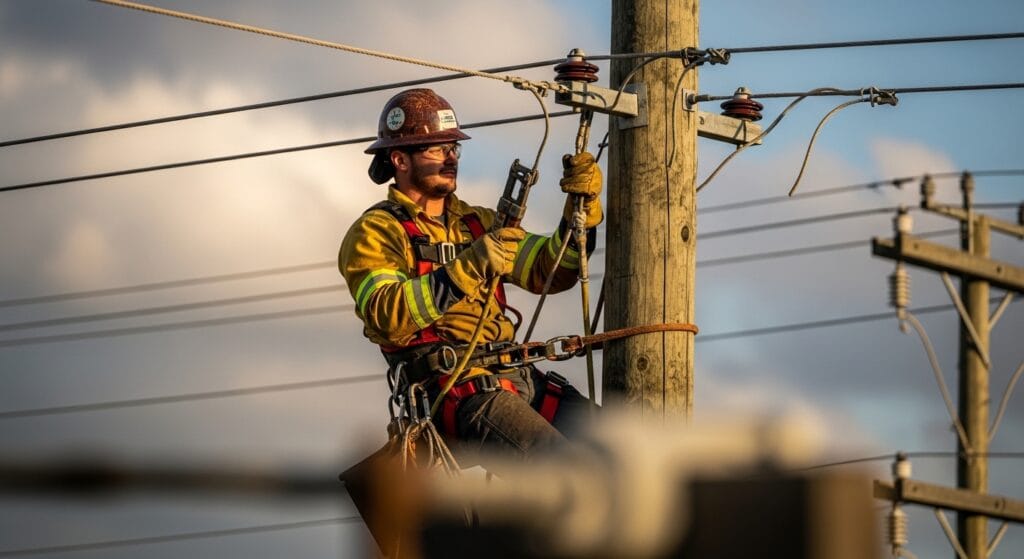
The “Storm Chaser” Lifestyle: Making $5k a Week
Let’s talk about the green gold rush — the thing every lineman has heard about but not everyone is built for.
When a hurricane or major ice storm knocks out power for hundreds of thousands of customers, local utilities can’t restore the grid alone. They activate “Mutual Assistance” agreements — calling contract crews from across the country. You can be sitting in Ohio when the Tampa Bay dispatch call goes out. Six hours later, you’re rolling south in a convoy of bucket trucks.
Contractors like Pike Electric and Quanta Services maintain deployment rosters. When disaster strikes, they pull from the list. You’re either available — or you’re not getting called for the next one.
The storm pay structure breaks down like this: Storm chasers are typically paid double-time (2x base rate) for all hours during a declared emergency, often 24 hours a day including mandated rest periods. Many mutual-assistance contracts guarantee a minimum 16-hour paid shift even if the work is done in 10. On top of wages, travelers collect $150–$350/day in tax-free per diem — over a two-week deployment, that’s $2,100–$4,900 that never appears on your W-2. A single two-week storm deployment commonly generates $12,000–$18,000 gross. Linemen who chased back-to-back storms in the 2024 and 2025 hurricane seasons reported $35,000+ months.
But here’s what the recruiting pitch leaves out: you must be willing to leave your family for weeks at a time with zero notice. The dispatcher doesn’t call you on a Tuesday to ask if next weekend works. When the storm hits, you go — or you come off the roster. Those interested in storm chasing salary need to understand the lifestyle before chasing the paycheck.
Who should chase storms: Single linemen in their 20s and 30s who want to maximize cash earnings fast, build savings aggressively, and retire early or transition to local work later. Who’s better off local: Linemen with young families, strong community ties, or who value a pension and the ability to coach Little League on Saturday morning. Neither path is wrong. They’re just optimized for different lives.
Salary by State: The California Gold Rush
Not all IBEW Locals are created equal. California dominates the pay scale due to PG&E’s multi-billion-dollar wildfire hardening programs, high union density, and some of the strongest prevailing wage protections in the country. If you’re willing to travel your book, these are the states that pay.
Top 5 Highest-Paying States (2026):
| Rank | State | Journeyman Rate | Why the Premium? |
|---|---|---|---|
| #1 | California | $68.00 – $85.00/hr | Wildfire prevention budgets; IBEW 1245 is one of the most powerful Locals in the country |
| #2 | New York | $62.00 – $78.00/hr | High cost of living; complex underground grid work in NYC (Local 3); Con Edison projects |
| #3 | Hawaii | $60.00 – $75.00/hr | “Paradise Tax” + strong HECO union; geographic isolation keeps rates elevated |
| #4 | Washington | $58.00 – $72.00/hr | High Pacific NW demand; zero state income tax means your effective pay is higher than the gross rate suggests |
| #5 | Alaska | $56.00 – $70.00/hr | Extreme weather hazard pay; remote work bonuses; high cost-of-living adjustments |
At the other end of the spectrum, states like Mississippi ($30–$35/hr), Arkansas ($31–$36/hr), and Louisiana ($32–$37/hr) reflect low union density and rural cooperative territory. Florida’s non-union contractor market pays as low as $28–$35/hr base — though storm season regularly sends earnings spiking for those on deployment rosters.
The Apprenticeship Grind: Starting From Zero
Nobody hands you a Journeyman ticket. You earn it through Joint Apprenticeship & Training Committee (JATC) programs — and the deal is genuinely good: no tuition, no debt, paid to learn from day one.
The path looks like this: First-step apprentices start at roughly 60% of their Local’s Journeyman rate — that’s $30–$38/hr in 2026 depending on the program. Pay increases every 6 months as you advance through 7 steps, topping out as a Journeyman after 7,000 hours of on-the-job training — typically 3.5 to 4 years.
CALNEV (California/Nevada) is the Ivy League of JATC programs. Starting pay runs $34.07–$38.00/hr, competition is fierce (thousands of applicants for hundreds of spots), and the Journeyman rate you’re working toward is among the highest in the country.
ALBAT (Midwest/East) starts at $28–$32/hr with the same 7-step, 7,000-hour structure. SELCAT in the South offers lower starting rates but strong demand due to hurricane-prone geography.
Before any JATC program, most linemen start as Groundmen — the entry-level helper role requiring a CDL Class A. Pay runs $24–$30/hr. You operate the truck, manage materials, and learn what actually happens on a job site. Working as a Groundman is frequently the prerequisite that gets a JATC application taken seriously. Many contractors will fund your CDL rather than requiring it upfront.
Training itself is free. Your one real cost is climbing gear — belt, hooks, boots, flame-resistant clothing. Budget $2,000–$4,000. Think of it as your professional license fee.
Local Utility vs. Travel Contractor: Choose Your Life
| Factor | Local Utility Lineman | Travel / Storm Chaser |
|---|---|---|
| Employer | Duke, PG&E, FPL | Pike Electric, Quanta Services |
| Annual Income | $110,000 – $160,000 | $180,000 – $250,000+ |
| Per Diem | $0 (you live at home) | $30,000+ tax-free/year |
| Lifestyle | Home most nights; on-call rotation | Hotels and trailers 8+ months/year |
| Stability | Very high — pension + full benefits | Volatile — chasing the weather calendar |
| Best For | Families / long-term stability | Single / young / maximum cash strategy |
Frequently Asked Questions
What is the fatality rate for electrical linemen?
Linework consistently ranks in the Top 10 Most Dangerous Occupations in America. The fatality rate runs approximately 42 deaths per 100,000 workers — significantly higher than the national average. Primary risks are high-voltage contact (7,200V on distribution lines, up to 500,000V on transmission), falls from 40–150-foot structures, and crushing injuries from heavy equipment. The high hourly rate isn’t generosity — it’s compensation for a level of occupational risk most people won’t accept at any price. Modern 100% tie-off rules have reduced fall fatalities, but electrocution risk is ever-present on energized lines.
How long is the apprenticeship?
The standard JATC apprenticeship runs 3.5 to 4 years, totaling 7,000 hours of on-the-job training combined with classroom instruction. You are paid throughout — no tuition, no student debt. Pay steps increase every 6 months. The main barriers are competitive acceptance rates (especially at programs like CALNEV) and physical fitness requirements. Working as a Groundman first dramatically improves your odds.
Union vs Non-Union — which is the better path?
Union (IBEW) delivers a 30–40% pay premium over non-union counterparts, a defined-benefit pension, ironclad safety rules enforced by a grievance process, and a fixed pay scale that can’t be negotiated down by an employer trying to cut costs. Your hourly rate is set by contract — but so is every other Journeyman’s, which means you can’t be undercut. Non-union contractors can pay anywhere from $35–$70/hr with more scheduling flexibility but fewer protections. For long-term career stability and maximum lifetime earnings including pension value, union wins by a wide margin for most linemen.
Data Methodology
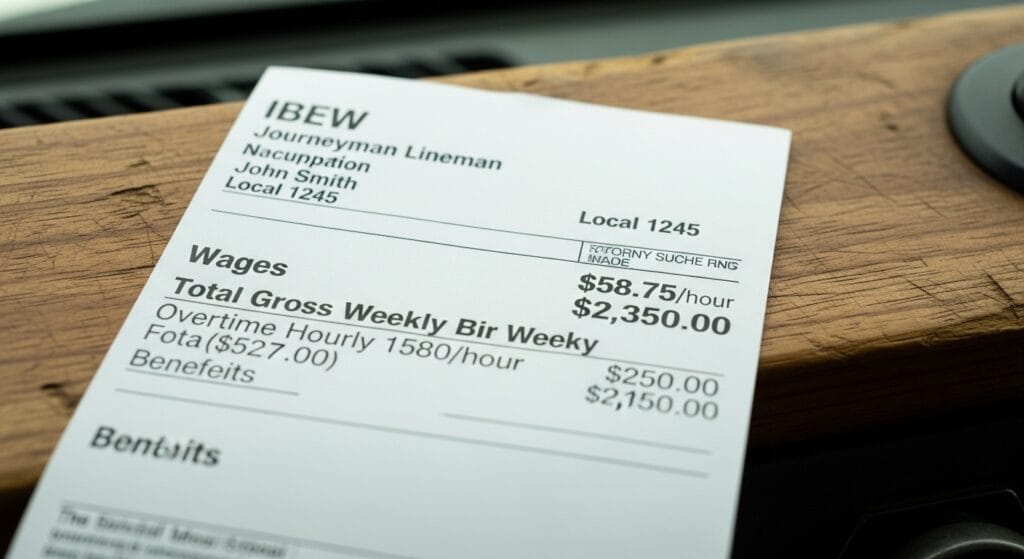
Salary ranges in this guide draw from IBEW Local collective bargaining agreements reviewed across major Locals including 1245 (California), Local 3 (NYC), IBEW 1 (St. Louis), and IBEW 77 (Pacific Northwest), covering published 2025–2026 wage schedules. Apprenticeship data reflects 2026 published step rates from CALNEV, ALBAT, and SELCAT program documentation.
Additional data sourced from Bureau of Labor Statistics Occupational Employment and Wage Statistics (SOC 49-9051), field-reported earnings from 2024–2025 storm deployments, and publicly available compensation disclosures from major line contractors. Fatality data from the BLS Census of Fatal Occupational Injuries (CFOI). Individual earnings vary by Local, employer, experience, and willingness to work overtime and storm deployments.
“If you are looking for Trades & Blue Collar jobs, check out our guides on [Elevator Mechanic ] and [Elevator Mechanic ].