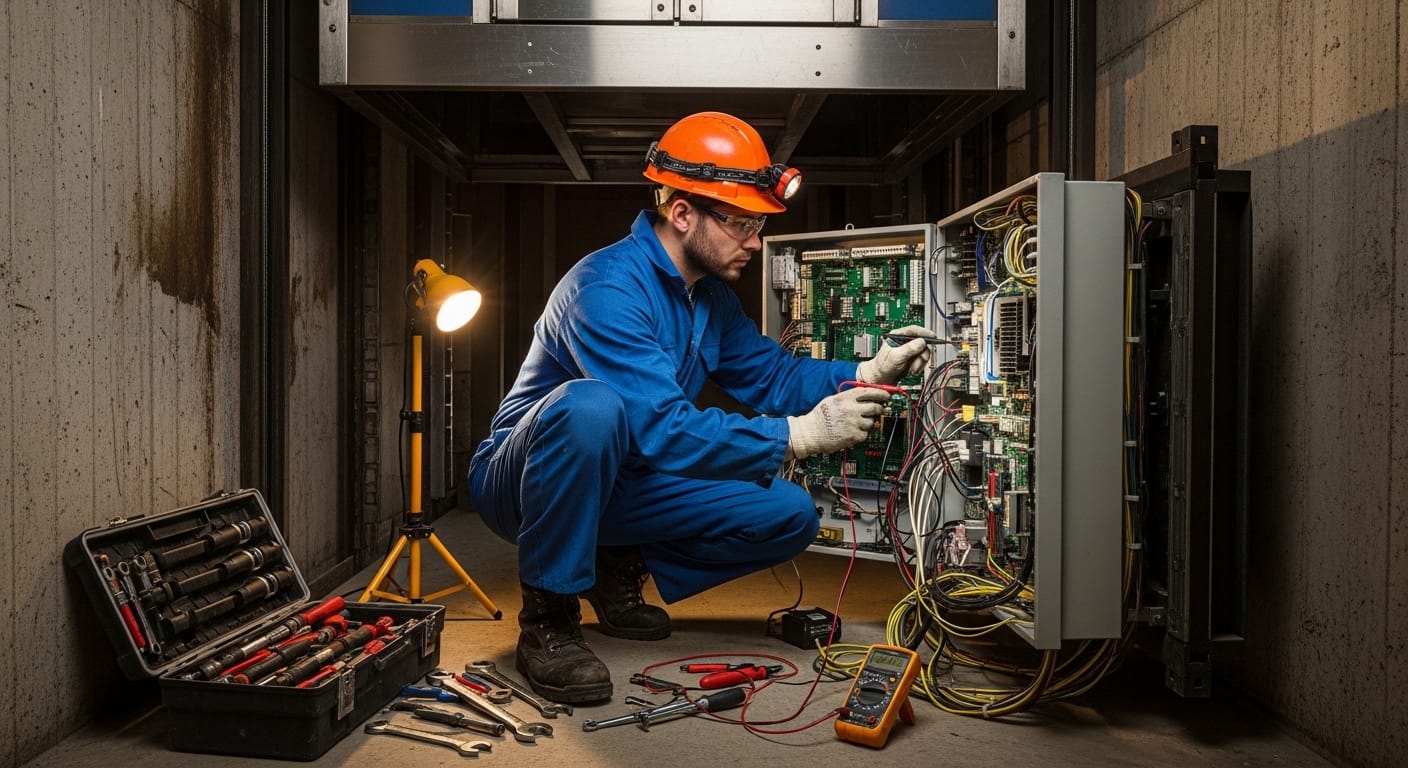
Elevator Mechanic Salary 2026: $96/hr Real Pay Data
Elevator Mechanic Salary
There’s a profession in America where you can earn more than the average software engineer, retire before age 55 with a guaranteed monthly check for life, and never spend a dollar on a college degree. Most people have never seriously considered it—and that’s exactly why the ones who got in are so quiet about it.
Elevator mechanics in the International Union of Elevator Constructors (IUEC) are building some of the most financially secure careers in the entire labor market. No tuition debt. No equity that evaporates when the stock market corrects. Just a union contract, a guaranteed wage scale, and a pension that pays you in your 50s while your college-educated peers are still grinding toward 65.
This guide breaks down exactly what elevator mechanics earn in 2026—by city, by career stage, and by the overtime structures that quietly push total compensation into territory most people associate with executives, not tradespeople.
Quick Elevator Mechanic Salary Summary (2026 Update)
In 2026, IUEC elevator mechanics earn $76–$96/hr at journeyman level in major metro areas. Apprentices start at $38–$45/hr (50% of mechanic rate) and receive automatic raises every year. Mechanics-in-Charge (foremen) exceed $101/hr in top markets. Annual base pay (no overtime) ranges from $158,000 to $210,000 for fully qualified mechanics. The total compensation package—including employer-funded pension and annuity contributions—adds $40–$50/hr on top of taxable wages.
Union Paycheck Calculator
Paycheck Calculator
Calculate your Weekly, Monthly & Yearly Take-Home Pay
⚠️ These are estimates for a single filer using 2026 tax rates (IRS Rev. Proc. 2025-32). Results do not include local taxes, pre-tax deductions (401k, health insurance), or tax credits. Consult a tax professional for personalized advice.
Use the calculator above to model your own projected earnings based on local, apprenticeship year, hours worked, and anticipated overtime. Mechanics we spoke with noted that realistic annual earnings—including overtime—typically run 20–35% above straight-time calculations.
Why the Union Makes You Rich: IUEC Pay Scales
The International Union of Elevator Constructors isn’t just a labor organization—it’s a wealth-building machine for the mechanics who earn their way into it. To understand why, you have to look past the hourly rate and understand how the entire compensation structure is architected.
Guaranteed, Contractual Raises—Not “Merit-Based” Maybes
Most workers rely on annual performance reviews to get raises. Managers have discretion. Budgets get frozen. Promises get broken. IUEC apprentices operate under an entirely different system: raises are written into the collective bargaining agreement and tied to time served, not to whether your supervisor likes you.
Analyzing the latest NEIEP apprenticeship data, the wage progression is structured as a percentage of the full journeyman mechanic rate in your local:
- Probationary (0–6 months): 50% of mechanic rate — No benefits yet, but even at 50%, this is $38–$48/hr in major metro areas
- Year 1: 55% of mechanic rate — Benefits activate. Health insurance, pension contributions, and annuity deposits all begin
- Year 2: 65% of mechanic rate — Apprentices in NYC and Chicago are clearing $53–$59/hr
- Year 3: 70% of mechanic rate
- Year 4 / Assistant Mechanic: 80% of mechanic rate — $60–$77/hr in top-paying locals
Each step is automatic, governed by the contract, and not subject to your employer’s quarterly budget review.
The Mechanics Exam: The Final Gate to Full Rate
At the conclusion of Year 3 or 4, NEIEP apprentices must pass a comprehensive Mechanics Exam covering electrical theory, hydraulics, door operator systems, and code compliance. Pass it, and you advance from 80% to 100% of the mechanic rate—a raise that translates to thousands of dollars annually.
Fail it, and you remain at 80% until you pass. Mechanics confirmed to us that this exam has real weight—it isn’t a formality. The rigor is intentional. It maintains the scarcity of fully certified mechanics, which is the structural reason wages are this high in the first place.
The MIC Premium: 112.5% Standard
Every IUEC contract includes a Mechanic-In-Charge (MIC) rate, the equivalent of a working foreman. An MIC earns 112.5% of the journeyman mechanic rate—not as a vague “leadership bonus” subject to annual review, but as a contractually mandated premium whenever they hold that designation.
In San Francisco in 2026, that’s $103–$108/hour. In New York City, it’s $99–$107/hour. Even in lower-wage markets like North Carolina, MIC mechanics are earning $56–$60/hour.
Salary by City: Where the Skyscrapers Pay Best
IUEC wages don’t operate on a national average—they’re negotiated locally, and the spread between the highest- and lowest-paying markets is dramatic. Analyzing the 2026 collective bargaining data across locals:
| Rank | Local | City | Est. Mechanic Hourly | Total Package (Wages + Benefits) |
|---|---|---|---|---|
| 1 | Local 8 | San Francisco, CA | $92.00–$96.00 | $145.00+ / hr |
| 2 | Local 1 | New York City, NY | $88.00–$93.00 | $140.00+ / hr |
| 3 | Local 18 | Los Angeles, CA | $84.00+ | $130.00+ / hr |
| 4 | Local 2 | Chicago, IL | $82.00+ | $128.00+ / hr |
| 5 | Local 4 | Boston, MA | $80.00+ | $125.00+ / hr |
The “Total Package” column reflects not just taxable wages but employer-funded pension contributions and annuity deposits—real compensation that goes to work for the mechanic, even though it never shows up on a pay stub as take-home cash.
For context on the lower end: even in the lowest-paying states—Arkansas (~$48/hr), Mississippi (~$46/hr), Alabama (~$47/hr)—an elevator mechanic working 2,080 hours per year earns approximately $95,680–$99,840 in base wages alone. The floor of this profession is close to six figures. The ceiling is closer to a surgeon.
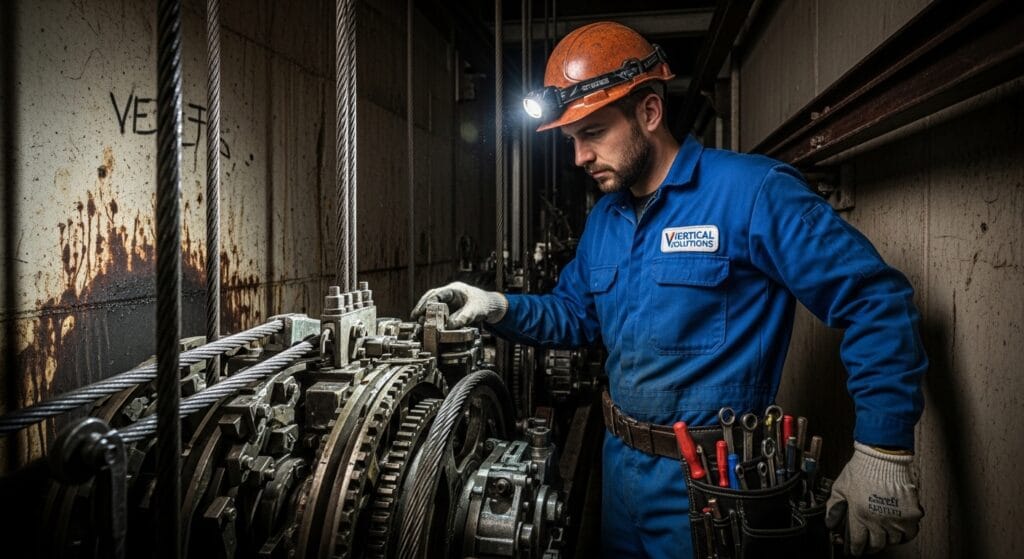
Overtime & “Trouble Calls”: Where $150k Becomes Ordinary
Base wages are strong. But overtime is where elevator mechanics genuinely separate themselves from every other trade—and from most professional careers.
Construction & Modernization Overtime: Double Time
For mechanics working on new elevator installations or system modernizations, anything outside the standard 7:00 AM to 3:30 PM window is typically double time (2x). That means a NYC mechanic earning $90/hr straight time bills $180/hour for evening or weekend work.
A single Saturday on a construction site—8 hours at double time—adds $1,440 to gross earnings in one day. Four such Saturdays in a month is $5,760 in additional gross income, every month, on top of base pay.
Service & Repair: The 1.5x and 1.7x Structure
For service mechanics—those maintaining and repairing existing elevator systems—scheduled overtime typically runs at 1.5x. But the real financial leverage is in the “trouble call.”
When an elevator traps a passenger in a hospital at 2:00 AM, or a freight elevator fails at a distribution center on Sunday, the mechanic on the on-call rotation responds. In many IUEC locals, emergency after-hours calls are paid at 1.7x the hourly rate—and under “portal-to-portal” rules, billing begins the moment the mechanic leaves home and ends when they return.
Mechanics confirmed to us that overtime consistently pushes annual income over $150,000 in major markets—and in San Francisco or New York, six-figure overtime bonuses on top of six-figure base wages are not uncommon for mechanics who are available for trouble calls.
Sundays and Holidays: Always 2x. No exceptions. A holiday trouble call in San Francisco—at 2x rate, portal-to-portal—can generate several hundred dollars from a single call.
The Benefits Nobody Talks About: Pension + Annuity
The compensation structure that genuinely distinguishes IUEC from nearly every other career—blue collar or white collar—is what sits underneath the hourly rate.
The “Golden 80” Pension
IUEC mechanics can retire with a full, unreduced pension when their age plus years of service equals 80. This isn’t an early retirement penalty calculation—it’s the standard qualification for full benefits.
A mechanic who begins their apprenticeship at 22 and works for 30 years retires at 52 with a defined-benefit pension. The current pension pays approximately $110–$120 per year of credited service. Thirty years of service generates $3,300–$3,600 per month, guaranteed for life.
That’s over $40,000 annually in guaranteed income starting in your early 50s—before Social Security, before annuity withdrawals, before any other savings you’ve built.
Most people retiring at 52 are drawing down savings. IUEC mechanics are getting paid monthly checks from a pension fund that doesn’t care what the stock market is doing.
The Annuity: The Tax-Deferred Wealth Engine
In addition to the defined-benefit pension, contractors contribute $11–$13 per hour worked directly into a tax-deferred annuity account for each mechanic. This contribution comes entirely from the employer—it is not deducted from the mechanic’s paycheck.
At 2,000 hours per year, that’s $22,000–$26,000 deposited into a retirement account annually, at zero cost to the mechanic. Over a 30-year career with conservative investment growth, this annuity can compound to well over $1.5 million.
The total compensation picture for a journeyman mechanic in a major market—wages, pension contributions, annuity deposits, and healthcare—represents a total package worth $125–$145 per hour. Very few careers outside of medicine and law deliver those economics without a graduate degree.
The Apprenticeship: What You’re Actually Signing Up For
NEIEP is a 4-to-5 year earn-while-you-learn program. You work 40 hours per week alongside a journeyman mechanic and attend class one night per week (approximately 4 hours) for the duration of the program. The cost to the apprentice is zero. You are paid to learn.
The coursework covers electrical theory and control systems, hydraulic systems and fluid mechanics, door operators and safety devices, elevator codes and compliance (ASME A17.1), and blueprint reading and technical documentation.
There are no student loans at the end. There is no unpaid internship period. You enter the workforce on day one of the apprenticeship as a paid employee with employer-funded benefits beginning in Year 1.
Frequently Asked Questions
How Hard Is the Entrance Exam?
The Elevator Industry Aptitude Test (EIAT) is the gateway to NEIEP candidacy. It measures mechanical reasoning, reading comprehension, and mathematical ability. The test itself is not obscure or impossible—but your score determines your ranking against every other applicant in your local’s recruitment pool.
Analyzing NEIEP recruitment data from recent cycles, competitive markets like NYC and San Francisco often receive several thousand applications for 20–50 apprentice slots. In those markets, a top-quartile score may be the minimum threshold for realistic consideration. Applicants with relevant backgrounds—military service, welding certification, HVAC training, or coursework in electrical or mechanical systems—tend to rank higher.
Recruitment drives typically open for only two weeks at a time, sometimes only once every two years per local. Missing the window means waiting until the next cycle. Preparation matters: take mechanical aptitude practice tests seriously, and apply the moment a recruitment opens.
Is It Dangerous?
Elevator mechanics work in hoistways—vertical shafts with moving counterweights, high-tension cables, and high-voltage electrical systems. The Bureau of Labor Statistics classifies elevator installers and repairers as one of the higher-fatality occupations in construction. Falls, electrical contact, and crush injuries are the primary hazards.
That said, IUEC contracts mandate rigorous safety training, and OSHA regulations governing elevator work are detailed and actively enforced. Mechanics who follow lockout/tagout procedures, use proper fall protection, and respect the hoistway environment work careers of 25–30 years without serious injury. The danger is real, but it is manageable through discipline and protocol adherence.
The honest framing: it is more dangerous than office work and less dangerous than ironwork or underground mining. The pay reflects the risk premium, among other factors.
Do I Need a Degree?
No. The NEIEP entrance requirements are a high school diploma (or GED) and successful completion of the aptitude test. That’s it. No associate’s degree, no trade school certificate, no prior experience in elevators.
Relevant experience helps your ranking—prior electrical work, mechanical maintenance roles, or military service in a technical field will make you a more competitive applicant. But the path is open to anyone with a high school diploma who scores well on the EIAT and applies during an active recruitment window.
This is one of the defining features of the IUEC career path: the barrier is aptitude and timing, not credentials or tuition.
The Bottom Line: Why This Career Wins the ROI Calculation
Across 38 skilled trades and labor categories analyzed for this series, elevator mechanics ranked as the highest-compensated trade profession in the United States in 2026—above linemen, plumbers, electricians, and every other blue-collar classification.
The Year 1 apprentice in a major metro market earns $85,000–$104,000 with no prior experience and zero debt. The journeyman mechanic clears $158,000–$210,000 in base wages before overtime. The MIC in San Francisco earns $210,000+ at straight time alone.
Add overtime, trouble calls, portal-to-portal pay, the Golden 80 pension, and a five-figure annual employer annuity contribution—and you’re describing a career that, for the right person, delivers financial outcomes that rival careers requiring $200,000 in graduate school tuition.
The hardest part isn’t the work in the hoistway. The hardest part is getting your name called from the list.
Data Methodology
Wage figures in this guide are drawn from IUEC collective bargaining agreements and published local wage rates current as of 2026 filings. Apprenticeship progression data reflects NEIEP program documentation. Benefits figures—including annuity contribution rates and pension credit values—are sourced from IUEC benefit fund publications and cross-referenced against individual local contract summaries. Where projections are noted (particularly for HCOL markets), they reflect negotiated escalation clauses within existing multi-year agreements.
Annual earnings calculations assume a standard 2,080-hour work year (40 hours/week × 52 weeks) and do not include overtime unless explicitly stated. Total compensation package estimates include taxable wages plus employer-funded pension and annuity contributions; they do not include the imputed value of employer-funded healthcare premiums. All figures should be verified against your specific local’s current wage sheet, as rates vary by jurisdiction and contract cycle.
“If you are looking for Government & USPS jobs, check out our guides on [Border Patrol ] and [FBI Agent ].