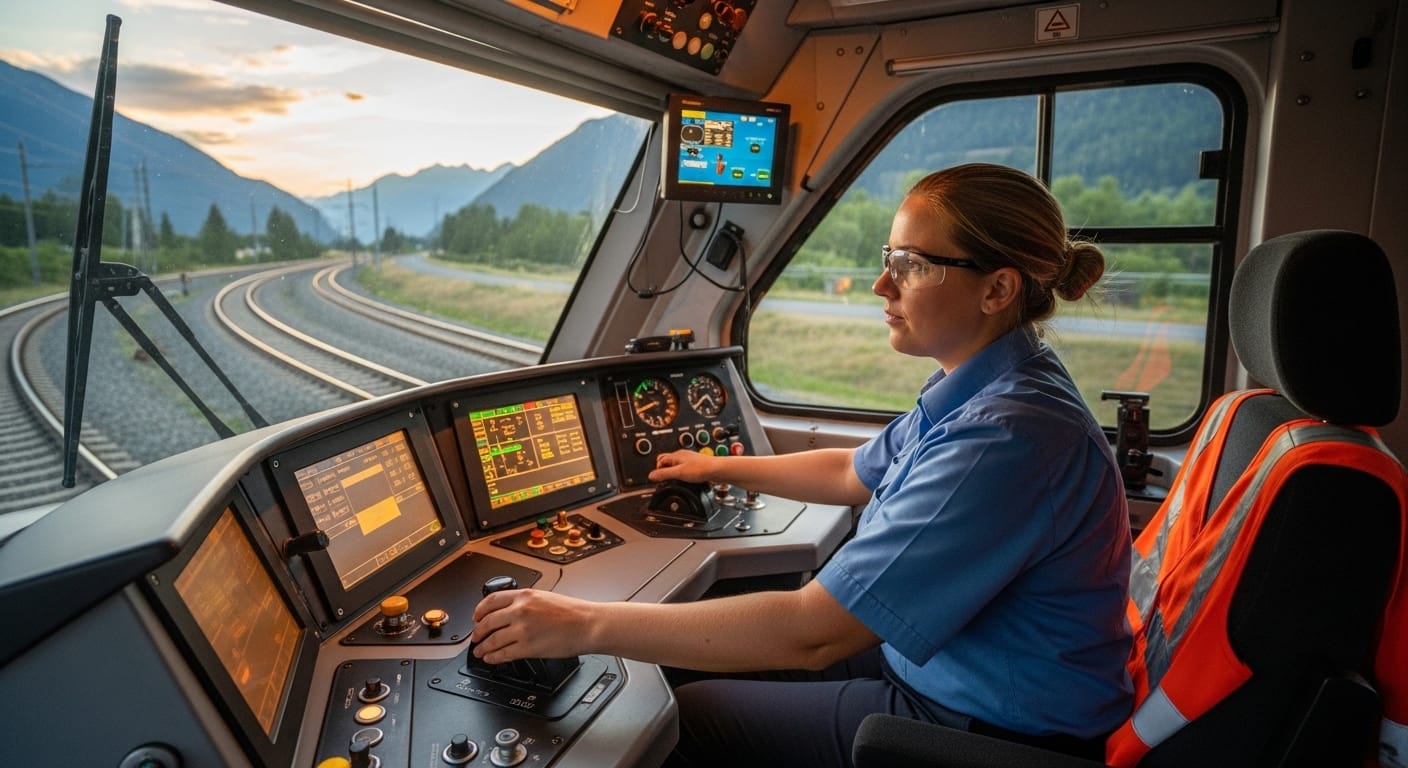
Locomotive Engineer Salary 2026: Up to $130K+
Locomotive Engineer Salary
By a Retired Locomotive Engineer — 30 Years in the Seat
I spent three decades with my hand on the throttle. Started as a brakeman when you still had to know how to throw a hand brake in the dark, worked my way up through conductor, and finally got my engineer’s card after years of waiting on the extra board, staring at a pager that could go off at 2 a.m. on Christmas morning. So when someone asks me about locomotive engineer pay in 2026, I’m not reading a spreadsheet — I’m living the answer.
Here’s what you need to know.
The Answer Box: What Do Locomotive Engineers Actually Make in 2026?
The Bureau of Labor Statistics (BLS), under Occupational Employment Statistics code 53-4011, puts the median locomotive engineer salary at $77,400 per year as of their May 2024 release — the latest verified benchmark for 2026 planning. That’s $37.21 an hour on paper. But “on paper” and “in your bank account” are two very different things on the railroad, and I’ll explain why that number is both accurate and incomplete at the same time.
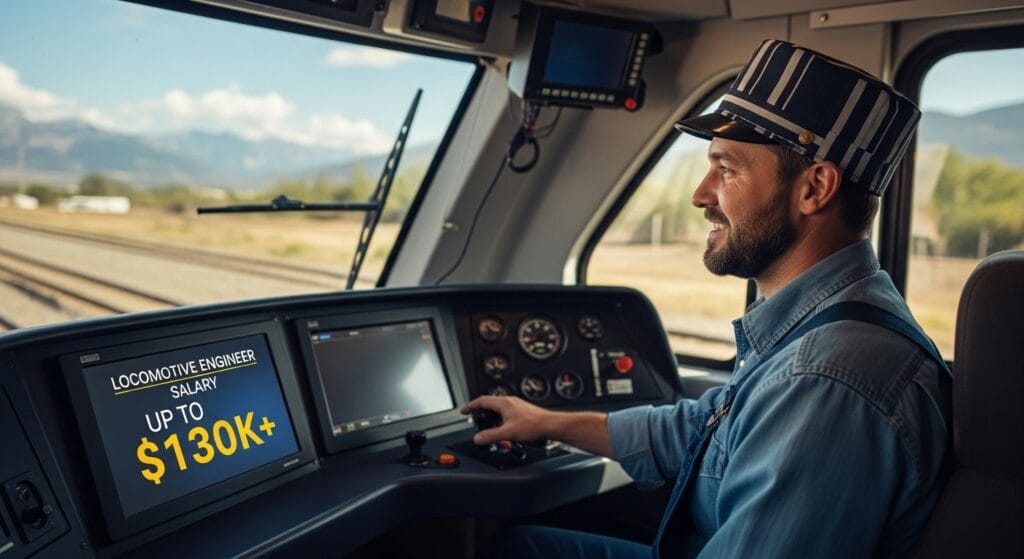
Senior engineers on high-mileage freight routes — the coal drags out of the Powder River Basin, the grain trains hammering across Nebraska — routinely clear $130,000 or more because they’re paid by the trip or the mile, not strictly by the hour. The BLS captures the base. It doesn’t fully capture what a senior man with a good assignment and a lot of miles can do.
Table 1: 2026 Locomotive Engineer Pay — Quick Overview
| Role / Tier | Percentile | Annual Salary | Hourly Wage |
|---|---|---|---|
| Conductor (Entry Path) | OES 53-4031 | $53,490 | ~$25.72 |
| Locomotive Engineer | Median (50th%) | $77,400 | $37.21 |
| Senior Engineer | Top 90th% | $100,690+ | $48.41+ |
| High-Mileage Road Freight (Trip Rate) | Senior/CBAs | $130,000+ | Varies |
Source: BLS OES 53-4011 / 53-4031, May 2024. High-mileage estimate based on collective bargaining agreements and trip rate structures.
Conductor to Engineer: The Promotion
Let me be crystal clear about something the job boards won’t tell you: you cannot walk off the street into a locomotive engineer’s seat. Nobody gets handed those keys. You earn them through seniority, time, and a whole lot of patience — and impatience will wash you out faster than anything.
The path almost universally starts as a conductor. You’ll spend anywhere from two to five years working what the railroad calls the Extra Board — and I’ll have more to say about that beast in a moment. During that time, you’re on-call around the clock, 24 hours a day, seven days a week. When your seniority gets high enough that an engineer trainee slot opens up and you can bid on it, then the real schooling begins: six or more months of classroom instruction on operating rules, simulator work, and federally mandated check rides. The FRA doesn’t play games, and neither should you.
Experience Level Pay Breakdown
| Career Stage | Role | Estimated Annual Pay |
|---|---|---|
| Year 1–3 | Conductor / Extra Board | $53,000 – $62,000 |
| Year 3–7 | Engineer Trainee / Junior Engineer | $65,000 – $75,000 |
| Year 8–20+ | Senior Road Freight Engineer | $80,000 – $130,000+ |
A word on Railroad Retirement — and pay close attention here because this is worth more than any signing bonus.
The Railroad Retirement Board (RRB) operates a two-tier system that is entirely separate from Social Security, and it is, without exaggeration, the single greatest financial benefit in blue-collar America.
Tier 1 functions like Social Security — it’s taxed at 6.2% for employees and provides comparable baseline retirement benefits.
Tier 2 is where the railroad separates itself from every other trade. It’s an additional pension-style benefit taxed at just 4.9% for employees, and it applies strictly to rail workers. A career railroader — someone who puts in 30 years — commonly retires drawing $4,000 to $6,000 per month. That is roughly double the average Social Security payout for comparable earners. I’ve watched younger workers in other trades look at my retirement check and go pale. No 401(k) match, no stock options — nothing in the blue-collar world touches Tier 2 Railroad Retirement. When you’re calculating the true value of this career, start with the paycheck and then add this on top.

Best States for Railroaders: Where the Money Is
Geography matters enormously on the railroad. The coastal passenger rail corridors — Amtrak’s Northeast Corridor, the MTA, Metro-North — pay premium wages driven by union density and the cost of living. But don’t sleep on the interior. The coal and grain belts of Wyoming and Nebraska offer pay figures that look smaller on paper but go much, much further when your mortgage reflects the Great Plains rather than Manhattan.
See Your Railroad Retirement Potential
See your railroad retirement potential:
Paycheck Calculator
Calculate your Weekly, Monthly & Yearly Take-Home Pay
⚠️ These are estimates for a single filer using 2026 tax rates (IRS Rev. Proc. 2025-32). Results do not include local taxes, pre-tax deductions (401k, health insurance), or tax credits. Consult a tax professional for personalized advice.
Top 5 Highest-Paying States for Locomotive Engineers (2026)
| State | Est. Annual Pay | Primary Rail Operations |
|---|---|---|
| New York | $107,290+ | MTA / LIRR Commuter Rail |
| Massachusetts | $104,950+ | MBTA / Amtrak Northeast Corridor |
| Connecticut | $103,010+ | Metro-North / High Union Density |
| Washington | $93,030+ | BNSF Northern Transcon Route |
| Nebraska | $84,870+ | Union Pacific HQ / Bailey Yard Hub |
Nebraska deserves a special mention. Bailey Yard in North Platte is the largest rail classification yard on the planet. Union Pacific is headquartered in Omaha. The cost of living in Nebraska means that $84,870 stretches considerably further than $107,000 does in New York City. I know fellas who transferred out to Nebraska mid-career and never looked back — bought a house with a shop out back and retired comfortable.
Engineer vs Truck Driver: Fixed Rails vs Open Road
People ask me all the time: “Why not just drive a truck? More freedom.” And I understand the appeal. But let me show you why the comparison usually ends in favor of the rails once you account for the full picture.
Transportation Trade Comparison
| Trade | Median Annual Salary | Primary Pain Point | Retirement Advantage |
|---|---|---|---|
| Truck Driver (OES 53-3032) | $57,440 | High turnover, isolation, physical wear | Standard 401(k) / Social Security |
| Conductor (OES 53-4031) | $74,080 | Physicality, ballast walking, switching | Railroad Retirement (Tier 1 + 2) |
| Locomotive Engineer (OES 53-4011) | $77,400 | Liability, mental load, schedule demands | Railroad Retirement — Superior Tier 2 |
The locomotive engineer is the captain of land transport. Your pay ceiling is lower than a senior airline pilot at a major carrier, yes — but your retirement package runs circles around anything in trucking, and the liability you carry is substantial. You are responsible for a train that can weigh 20,000 tons or more. Stopping distance can exceed a mile at speed. The mental weight of that responsibility never fully leaves you, even after retirement. Ask me how I know.
The truck driver has his own road and can pull over. You have one track and a schedule. Freedom and liability are opposite ends of the same bar, and the railroad pays you for what you carry.
FAQ
Is it hard to become a locomotive engineer?
Yes — but the hardest part isn’t the skill. It’s the seniority system, and if nobody explains it to you upfront, it will break your spirit.
You start at the bottom. Period. Regardless of your education, your military background, your mechanical aptitude — you start at the bottom of the seniority list. The Extra Board is where you’ll live for years. The Extra Board means you are on-call around the clock. Your phone rings and you have a limited window to respond before you “miss your call” and face discipline. Holidays, weekends, your kid’s birthday — the board doesn’t care. You might go weeks with irregular rest, then sit for days without a call. The uncertainty is what burns people out more than the physical work.
The Guaranteed Extra Board is a somewhat better version of this arrangement that some collective bargaining agreements provide — it guarantees a minimum number of paid hours per week even if the railroad doesn’t call you. If you get assigned to a Guaranteed Extra Board under your union contract, you receive a minimum pay guarantee (often in the range of 40 hours equivalent) for your availability, whether or not trains are moving. It’s still on-call life, but it puts a floor under your paycheck. Not every property offers it, and your seniority determines whether you can hold it.
Do train engineers sleep on the train?
No. And it’s not a matter of policy — it’s federal law. The Federal Hours of Service Act limits operating crews to 12 hours on duty. When you reach 12 hours or arrive at the terminal, you are done. The railroad puts you up at a company-paid hotel at what we call the AFHT — Away From Home Terminal. You rest there until you’re called back for your return trip. You do not sleep in the cab. I’ve heard civilians ask this with genuine curiosity and I always say: the locomotive cab is not a bedroom, it’s a cockpit. You would no more sleep there than an airline pilot would nap in the seat on final approach.
The only exception worth noting is Maintenance of Way crews — track gangs working remote territory sometimes sleep in what we call camp cars. But operating crews, the engineers and conductors moving trains, do not.
How does Railroad Retirement compare to Social Security?
It’s not a close contest. Railroad Retirement wins, and it’s not subtle about it. Tier 1 mirrors Social Security and is funded the same way. Tier 2 is the difference-maker — a dedicated, pension-style benefit funded by a separate payroll tax (4.9% employee contribution) that accumulates over your career on the rails. A 30-year engineer retiring in 2026 can realistically draw $4,000 to $6,000 per month in combined Tier 1 and Tier 2 benefits. The average Social Security retirement benefit nationally runs around $1,900 per month. The gap is not small. This is why career railroaders, even ones who complained every day of their working life, tend to go quiet and satisfied when retirement comes.
What does the “trip rate” mean for engineer pay?
Most road freight engineers aren’t paid a simple hourly wage. They’re compensated under what’s called a trip rate or mileage rate structure, negotiated in their collective bargaining agreement. You might be paid a rate per mile traveled, or a flat rate per trip between terminals, with minimums built in. On a long, high-mileage assignment — say, a coal train operating out of Wyoming’s Powder River Basin — a senior engineer accumulating miles on a demanding schedule can easily exceed what the BLS median suggests. The BLS data captures a broad cross-section. The trip rate reality at the top of the seniority list is something else entirely.
Sources
All salary data is drawn from the Bureau of Labor Statistics Occupational Employment and Wage Statistics (OES), code 53-4011 (Locomotive Engineers and Operators) and 53-4031 (Railroad Conductors and Yardmasters), May 2024 release — the latest verified benchmark as of 2026 planning. State-level figures reflect BLS state OES data. Railroad Retirement benefit structures are sourced from the Railroad Retirement Board (RRB) published guidelines. High-mileage earnings estimates reflect reported collective bargaining agreement structures and are not captured in BLS OES averages.
Thirty years is a long time to sit in that seat. The pay is good. The retirement is the best in the blue-collar world, full stop. But you earn every dollar of it — on the extra board at 2 a.m., in the snow at a remote siding waiting on a meet, and in the quiet of that cab knowing that everything behind you weighs more than most people can imagine. Respect the weight. Respect the rules. And if you’ve got the patience for seniority, it’s still one of the best careers in America.
If you are looking for Trades & Blue Collar jobs, check out our guides on [Heavy Equipment Operator] and [Diesel Mechanic].