
Tanker Truck Driver Salary 2026: Up to $110K+
Quick Facts — Tanker Truck Driver Salary 2026
| Data Point | Figure |
|---|---|
| National Median (BLS OES 53-3032) | $77,152 |
| Entry-Level Local Fuel Hauler | $65,000 – $75,000 |
| OTR Chemical Tanker (Mid-Career) | $90,000 – $110,000 |
| Specialized Hazmat Owner-Operator | $200,000 – $300,000+ (Gross) |
| X Endorsement Premium | +$15,000 – $30,000/year |
| Top-Paying State | Alaska ($92,301 avg.) |
| BLS OES Code | 53-3032 |
| Last Updated | February 2026 |
There is a phrase that gets passed around loading racks from Texas to Alaska, spoken quietly between drivers who have made this career their life: “You don’t just drive a tanker. You drive the liquid inside it.” That sentence isn’t poetry — it’s physics, and it’s the first thing a seasoned hazmat driver will tell a rookie before they take the wheel of an 80,000-pound rolling fuel bomb for the first time.
In 2026, the tanker truck driver remains one of the highest-paid, most technically demanding, and most quietly respected roles in all of commercial trucking. While a standard dry van driver earns a respectable living moving palletized freight, a hazmat tanker driver operates in a different professional universe entirely — one governed by federal endorsements, TSA background checks, meticulous loading rack protocols, and a deeply ingrained understanding of fluid dynamics that can mean the difference between a routine delivery and a catastrophic rollover.
This guide breaks down exactly what the market is paying tanker drivers in 2026, where the highest-paying opportunities are concentrated, what separates a local fuel hauler from an OTR chemical specialist, and what the coveted “X Endorsement” is actually worth on your paycheck.
Local Fuel to OTR Hazmat: The Salary Ladder
The tanker sector is not monolithic. Your earning potential is dictated almost entirely by three variables: what you’re hauling, how far you’re traveling, and what endorsements are on your CDL. Here is how the salary ladder breaks down across experience and route type in 2026.
| Experience Tier | Role | Annual Salary Range |
|---|---|---|
| Entry-Level (0–3 years) | Local Fuel Hauler | $65,000 – $75,000 |
| Mid-Career (4–10 years) | OTR Chemical Tanker Driver | $90,000 – $110,000 |
| Senior / Independent (10+ years) | Hazmat Owner-Operator | $200,000 – $300,000+ (Gross) |
The Local Fuel Hauler: Your Starting Point
If you are just crossing over into tanker work from dry van or flatbed, local fuel delivery is where the vast majority of new tanker drivers begin. These routes supply the retail gas station network — think regional petroleum distributors running tight loops between terminals and fuel stations within a 150-mile radius.
Calculate your Hazmat premium pay
Paycheck Calculator
Calculate your Weekly, Monthly & Yearly Take-Home Pay
⚠️ These are estimates for a single filer using 2026 tax rates (IRS Rev. Proc. 2025-32). Results do not include local taxes, pre-tax deductions (401k, health insurance), or tax credits. Consult a tax professional for personalized advice.
The critical lifestyle advantage here — and the reason many experienced drivers deliberately choose to stay in local fuel delivery rather than chase OTR chemical money — is home time. You load at a petroleum terminal in the morning, run your assigned loop, and you are pulling back into the yard by late afternoon or early evening. You sleep in your own bed every night. Your family sees your face at dinner. That consistency commands real loyalty, and it is why local fuel delivery operations often maintain low driver turnover compared to the broader trucking industry.
The pay, starting between $65,000 and $75,000 annually, reflects the endorsements required (you will need at minimum an N Tanker endorsement and typically an H Hazmat for petroleum products), but the routing is predictable, the equipment is familiar, and the learning curve — while steep in terms of liquid load management — is manageable within a structured training environment.
The OTR Chemical Tanker: Where the Real Money Starts
Moving from petroleum to industrial chemical hauling is the career leap that most serious tanker drivers eventually make. This is where OES Code 53-3032 compensation truly separates from the broader trucking average. OTR chemical tanker drivers haul volatile materials including corrosive acids, industrial gases, flammable solvents, and reactive compounds along regional and national freight lanes.
The compensation range of $90,000 to $110,000 reflects the significant additional demands: longer time away from home (OTR routes may keep you out for two to three weeks at a stretch), stricter regulatory compliance at every point of origin and delivery, mandatory hazardous materials handling certifications beyond the standard CDL endorsement suite, and the psychological weight of knowing your cargo can kill people if mishandled.
Carriers in this segment typically provide substantial incentive packages — hazard pay differentials, performance bonuses tied to clean safety records, and health and retirement benefits that are notably more generous than what you will find at a standard dry van carrier.
The Hazmat Owner-Operator: Six Figures and Beyond
At the top of the tanker salary pyramid sit the independent owner-operators hauling the most high-consequence materials in American commerce: crude oil, liquid propane, anhydrous ammonia, nuclear waste transport fluids, and explosives precursors. Gross revenues in the $200,000 to $300,000+ range are legitimately achievable in this tier.
The critical word is gross. An owner-operator in this space carries the full weight of equipment costs (a specialized stainless-steel chemical tanker trailer alone can run $60,000 to $100,000 new), sky-high insurance premiums driven by the hazardous cargo, fuel, maintenance, permits, and the administrative overhead of operating an independent trucking business. Net take-home will be substantially lower than the gross figure — but still exceptional by any occupational standard.
Best States for Tanker Drivers: The Oil Patch
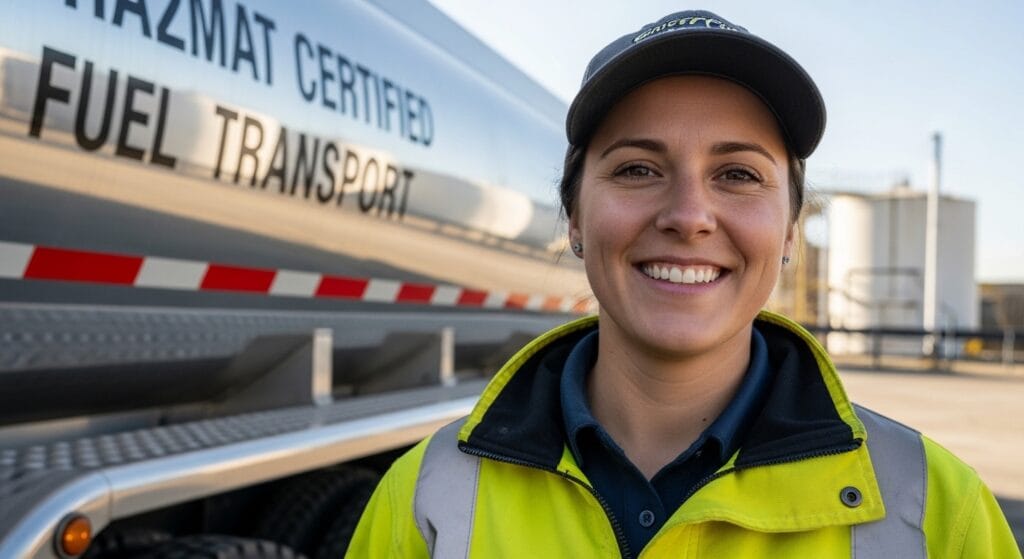
Tanker driver demand is geographically concentrated around four primary economic drivers: petroleum extraction, chemical manufacturing, refinery infrastructure, and extreme-environment logistics. The following five states represent the highest average compensation for tanker and hazmat drivers in 2026.
| State | Average Annual Pay | Why It Pays |
|---|---|---|
| Alaska | $92,301 | Trans-Alaska pipeline network, extreme terrain, severe weather operations |
| Wyoming | $83,486 | Powder River Basin resource extraction, remote site hauling demand |
| North Dakota | $82,151 | Bakken shale formation, sustained crude oil transport demand |
| Texas | $70,144 avg. / $114,000+ in Houston & San Antonio hubs | Highest concentration of U.S. chemical plants and oil refineries |
| Louisiana | $61,974 – $66,447 | Gulf Coast refinery corridor, constant short-haul and regional hazmat demand |
Texas warrants a specific call-out: the statewide average appears modest relative to Alaska and Wyoming, but that number is suppressed by a large volume of entry-level positions across the state’s enormous transportation workforce. In the Houston Ship Channel corridor — arguably the densest concentration of petrochemical infrastructure on earth — experienced hazmat drivers consistently clear $90,000 to $114,000 annually.
Tanker vs. Flatbed: Brain vs. Brawn
A frequent debate in commercial trucking circles centers on the comparison between tanker and flatbed work. Both are skilled trades that pay well above the dry van baseline. But they demand entirely different physical and cognitive profiles.
| Category | Tanker Driver | Flatbed Driver |
|---|---|---|
| Primary Skill Demand | Fluid dynamics, surge management, precision braking | Physical load securement, tarping, rigging, weight distribution |
| Physical Labor | Low to moderate (loading rack connection, valve management) | High (tarps, straps, chains, binders — weather-exposed) |
| Cognitive Demand | High (liquid physics, emergency protocols, regulatory compliance) | Medium-High (load geometry, oversized permitting) |
| Endorsements Required | N (Tanker), H (Hazmat), X (Combined) | Minimal beyond base CDL-A |
| Typical Pay Range | $75,000 – $120,000+ | $65,000 – $90,000+ |
| Weather Exposure | Low (enclosed cab operations) | High (outdoor securement in all conditions) |
The core distinction comes down to this: flatbed is a physical trade. Tanker is a precision science. A flatbed driver earns their pay through hard physical labor in punishing conditions — tarping a 48-foot load in freezing rain at midnight is genuinely brutal work. A tanker driver earns their pay through mastery of invisible forces acting on thousands of gallons of liquid inside a moving steel vessel.
Understanding Liquid Surge: The Physics That Can Kill You
No discussion of tanker driver compensation is complete without addressing the technical reality that justifies it. Liquid surge — sometimes called the “slosh and surge” effect — is the single most dangerous phenomenon a tanker driver manages on every single trip.
When you are hauling a full load, inertia works predictably. The problem is the partially loaded tanker. When a tank is 60% to 75% full, the liquid inside is free to move. During hard braking events, that several-thousand-gallon wave of liquid continues forward at the speed the vehicle was traveling, crashing against the front baffle wall and physically pushing the truck into the intersection you were trying to stop before.
On a curve, the same effect creates lateral surge. The liquid shifts outboard, raising the vehicle’s center of gravity and dramatically increasing rollover risk. This is why tanker drivers brake early, brake gently, and never — not under any circumstances — attempt the aggressive threshold braking maneuvers that might be appropriate for a loaded dry van.
Modern tanker trailers incorporate internal baffle systems, dome lids, and surge-dampening compartment designs to manage this effect. But no engineering solution eliminates it. The driver’s understanding of what is happening inside the trailer at every moment of deceleration, acceleration, and cornering is the last line of defense.
At a loading rack, the protocols are equally exacting. The driver connects the ground cable before any product transfer begins (static electricity from flowing fuel has ignited fires at terminals that killed workers). Vapor recovery lines are connected to prevent atmospheric release of flammable vapors. Overfill protection sensors are verified active. The emergency shutoff is identified and confirmed operable before a single gallon moves. These are not suggestions. They are federal regulatory requirements under DOT and EPA jurisdiction, and a single violation can end a career and initiate a criminal investigation.
FAQ
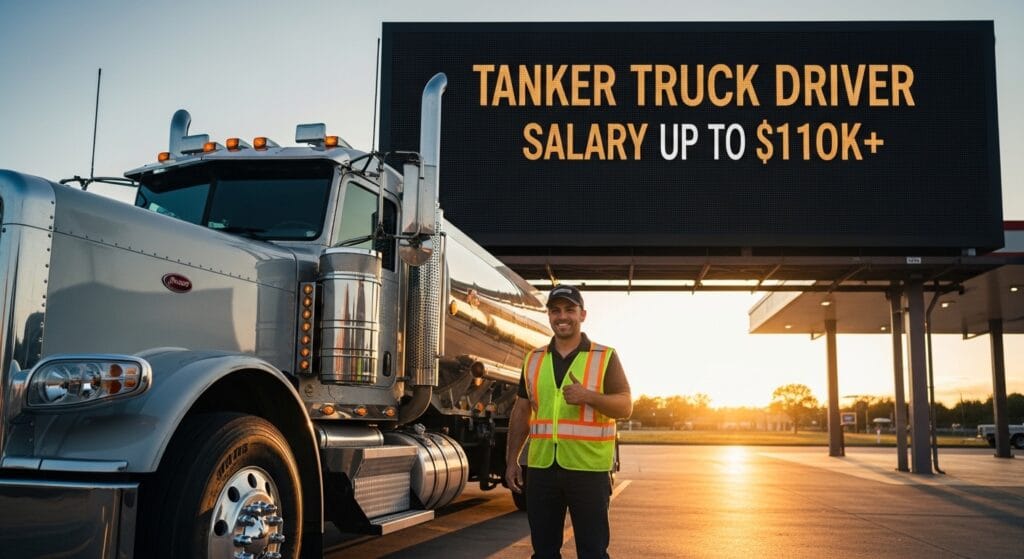
What is an X Endorsement and why does it matter for pay?
The X Endorsement is the combination of two separate CDL endorsements: the N (Tanker) endorsement and the H (Hazardous Materials) endorsement. Holding both simultaneously grants you the X Endorsement designation on your commercial driver’s license — and it is the single most valuable credential upgrade available to a commercial driver in 2026.
To obtain the H endorsement (and by extension the X), you must pass a written knowledge exam at your state DMV and complete a TSA security threat assessment. That assessment involves submitting fingerprints, a background investigation covering criminal history, immigration status, and mental health adjudications, and paying a federal processing fee. The TSA background check takes anywhere from several days to several weeks to clear.
The financial return on that investment is exceptional. The X Endorsement generates a documented wage premium of $15,000 to $30,000 annually above the baseline median for standard truck drivers. Across a 20-year career, that single credential is worth $300,000 to $600,000 in incremental earnings before any consideration of compounding career advancement or owner-operator gross revenue.
Is tanker truck driving dangerous?
The elevated compensation is not arbitrary — it reflects genuine risk. Tanker driving carries materially higher accident consequence rates than dry van freight. A jackknifed dry van is a traffic incident. A jackknifed fuel tanker on an urban interstate is a potential mass-casualty event. Drivers in this field carry that awareness with them professionally at all times, which is why the culture around safety in hazmat tanker operations is distinctly different — and more rigorous — than in general trucking.
How do you become a tanker truck driver?
The pathway is sequential: obtain your Class A CDL, add the N Tanker endorsement through a written knowledge exam, complete the TSA background check process to obtain your H Hazmat endorsement (earning you the X designation), and then seek entry-level placement with a petroleum carrier or fuel distribution company. Build your local fuel delivery experience, maintain a clean safety record, and the OTR chemical and specialized hazmat opportunities will follow.
How much does a tanker truck driver make per mile?
Local fuel haulers are frequently paid on an hourly basis rather than per mile, given the stop-and-go nature of retail fuel delivery. OTR chemical tanker drivers are more commonly compensated on a cents-per-mile basis in the range of $0.60 to $0.85 per mile for company drivers, with additional hazmat and fuel surcharge line items that further increase total compensation per loaded mile.
Sources
Wage data sourced from the U.S. Bureau of Labor Statistics Occupational Employment and Wage Statistics program, OES Code 53-3032 (Heavy and Tractor-Trailer Truck Drivers). Endorsement and regulatory information consistent with Federal Motor Carrier Safety Administration (FMCSA) CDL standards and TSA Hazardous Materials Endorsement (HME) threat assessment program requirements, current as of February 2026.
“If you are looking for Delivery Driver jobs, check out our guides on [Transit Bus Driver] and [Flatbed Truck Driver].”