Welder Salary 2026: $23/hr to $110k — Real Pay
The Real Answer: What Welders Make in 2026
Let me cut through the noise right now. You’ve probably seen those “Make $300k underwater welding!” headlines plastered across YouTube thumbnails and trade school ads. Pure clickbait. Here’s the truth, straight from the Bureau of Labor Statistics and from guys I’ve worked beside on rigs from the Gulf of Mexico to the Bakken Shale.
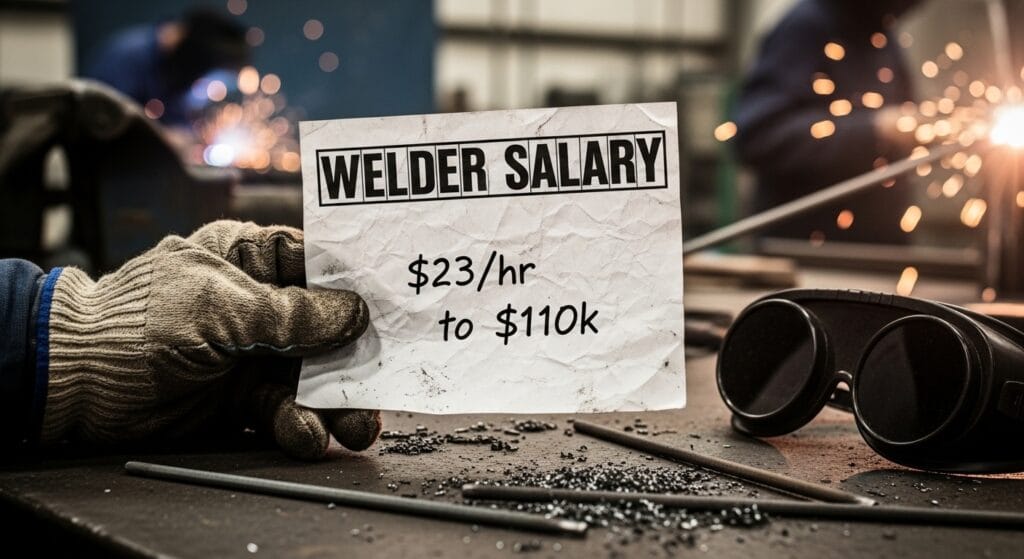
The median pipe welder — your workhorse of the trade — pulls $48,940 a year, or roughly $23.53 an hour. That’s the 50th percentile. The bottom end, the guy fresh out of school doing MIG welds in a fab shop, clears $36,830. And the top 90% BLS benchmark sits at $72,970+. But here’s where the government data leaves serious money on the table: it doesn’t account for hazard pay, per diem, or the overtime culture of pipeline work.
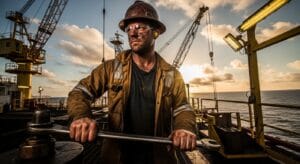
A certified rig welder working offshore can realistically see $85,000 to $110,000 with overtime stacked in. Saturation divers who also weld? They can crack $200,000 — but that’s less than 1% of the workforce, and it comes with costs I’ll get into later.
Table 1: Quick Overview — Welder Salary by Tier (2026)
| Role / Tier | Percentile | Annual Salary | Hourly Wage |
|---|---|---|---|
| Production Welder | Bottom 10% | $36,830 | ~$17.71 |
| Pipe Welder | Median (50th) | $48,940 | $23.53 |
| Rig / Specialist | Top 90th | $72,970+ | $35.08+ |
| Rig Welder (Offshore) | OT Reality | $85,000–$110,000 | $40–$53+ |
| Underwater (Sat Diver) | Elite <1% | $200,000+ | $95–$145+ |
Source: BLS OES 51-4121, May 2024. Offshore and sat diver ranges reflect industry contractor rates and overtime — not captured in standard OES reporting.
Per Diem Reality Check: A pipeline welder driving 200 miles from home can add $75–$150 per day in per diem — tax-free. On a 100-day project, that’s $7,500–$15,000 sitting on top of your base wage. That’s the number your paycheck stub doesn’t show.
Calculate Your Pay with Per Diem
Paycheck Calculator
Calculate your Weekly, Monthly & Yearly Take-Home Pay
⚠️ These are estimates for a single filer using 2026 tax rates (IRS Rev. Proc. 2025-32). Results do not include local taxes, pre-tax deductions (401k, health insurance), or tax credits. Consult a tax professional for personalized advice.
Formula: (Base Hourly × Hours/Week × 52) + (Per Diem × Travel Days) = Annual Take-Home
Shop vs Field vs Underwater
This is the most important distinction in this trade, and most salary articles blur it beyond recognition. A “welder” job posting can mean sitting inside a climate-controlled fab shop doing the same bead all day, or it can mean crawling through a 36-inch pipeline in West Texas in July with a rod oven strapped to your belt. The pay gap between those two realities? Sometimes $30,000 to $40,000 a year.
Shop welders have stability: same address, same hours, same crew every day. That’s worth something, especially if you’ve got a family at home. But you cap out faster. Without field certifications, you’re fighting for raises in a crowded lane with limited upside.
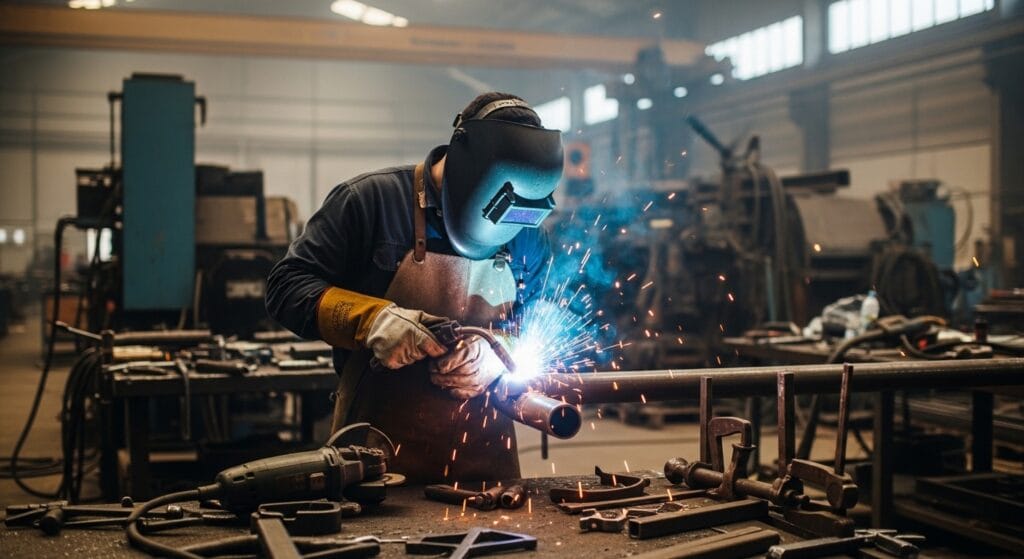
Field welding and pipeline work is where the real money lives — but you earn every dollar of it. You’re living out of a truck or a motel. You might be on a job in North Dakota for three months, then home for two weeks, then back on the road. The per diem softens the blow financially, but the lifestyle isn’t for everyone. Your ASME Section IX certification and the ability to pass a 6G pipe test with X-ray verification is what separates the guys making $55K from the guys making $90K.
Underwater welding is its own universe entirely. You need your AWS certifications — but you also need commercial diving credentials (ADCI), non-destructive testing (NDT) qualifications, and the kind of mental composure that comes from welding at 150 feet underwater in near-zero visibility. The saturation diving subset is so small and so specialized that lumping it into a general “welder salary” conversation is almost misleading. Consider it a separate career path that happens to share a hood with welding.
Table 2: Shop vs Field vs Underwater — Full Breakdown
| Category | Shop Welder | Field / Pipeline | Underwater Welder |
|---|---|---|---|
| Base Pay Range | $36K–$52K/yr | $55K–$90K/yr | $50K–$200K+/yr |
| Per Diem Typical | None | $75–$150/day | N/A (offshore stay) |
| Overtime Potential | Low–Moderate | High (60–70 hr weeks) | Extreme (project-based) |
| Certifications | AWS D1.1 | ASME Sec. IX / 6G | ADCI + AWS + NDT |
| Work Schedule | M–F, stable | Rotational / Drive-out | 4–6 week rotations |
| Travel Required | No | Yes (often 200+ mi) | Yes (offshore/remote) |
| Career Mobility | Moderate | High | Very High (elite) |
| Risk Level | Low–Moderate | Moderate–High | Extreme |
The difference between a factory job and a pipeline job isn’t just the paycheck. It’s the entire structure of your life. A shop welder clocks out at 4:30 and goes home. A pipeline welder might be three states away for the next 90 days. The trade-off is real money — per diem stacking, overtime hours, and rig pay bonuses that a shop will never offer. Whether that trade-off is worth it depends entirely on what you’re willing to give up.
Best States for Welders
Not all states are created equal for a welder’s wallet. Coastal states like California and New York pay above median, but your cost of living will eat most of that advantage. The real arbitrage — where your dollar actually stretches furthest — sits in energy-heavy states where demand is high and cost of living stays manageable.
Alaska is the gold standard. Pipeline and infrastructure work in the Last Frontier comes with a built-in premium because the state has to import almost everything, including skilled labor. Wyoming is the quiet overachiever — mining and oil extraction keep demand steady, and you can actually afford to live there. Wyoming welders also tend to run more overtime hours during peak extraction cycles, which pushes take-home well past the posted average.
Texas doesn’t crack the top five by mean wage, but volume makes it a top destination. The sheer density of pipeline infrastructure, petrochemical facilities, and LNG projects means consistent work and consistent overtime. A welder who knows how to hustle in the Permian Basin can out-earn peers in higher-wage states by working smarter rotations and staying mobile.
Table 3: Top 5 States for Welders by Annual Wage (BLS May 2024)
| # | State | Avg Annual Pay | Key Driver | Income-to-COL |
|---|---|---|---|---|
| 1 | Alaska | $66,740+ | Pipeline & infrastructure demand | Excellent |
| 2 | D.C. / Virginia | $63,980+ | Gov / infrastructure contracts | Good |
| 3 | Hawaii | $61,830+ | Imported labor premium | Good (COL adjusted) |
| 4 | Wyoming | $61,650+ | Mining / oil extraction | Excellent |
| 5 | Massachusetts | $55,000+ | High union density | Moderate |
Wyoming and Alaska consistently offer the best income-to-cost-of-living ratio for working welders. D.C. pays well on paper but the cost of housing in the metro area cuts into that number fast. Hawaii’s premium exists because they can’t source the labor locally — if you’re willing to relocate, the wage premium and per diem can make a real difference.
Welder vs. Ironworker
People ask me this constantly at job sites. “Shouldn’t I just go ironworker? They make more.” The short answer: ironworkers earn more on average because what they do — structural steel erection, rigging, high-iron work on skyscrapers and bridges — carries extreme fall risk. That premium is essentially hazard pay baked directly into the union contract.
The median ironworker wage sits at $62,350 compared to $48,940 for welders. That’s a $13,410 gap at the median. But here’s the ceiling comparison: an ironworker’s peak earning in construction still tops out below what an ASME-certified, 6G pipe welder on a nuclear plant or an aerospace welder with AWS D17.1 certification can command. The specialist ceiling for welding — nuclear, pressure vessels, aerospace, saturation diving — has no real equivalent on the ironworker side.
Barrier to entry also differs significantly. Ironworker apprenticeships are physically demanding and competitive — you need to be comfortable on iron at height from day one. Welding school can get you coded and certifiable in 12–18 months at a vocational program. The ramp is shorter, but the ceiling for specialists is genuinely higher.
Table 4: Welder vs. Ironworker Comparison (2026)
| Feature | Welder (51-4121) | Ironworker (47-2221) |
|---|---|---|
| 2024 Median Salary | $48,940 | $62,350 |
| Hourly (Median) | $23.53 | $29.98 |
| Top 10% Earnings | $72,970+ | $100,000+ |
| Primary Hazard | Fumes / Burns (resp. & eyes) | Falls / Heights / Steel erection |
| Work Environment | Shop, Rig, or Confined Space | Outdoors, Skyscrapers, Bridges |
| Barrier to Entry | Moderate (Vocational / Certs) | High (Apprenticeship / Physicality) |
| Union Penetration | Moderate | Very High (IABSORIW) |
| Specialist Ceiling | Nuclear / Aerospace / Sat Dive | Project foreman / superintendent |
| 2026 Job Outlook | Stable (energy transition demand) | Strong (infrastructure bill) |
Analyst Verdict: Ironworkers earn more on average because the job demands extreme physical danger and heavy lifting at heights. Welders have a lower floor but a meaningfully higher specialist ceiling. If you’re willing to chase certifications and stay mobile, the welder path can absolutely close — and exceed — that median gap.
FAQ
Do underwater welders really make $300,000?
Rarely. Let’s be precise about this because the number is technically real but wildly misleading for anyone considering the trade.
The $300K figure describes saturation divers — not underwater welders broadly. Saturation diving means living inside a pressurized chamber for weeks at a time, descending to extreme depths (sometimes 1,000+ feet) in the North Sea or Gulf of Mexico. The body absorbs enormous physiological stress. Decompression injuries, neurological damage, and long-term joint problems are documented occupational realities in this work. The majority of commercial divers who weld earn $50,000 to $90,000 annually. The $300K figure represents a tiny fraction of an already tiny workforce — maybe a few hundred people in the entire world at any given time.
If you want to chase that number, understand what you’re actually chasing: years of diving experience, saturation-specific training, a willingness to live in a pressurized steel tube for weeks, and genuine tolerance for one of the most physiologically demanding jobs in existence.
Is welding bad for your eyes?
Yes — without strict, consistent protection. This is one of the most under-discussed health realities in the trade, so I’m not going to soft-pedal it.
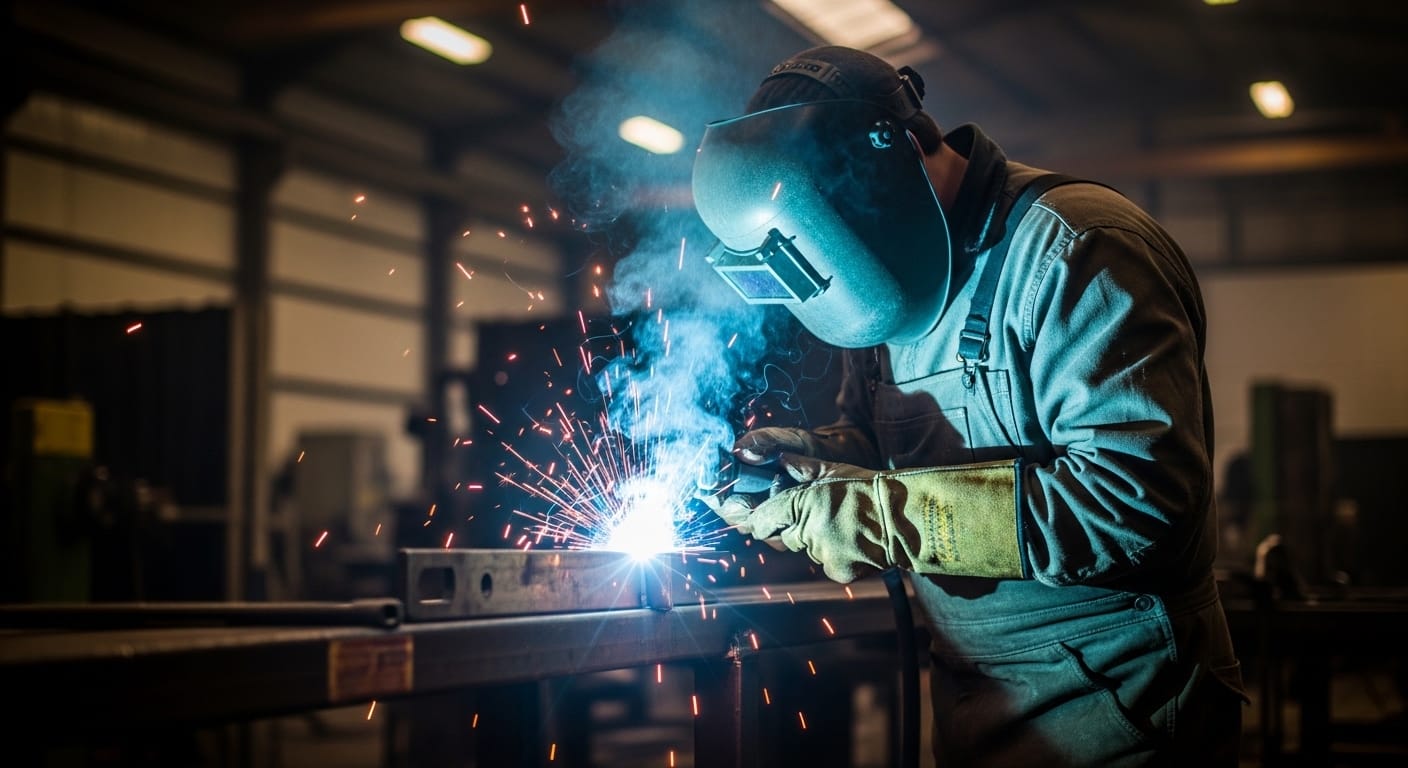
Arc Eye (Photokeratitis): UV radiation from the welding arc causes painful inflammation of the cornea — essentially a sunburn on the surface of your eye. You’ll know it happened by morning: a gritty, burning sensation that feels like sand poured directly onto your eyeballs. It’s a rite of passage for careless or overconfident welders, but it’s entirely preventable.
Long-Term Risks: Chronic, unprotected exposure to welding arc radiation is associated with increased risk of cataracts and retinal damage. These aren’t instant injuries — they develop over years of accumulated exposure. The guys who skip the hood for “just a quick tack” their entire careers are the ones sitting in the ophthalmologist’s office in their fifties.
The Non-Negotiable Fix: Auto-darkening helmets rated at shade 10–13 appropriate for your amperage and process. Full-face protection. Lens inspection before every shift — a cracked or degraded lens offers no protection. No exceptions, no “I’ll be quick.” Flash burns don’t care how fast you moved.
What about lung health?
This is the one that quietly catches up with older welders and doesn’t get nearly enough airtime.
Welding fume — particularly from stainless steel, which releases hexavalent chromium — is classified as a Group 1 human carcinogen by the International Agency for Research on Cancer (IARC). That’s the same category as asbestos and tobacco smoke. Manganese exposure from mild steel fumes is linked to manganism, a progressive neurological condition that mimics Parkinson’s disease. In enclosed or confined spaces, fume concentrations can reach dangerous levels within minutes of striking an arc.
Air-purifying respirators (APRs) with P100 filters are the minimum for general welding. In confined spaces or high-alloy work involving chrome-moly, stainless, or nickel alloys, supplied-air respirators become necessary. If a superintendent tells you the ventilation is “good enough,” ask to see the air monitoring data. Know your OSHA PELs for the base metals you’re running. This is not the area of the trade to play loose with.
What certifications do you need to make the most money?
The gold standard credentialing body is the American Welding Society (AWS). Here’s the certification hierarchy that actually moves the needle on pay:
AWS D1.1 — Structural Steel: The most common certification, required for most structural fabrication and field work. This is your door-opener. Gets you working, doesn’t necessarily get you top dollar.
ASME Section IX — Boiler and Pressure Vessel: The pipe welder’s premier credential. This is what gets you onto refinery turnarounds, LNG plants, and power generation projects. Passing the 6G position test (pipe inclined at 45°, all positions, no repositioning) with radiographic (X-ray) verification is the benchmark. Many employers on high-spec work won’t even schedule an interview without it.
AWS D1.2 — Structural Aluminum: Expands your scope into aerospace, marine, and high-specification fabrication markets where demand is real and competition is thinner.
AWS D17.1 — Aerospace Fusion Welding: The specialist certification that puts you in a genuinely different pay bracket. Limited workforce, extreme precision requirements, and private sector demand keep hourly rates elevated. If you can get into an aerospace shop, the pay stability and overtime are both strong.
Tests across all these certifications are primarily or entirely practical — your hands either pass or they don’t. There’s no multiple-choice shortcut.
How long does it take to become a certified welder?
A focused vocational program runs 9 to 18 months and will get you to your first AWS qualification. From there, practical field experience and additional certifications stack over two to five years into full pipeline journeyman-level pay. The guys making $80,000+ have usually got five to ten years of varied experience, multiple active certifications, and a willingness to move for work. The path is clear — it just takes time and rod hours.
Is welding a good career for 2026?
The infrastructure spend driven by the Infrastructure Investment and Jobs Act (IIJA) is still flowing into pipeline, bridge, and energy projects. LNG export terminal expansion on the Gulf Coast is ongoing. Nuclear power is being reconsidered at the policy level, which would open one of the highest-paying specialty welder markets in existence. The energy transition itself creates work — wind tower fabrication, hydrogen infrastructure, carbon capture facilities, and offshore floating platforms all require certified welders.
The trade is not dying. It’s evolving. The welders who will struggle are the ones who stop certifying and stop moving. The ones who stay current will see strong, consistent demand through the rest of this decade.
Sources
All salary data in this article is drawn from the Bureau of Labor Statistics Occupational Employment and Wage Statistics (OES) program, OES Code 51-4121 (Welders, Cutters, Solderers, and Brazers). Reference period: May 2024 — the most current official release for 2026 workforce planning.
- BLS OES 51-4121 — Welders, Cutters, Solderers, and Brazers (May 2024): bls.gov/oes/current/oes514121.htm
- BLS OES 47-2221 — Structural Iron and Steel Workers (comparison data)
- American Welding Society (AWS) — Certification Standards D1.1, D1.2, D17.1, ASME Section IX: aws.org
- Association of Diving Contractors International (ADCI) — Commercial Diving Standards (underwater welder salary context)
- IARC Monograph Vol. 118 — Welding fume classified Group 1 carcinogen
- OSHA Standard 1910.1026 — Hexavalent Chromium (respiratory health guidance)
Analyst Note: The BLS top percentile cap of $72,970 understates real rig and offshore pay. Overtime, hazard premiums, and per diem are not captured in OES wage reporting. Offshore and saturation diving salary ranges cited reflect industry contractor rate sheets, union agreements, and field-verified data.
The welding trade will pay you well if you’re willing to move, certify, and push your skillset. The guys I know clearing $90,000+ are not sitting in one zip code. They’re chasing turnarounds, new pipeline laterals, offshore rotation, power plant outages. They keep their books current, they know which certifications open which doors, and they protect their health like the irreplaceable tool it is.
— Certified Rig Welder, 2026
If you are looking for Trades & Blue Collar jobs, check out our guides on [Plumber] and [Electrician ].