Ironworker Salary 2026: $62K–$105K+ Real Pay
Quick Answer: What Does an Ironworker Make in 2026?
If you’re here for the fast answer, here it is. A union journeyman structural ironworker in the United States earns a median base wage of $62,760 per year — roughly $30.17 per hour — according to the latest BLS OES data for occupational code 47-2221. But that number alone doesn’t tell the real story. When you fold in the union package — pension contributions, annuity, premium healthcare, and vacation pay — that same journeyman working in New York, Chicago, or New Jersey is looking at a total compensation package that routinely clears $150,000 in major markets.
Reinforcing ironworkers, the rodbusters who tie rebar for concrete pours, work under OES code 47-2171 and run a median closer to $54,850 ($26.37/hr). Still strong money. Still earned the hard way.
Ironworker Salary Quick Overview — 2026
| Role | Annual Base Pay | Hourly Rate | Est. Total Union Package |
|---|---|---|---|
| Apprentice (Entry Level) | $40,510 | ~$19.48 | ~$28–$32/hr total |
| Journeyman (Median) | $62,760 | $30.17 | $55–$75+/hr total |
| Foreman / Superintendent | $105,010+ | $50.49+ | $90–$120+/hr total |
| Rebar / Rodbusting (Median) | $54,850 | $26.37 | $45–$65/hr total |
Source: BLS OES 47-2221 (Structural Iron & Steel Workers) and 47-2171 (Reinforcing Iron & Rebar Workers), May 2024 data.
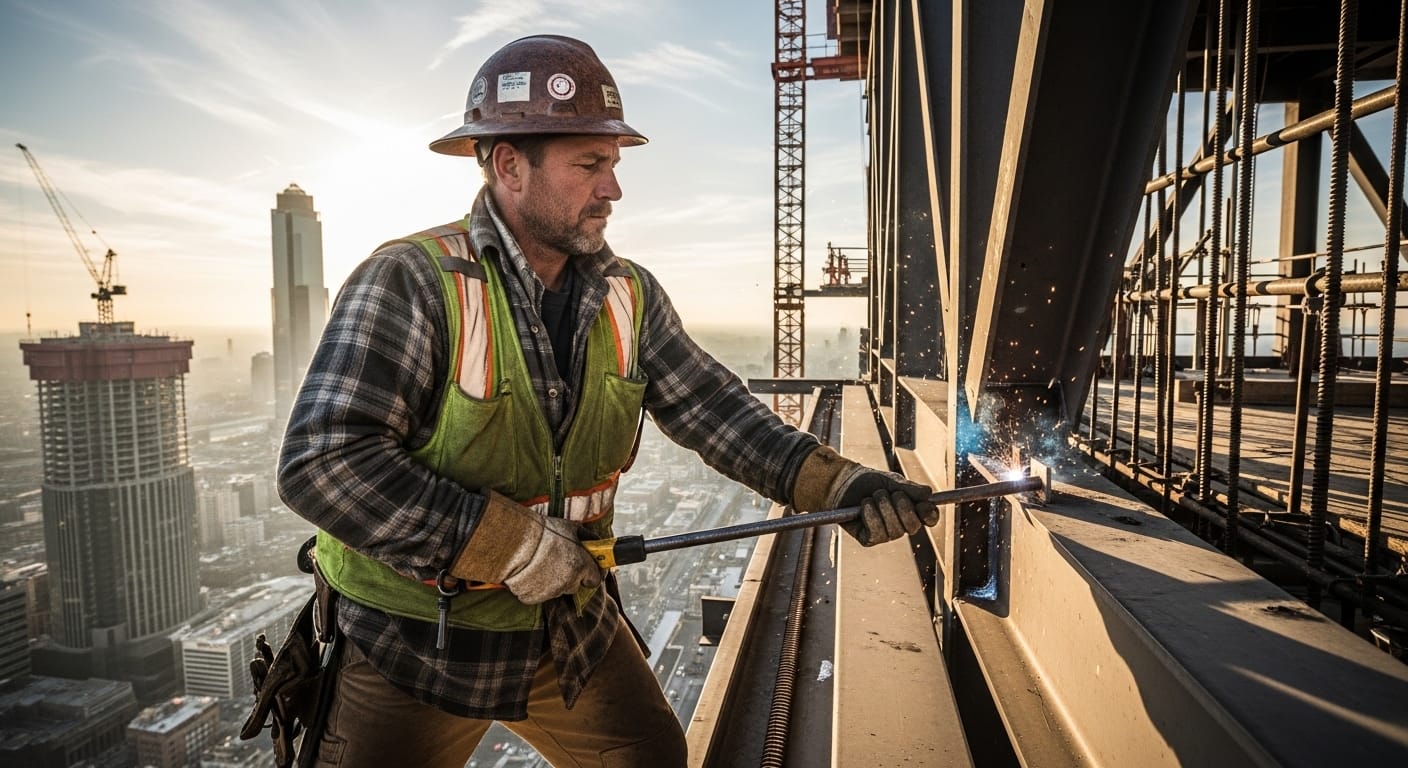
I’ve been walking the iron for over two decades. I’ve been on buildings in Chicago where the January wind off Lake Michigan hits you at 40 miles an hour and the beam you’re standing on — maybe eight inches wide, 22 stories up — becomes an ice rink. I’ve watched the skyline of three cities go up piece by piece from inside the steel. And I can tell you this with zero hesitation: ironworking is the best-paying blue-collar trade in the country if you’re willing to earn it.
But let’s be honest with you too. This trade takes something from you. Your knees. Your back. Your nerves, on the bad days. Before you chase the money, you need to understand exactly what the job is, what it pays at every level, and what it costs you to collect that check.
Apprentice to Foreman: The Pay Ladder
Let’s break down how ironworkers actually climb the wage scale, because nobody starts at journeyman wages. The path matters.
The 4-Year Apprenticeship: Earning While You Bleed
The Ironworkers International union runs a 3-to-4-year apprenticeship program, and it is not a classroom degree. You work. Every single day, you are on an active job site learning from journeymen who have already paid their dues. The coursework runs alongside the real work — blueprint reading, rigging mathematics, torch cutting, bolt-up, and structural welding certifications. You will be climbing before you feel ready, because there is no other way to learn.
Apprentices start at roughly 50% to 60% of journeyman wages and receive scheduled step increases tied to accumulated work hours, usually every six months. By your final year, you’re sitting at 85% or 90% of journeyman scale, and once you pass your book — your journeyman certification — the full rate kicks in immediately.
The most important thing people miss about the union apprenticeship is the benefit package that builds from day one. From your very first paycheck, your contractor is making contributions to your pension and annuity fund. By the time a union ironworker hits 30 years of service in a major market like Chicago or New York, the pension alone is worth more than most people’s entire career savings. That’s not an exaggeration.
How much is your union package actually worth? Enter your hourly rate and local market to see your true total compensation:
Paycheck Calculator
Calculate your Weekly, Monthly & Yearly Take-Home Pay
$✓ Rate automatically detected from page titleYearly Net Pay (Take Home) $0.00Monthly Pay $0.00Weekly Pay $0.00Gross Annual Income: $0.00Standard Deduction (2026): -$16,100.00Federal Tax (Est.): -$0.00State Tax (Est.): -$0.00FICA (7.65%): -$0.00⚠️ These are estimates for a single filer using 2026 tax rates (IRS Rev. Proc. 2025-32). Results do not include local taxes, pre-tax deductions (401k, health insurance), or tax credits. Consult a tax professional for personalized advice.
Ironworker Pay by Experience Level — 2026
| Career Stage | Years of Experience | Annual Base Pay | Hourly Rate | Key Milestones |
|---|---|---|---|---|
| Apprentice — 1st Year | 0–1 | ~$40,510 | ~$19.48 | First job site, connector training begins |
| Apprentice — 3rd Year | 2–3 | ~$52,000 | ~$25.00 | Welding certs, rigging, scaffold work |
| Journeyman | 4–10 | $62,760 | $30.17 | Full union rate, full benefit package |
| Journeyman — Senior | 10–15 | $70,000–$85,000 | $33–$40 | Specialty work, crane rigging lead |
| Foreman / Superintendent | 15–25+ | $105,010+ | $50.49+ | Crew management, project coordination |
Structural Steel vs. Rodbusting: Two Very Different Jobs
Here’s something the salary calculators rarely explain clearly: Structural Ironworker and Reinforcing Ironworker (Rodbuster) are two distinct crafts under the ironworker umbrella, and the physical reality of each job is completely different.
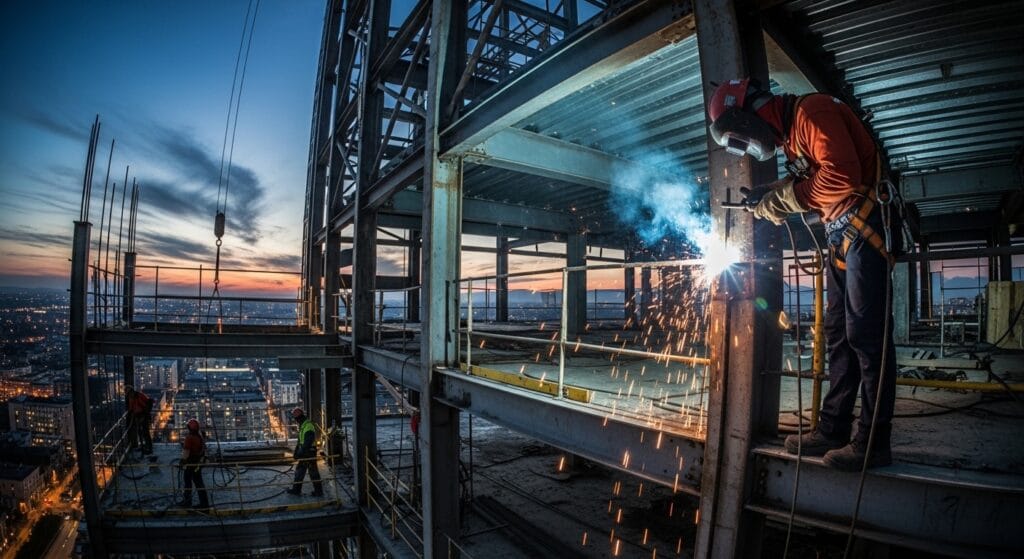
Structural Ironworkers are the ones you picture — connecting crew members walking the top chord of a beam 20 floors up, bolting up columns, setting deck, and hooking ironwork to cranes. The danger is immediate, constant, and visual. You are working with moving steel at height, and there is almost no margin for error. This is the craft that commands the highest wages (BLS 47-2221, median $62,760).
Reinforcing Ironworkers — Rodbusters — work primarily at grade or just above it, tying rebar mats and placing pre-tied cages inside concrete forms. It’s brutally physical work. You’re bent over all day, twisting wire ties thousands of times a shift, hauling 60-pound bundles of #8 or #10 bar across mud and debris. The danger here is less about falls and more about the cumulative destruction of your hands, wrists, shoulders, and lower back. Rebar work runs at the BLS 47-2171 median of roughly $54,850 — lower than structural, but it is still skilled union work in most major markets.
Both paths lead to foreman and superintendent roles. Both paths lead to strong pensions. But if someone tells you rodbusting is the “easy” ironworker job, they have never tied a mat for 10 hours in 95-degree heat.
Best States for Ironworkers in 2026
Geography is everything in this trade. The money concentrates where the commercial construction is dense, where union locals are strong, and where prevailing wage laws protect workers on public projects. Here’s where the real money lives.
Top 5 States for Ironworker Pay — 2026
| Rank | State | Annual Mean Wage | Why It Pays |
|---|---|---|---|
| 1 | New Jersey | $103,160+ | NYC/Philadelphia metro spillover, massive infrastructure projects |
| 2 | New York | $98,290+ | Manhattan high-rise density, Local 40 & Local 361 union strength |
| 3 | Illinois | $97,630+ | Chicago skyline commercial builds, strong prevailing wage statutes |
| 4 | Washington | $96,640+ | Seattle’s tech-sector construction boom, seismic upgrade requirements |
| 5 | California | $89,530+ | LA/SF seismic retrofitting, public works mega-projects |
Working in New York City under Local 40 or Local 361 is genuinely the top of the ironworker pay pyramid in North America. When you account for the full union package, a journeyman connector in Manhattan is making more total compensation than most college-educated office workers. That’s not a myth. That is what the union fought for and what every ironworker in this city bleeds to protect.
Ironworker vs. Welder vs. Carpenter: How the Trades Stack Up
People ask me all the time if the ironworker premium is worth the danger. Here’s the honest comparison. The “pain point” column matters as much as the salary.
Trade Comparison — 2026 Median Salaries
| Trade | BLS Code | Median Annual Pay | Primary Physical Risk | Union Ceiling |
|---|---|---|---|---|
| Welder | 51-4121 | $48,940 | Fumes, confined spaces, eye damage | Moderate — varies by industry |
| Carpenter | 47-2031 | $59,310 | Joint stress, repetitive motion, falls | Strong in union markets |
| Ironworker (Structural) | 47-2221 | $62,760 | Heights, moving steel, crush hazards | Highest in construction |
| Ironworker (Rebar) | 47-2171 | $54,850 | Repetitive strain, physical load | Strong in urban markets |
Welding is a deeply skilled trade that I respect. But a lot of welding work happens in a shop — same floor, same booth, same ambient temperature every day. Ironworking happens on the face of a building in December. The premium exists for a reason.
Calculate Your Total Union Package
Understanding your base wage is only half the picture. The real number — your total compensation including pension contributions, annuity, health insurance, and vacation — is what makes union ironworking genuinely wealth-building.
FAQ
Is ironworking really one of the most dangerous jobs in America?
Yes. Full stop. Ironworking consistently ranks among the top five most hazardous occupations in the United States by fatality rate. The Bureau of Labor Statistics tracks fatalities in construction by subindustry, and structural steel erection sits at the top of that list year after year. The two primary killers are falls and struck-by incidents — being hit by moving steel during a pick gone wrong.
I’ve known men who fell. I’ve been on jobs where someone didn’t go home. The Personal Protective Equipment requirements, the tie-off protocols, the safety culture on union jobs — these aren’t bureaucratic formalities. They are written in the blood of ironworkers who came before us. You tie off every single time, or you find another trade.
What does the weather actually do to you up on the steel?
People who haven’t done this work underestimate the weather factor entirely. In winter, the steel itself becomes a heat sink. It pulls the warmth out of your hands through your gloves while the wind works on everything else. Frostbite on the fingers is not rare. In summer, black steel in direct sunlight reaches temperatures that will blister skin on contact. You’re managing your hydration, your core temperature, and your grip simultaneously while moving steel 15 stories up.
There is no “waiting for better conditions” on a job with a hard deadline. The building goes up on schedule. You go up with it, weather be damned.
Union vs. non-union: is the difference really that significant?
The honest answer is that the difference is enormous — not just in wages, but in job security, training, and long-term financial stability. A non-union ironworker might earn a solid hourly rate, but without the pension and annuity contributions, without the portable benefit package that follows you from job to job, the long-term financial picture is fundamentally different.
In major markets, the union “total package” — meaning the full value of everything the contractor puts in on your behalf per hour — frequently exceeds $70 to $90 per hour in cities like New York and Chicago. The base check is just one slice of that number.
How does the ironworker pension actually work?
The union pension is a defined benefit plan. That means when you hit retirement age with enough years of service, you receive a monthly check for life — not a 401(k) balance that rises and falls with the stock market. Contributions are made by every signatory contractor that hires you, every job, automatically. The portability of union benefits across all signatory contractors in your local area is one of the most underappreciated features of union membership.
After 30 years in a strong local, a structural ironworker can retire with a pension that pays genuinely livable income. Add Social Security and whatever personal savings you’ve built, and the retirement picture is strong.
What are the physical long-term effects of the trade?
I’ll be straight with you. Your knees pay a price. Your lower back pays a price. Ironworkers who work 30 years on structural steel often carry the cumulative wear of decades of climbing, carrying, and crouching in ways the human skeleton was never designed for. The trade knows this. The pension and early retirement provisions exist partly because the union won those concessions based on the physical reality of the work.
If you’re young and thinking about getting into ironworking, take the joint care seriously from day one. The workers who get through with the least damage are the ones who treat their bodies like the capital asset they are — stretching, staying hydrated, and using proper form on every lift.
Sources & Methodology
All salary figures in this guide are drawn from official government labor market data and reflect the most current available release.
Primary Sources:
- U.S. Bureau of Labor Statistics, Occupational Employment and Wage Statistics (OES):
- OES Code 47-2221: Iron and Steel Workers (Structural)
- OES Code 47-2171: Reinforcing Iron and Rebar Workers
- Survey Reference Period: May 2024 (Latest Official Release)
- BLS Occupational Outlook Handbook, Iron and Steel Workers entry
- Ironworkers International Union (international.org) — Apprenticeship program structure and benefit fund information
- State-level OES data — New Jersey, New York, Illinois, Washington, and California Department of Labor releases
All total compensation estimates reflect standard union benefit package contributions typical of major metropolitan signatory contractors and are not guaranteed figures. Individual local agreements vary.
Last Updated: 2026 | Data Source: BLS OES May 2024 | For journeymen, apprentices, and anyone tough enough to walk the iron.
If you are looking for Trades & Blue Collar jobs, check out our guides on [Roofer] and [Wind Turbine].